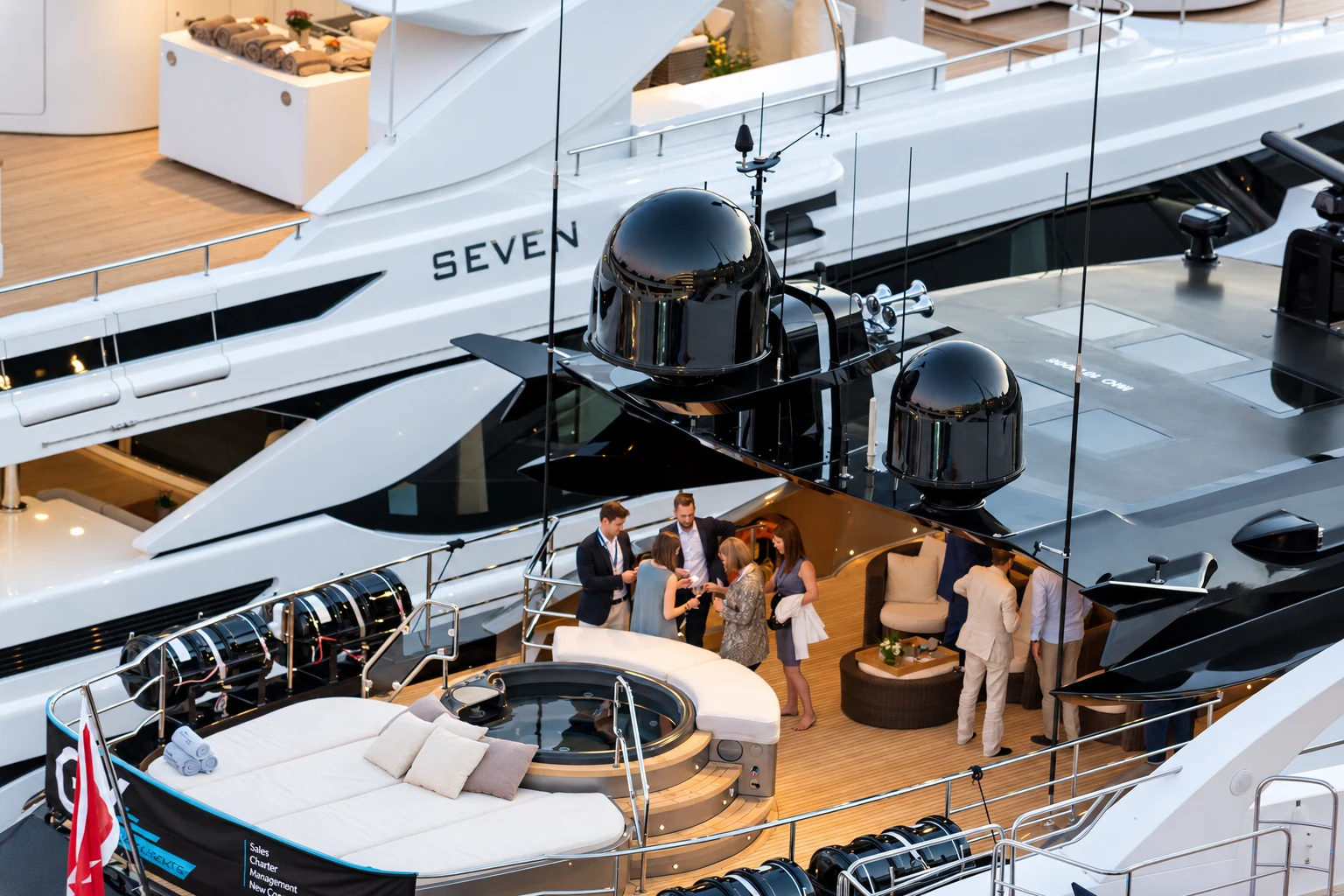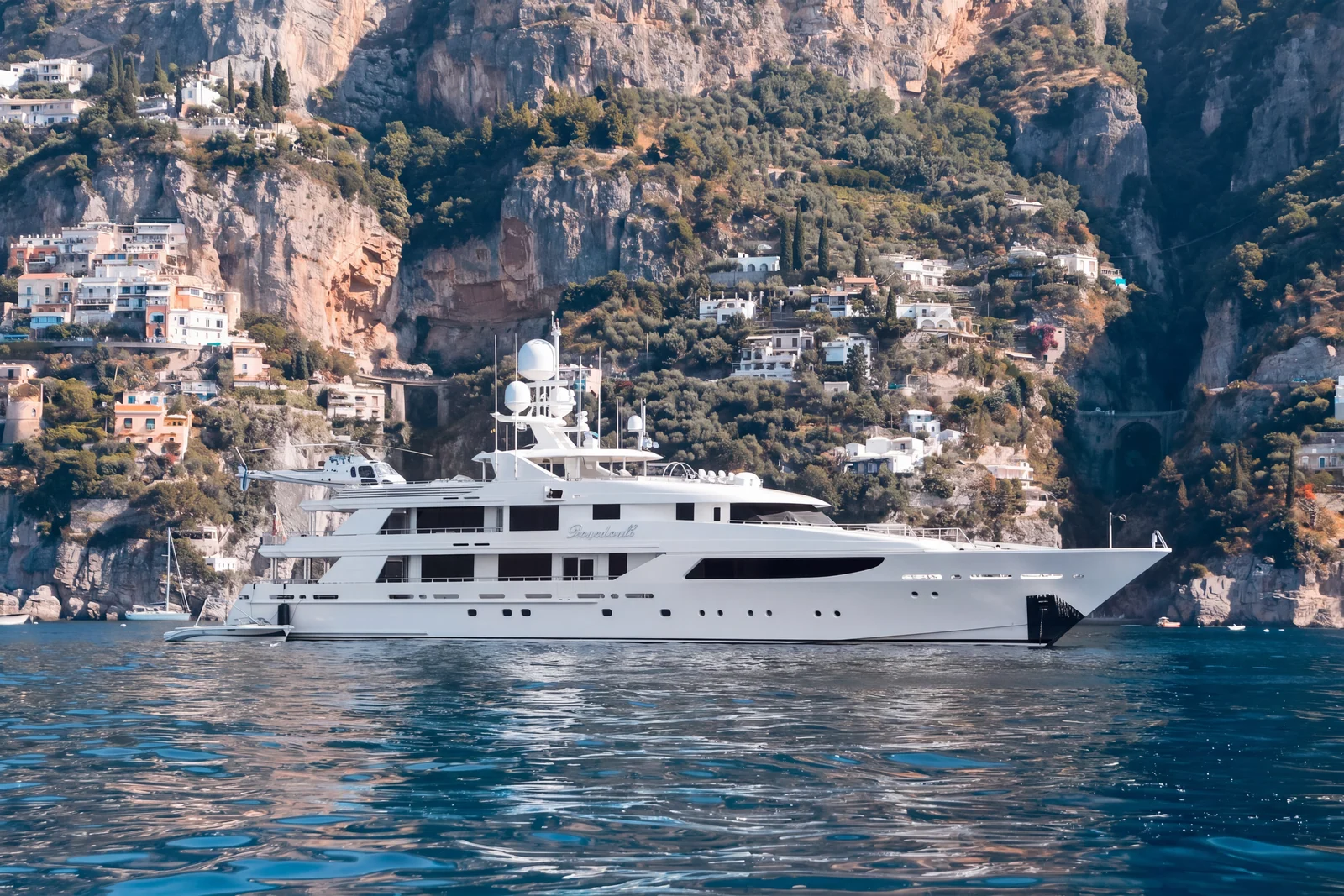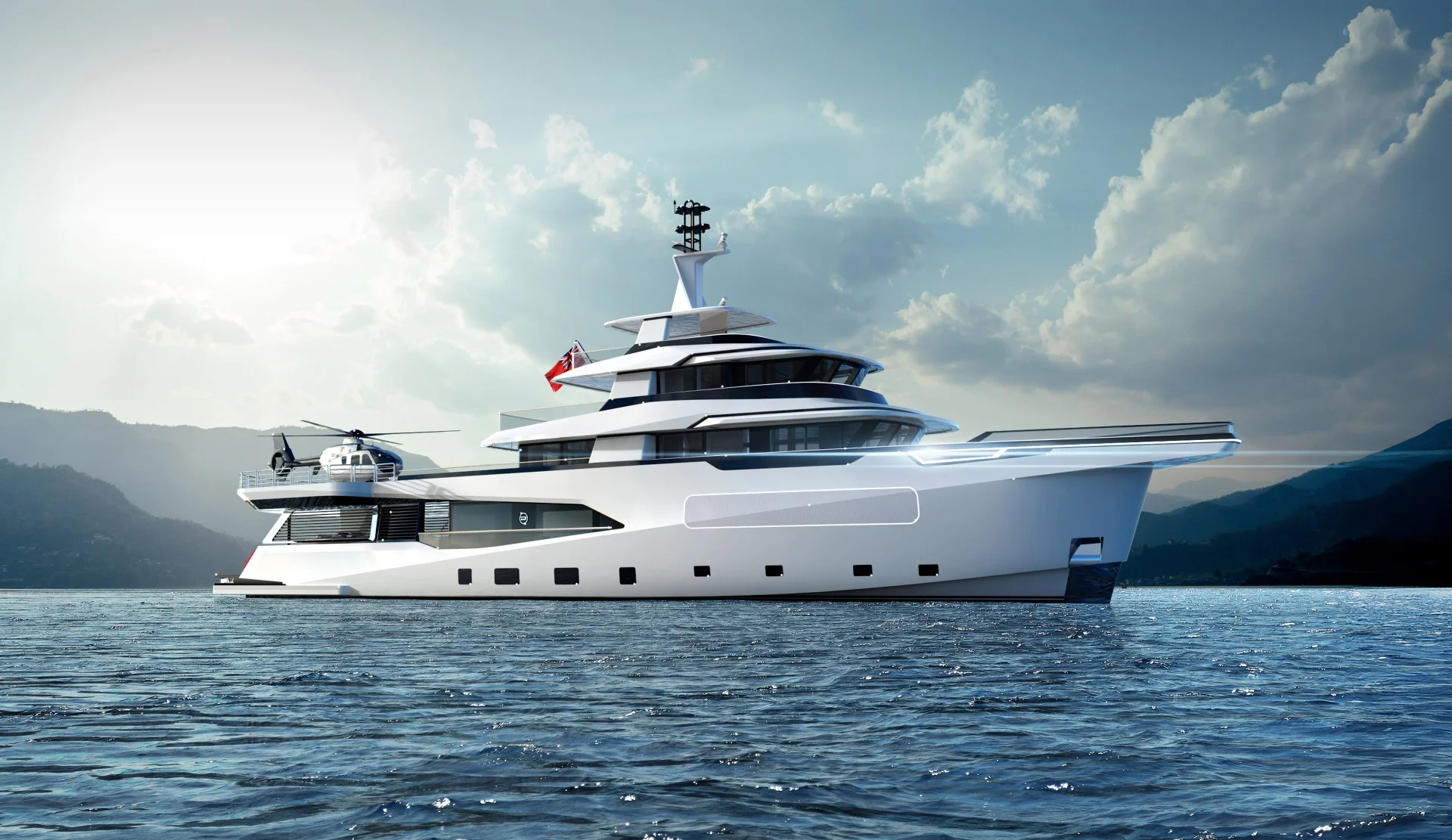
After lunch, people begin to move. Someone takes a drink towards the stern, another settles inside and a few remain at the table. On some yachts, the gathering still feels like one conversation. The relationship between the places keeps people aware of one another, with movement becoming part of the afternoon's natural rhythm.
For an owner who enjoys that kind of hosting, the main deck deserves a close look as a connected social space. Guest Capacity and length frame the LYRA catalogue search. The actual openings, furniture and routes then show how the company will share it.
Start at the table and look beyond it
The dining area often brings everyone together first. From the seats, consider the relationship with the saloon and aft living area. The view through a doorway, the height of a seat back and the position of another group all influence how connected the spaces feel.
Try the arrangement with people in the relevant places. Someone inside may still be close enough for an easy exchange, while another seat creates more separation. The owner can decide which atmosphere suits the company they most often invite.
Give that comparison a moment in the afternoon. One person moves inside with coffee while the others remain after lunch. Where would that person choose to sit, and how connected would they feel to the table? Trying those positions together during a viewing can reveal a relationship between rooms that is easy to miss in separate interior and exterior photographs.
This is a personal preference worth stating clearly. Some groups enjoy an open gathering that shifts gradually across the deck. Others value distinct areas for separate conversations. The selection becomes more useful when the adviser knows which experience the owner wants to encourage.
Openings give the main deck its changing character
Doors and windows can alter the relationship between rooms. A broad opening may connect the interior with the cockpit, while its closed state creates a more protected setting. Assess the actual arrangement in both states if it is relevant to your intended use.
Have the representative explain which opening arrangements are appropriate to the circumstances in which you expect to use the yacht, with the captain addressing the operating conditions. The connected room you enjoy while settled and the arrangement for a passage should each be understood for the actual installation.
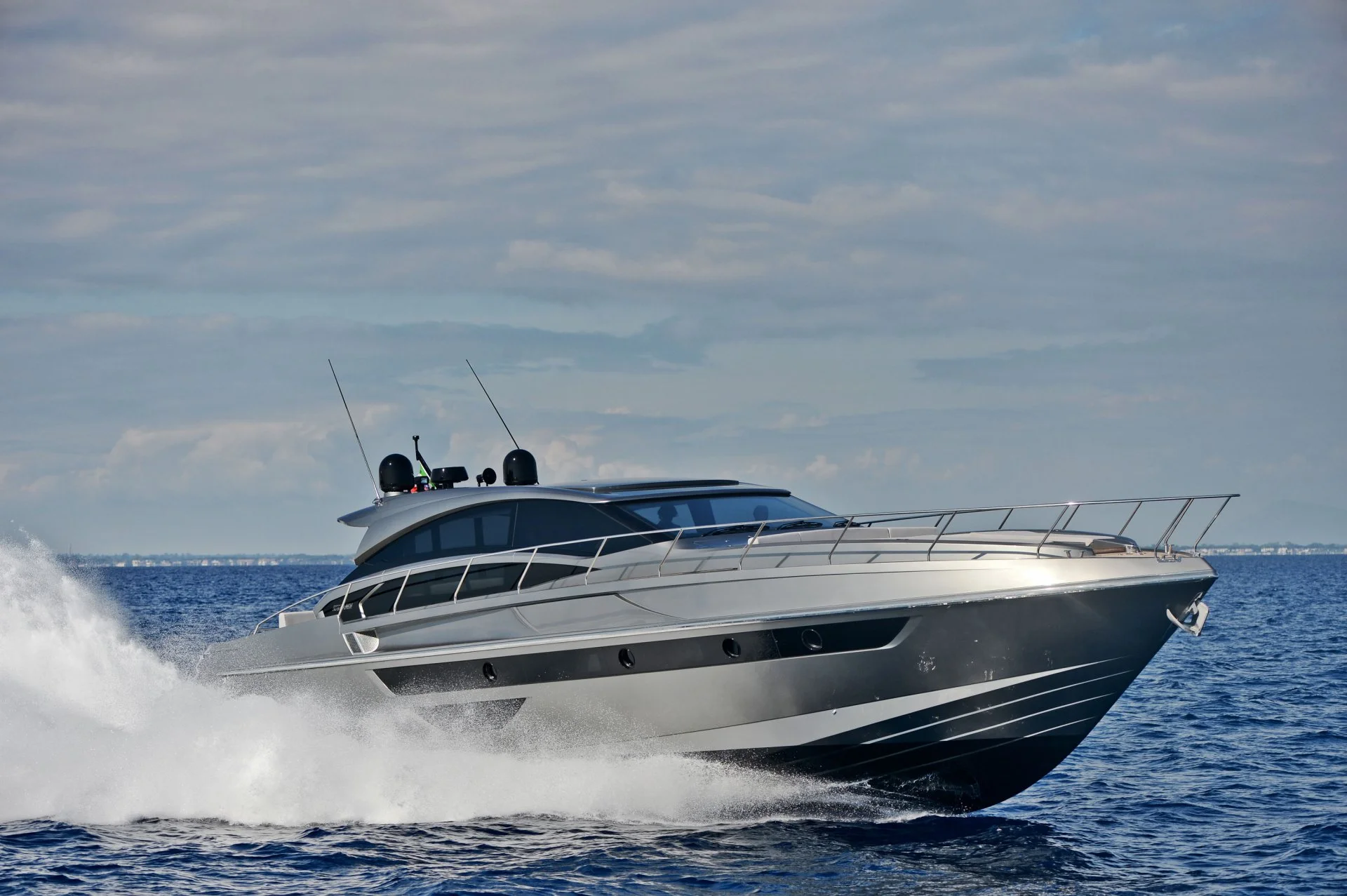
Catalogue example: the Rizzardi In Six, listed at 19.99 metres, describes a large glass door linking cockpit and saloon when open. It illustrates a physical connection to explore when comparing the main deck's social arrangement.
The opening is only part of the room. Look at where the door rests, how the furniture relates to it and which passages remain available. A feature that looks dramatic in a photograph becomes more meaningful when the owner can picture the occupied space around it.
Seated views matter here too. A person inside should be able to enjoy the connection in the position they will actually use. The proportions of windows, thresholds and furniture can make the room feel different from a standing tour through the centre.
Give movement somewhere comfortable to happen
A conversation continues more naturally when people can move without repeatedly asking others to stand. The route between table, seating and facilities deserves attention with the main deck furnished for ordinary use.
Place the regular company in the scene. Someone collects a drink, another goes below and a guest returns from the aft area. Notice where those routes meet and how the available space serves them. The layout should make sense at the scale of your own gathering.
Guest Capacity is a useful initial reference, with the permitted numbers confirmed for the actual yacht and operation. The social experience then depends on how the relevant people occupy the main deck. Places at the table and seats elsewhere each contribute differently to that afternoon.
The galley's position can also shape the gathering. A connected preparation area may keep an owner who enjoys cooking close to the company. A more separate kitchen may support another style of service. Consider the role of the person preparing food alongside the guests enjoying it.

Preserve a choice of atmosphere
An open main deck can still contain quieter places. A seat slightly apart from the table or a protected interior corner may invite a smaller exchange while remaining part of the wider company. Those choices give the gathering variety without requiring everyone to move to another level.
Shade and shelter contribute to how long people stay in each place. During a viewing, consider the intended season and the actual arrangements supplied. The owner can identify the seats they would enjoy repeatedly, while the relevant professionals assess the vessel's use and systems.
Compare candidates through the same familiar afternoon. The dimensions remain useful, but your observations will concern a particular relationship: the table with the saloon, the interior with the water and one conversation with the next.
The right main deck can become a favourite setting for hospitality. People move as they please, discover comfortable places and remain connected through the shared space. Choosing for that experience gives the yacht a social character you will recognise each time friends come aboard.