A remote-water ambition gives hull construction a clear subject to serve. The owner wants to experience a particular region, with the vessel and support appropriate to that journey. Hull material is one part of understanding the proposed yacht, considered within its complete design and the professional assessment of the programme.
Hull Material identifies the stated construction, and expedition suitability brings the remote programme into the search. The actual vessel, destination and project documentation give those entries their practical meaning.
Give the material question a destination
Begin with the place you want to reach and the experience you hope to enjoy there. The captain and expedition specialists should assess the programme, including the support available and requirements relevant to the actual operation. The owner contributes the purpose and company travelling.
This makes the construction discussion more precise. The technical specialists can consider the proposed vessel against a defined brief rather than an abstract preference for a material. Their assessment should explain which evidence supports the design's suitability for the intended programme.
Expedition suitability has a particular role in this search because remoteness concerns the arrangement around the journey as well as distance travelled. The professionals should establish the actual requirements of the region and vessel. The owner should understand how the proposed yacht and preparation connect with that setting.
Read the catalogue entry as a construction starting point
In the LYRA catalogue, Hull Material helps organise candidates by their stated construction. The exact specification and supporting documents should be established for the yacht under consideration. The material entry introduces a subject for technical review within the complete project.
Ask the technical team to identify the scope of that description in the supporting documents. The hull, deck and superstructure can each be addressed explicitly in the review of the actual yacht. The owner should understand which parts are being described and where their confirmed construction is recorded. This gives a broad material entry a precise place in the project without assigning it properties beyond the evidence.
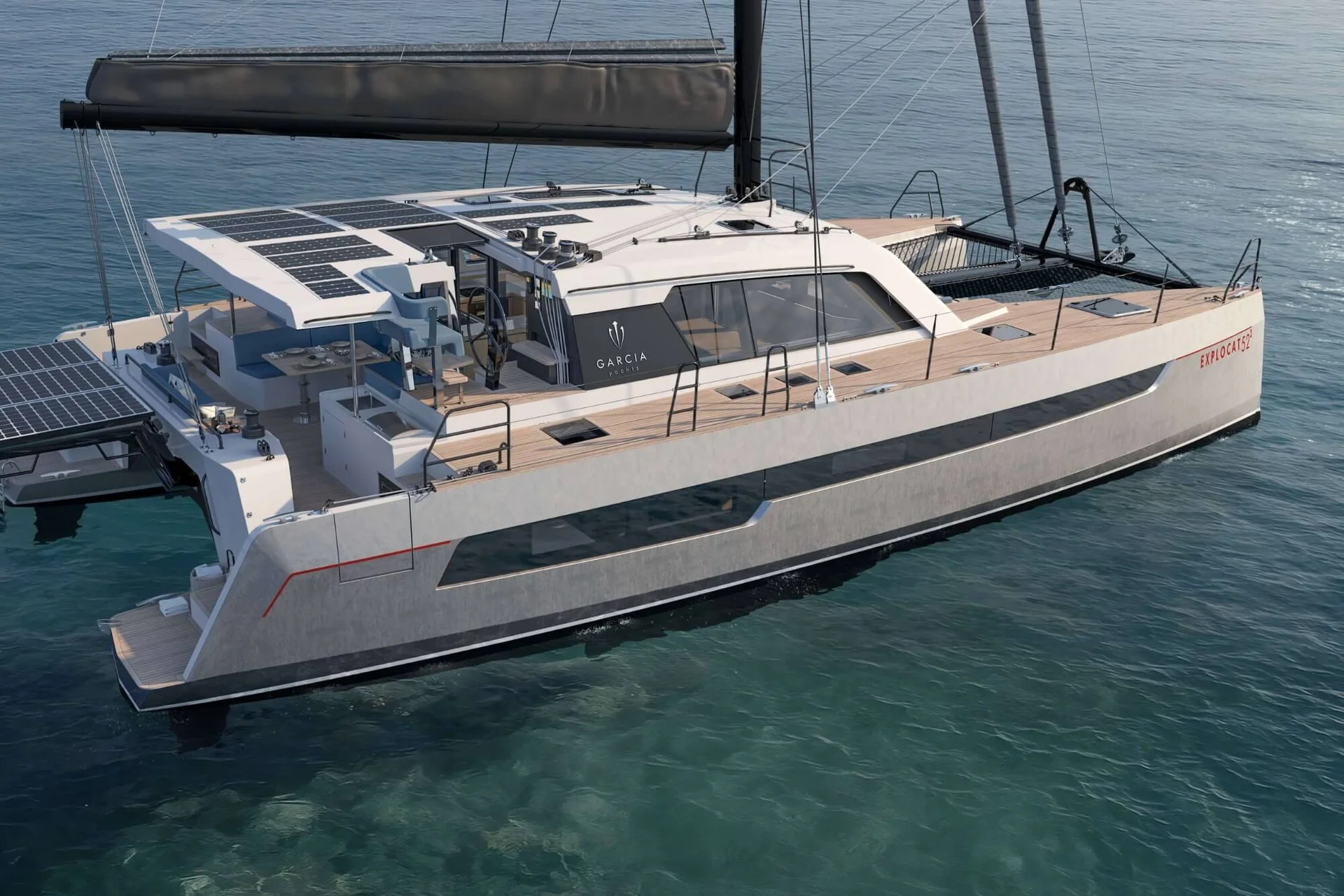
Catalogue construction example: the Garcia Explocat 52 is listed at 15.9 metres, with aluminium hull material, Sailing category and catamaran hull type. These entries illustrate the construction information to investigate within a remote-water brief. Suitability for a specific region requires assessment of the actual vessel and its preparation.
The comparison should preserve that complete perspective. Construction, equipment and the proposed operation need to be assessed together by qualified specialists. A material name alone does not describe the details of an individual design or its condition.
Where a catalogue description and technical documents differ, the relevant professionals should reconcile the exact information before it is relied upon. The owner should receive a clear account of the vessel being offered, with the source and scope of the construction description understood.
Let specialists explain the whole project
The appropriate technical review should address the actual design, documentation and condition within the purchase process. Its scope depends on the vessel and transaction. The owner benefits from understanding what has been assessed and which questions remain open.
For an existing vessel, bring any relevant documented work on those structural parts into the same review. The specialist can relate the current yacht and its records to the original specification, explaining what has been established and what needs further evidence. The construction discussion then concerns the vessel being purchased, with its actual history as well as its design.
For a new build, the yard and relevant advisers should explain the proposed specification and evidence supporting the intended use. For an existing yacht, the current vessel and its records need the appropriate professional review. Both routes should lead to an intelligible proposal for the real programme.
The owner can ask how the yacht will be cared for and supported through the intended geography. The captain, yard and providers should establish the arrangements appropriate to the actual systems and construction. That support discussion gives the remote-water brief a practical continuation after delivery.
The purpose is informed confidence in a complete vessel. Technical findings should be specific enough to support the decision, while the owner keeps the desired journey visible. Material becomes one understood part of the yacht rather than a substitute for the whole assessment.
Keep life aboard within the decision
The company will spend time in the rooms as well as thinking about the destination. Cabins, shared spaces and practical storage should serve the people travelling. The construction conversation belongs alongside that personal experience within the same purchase.
During viewings, place the actual company in the layout and imagine ordinary days on the route. The owner can identify which spaces make the stay appealing, while specialists assess the vessel's technical and operational suitability. Both perspectives inform the choice.
The final proposal should connect the confirmed vessel identity, specification and professionally assessed programme. Any changes should receive the relevant review so the purchase remains aligned with the intended use.
Choosing hull material through a particular brief gives the technical question a clear purpose. The owner understands the construction within the yacht they are selecting, with the journey and life aboard supported as a coherent whole. The result is a purchase prepared around a place you are excited to experience.