
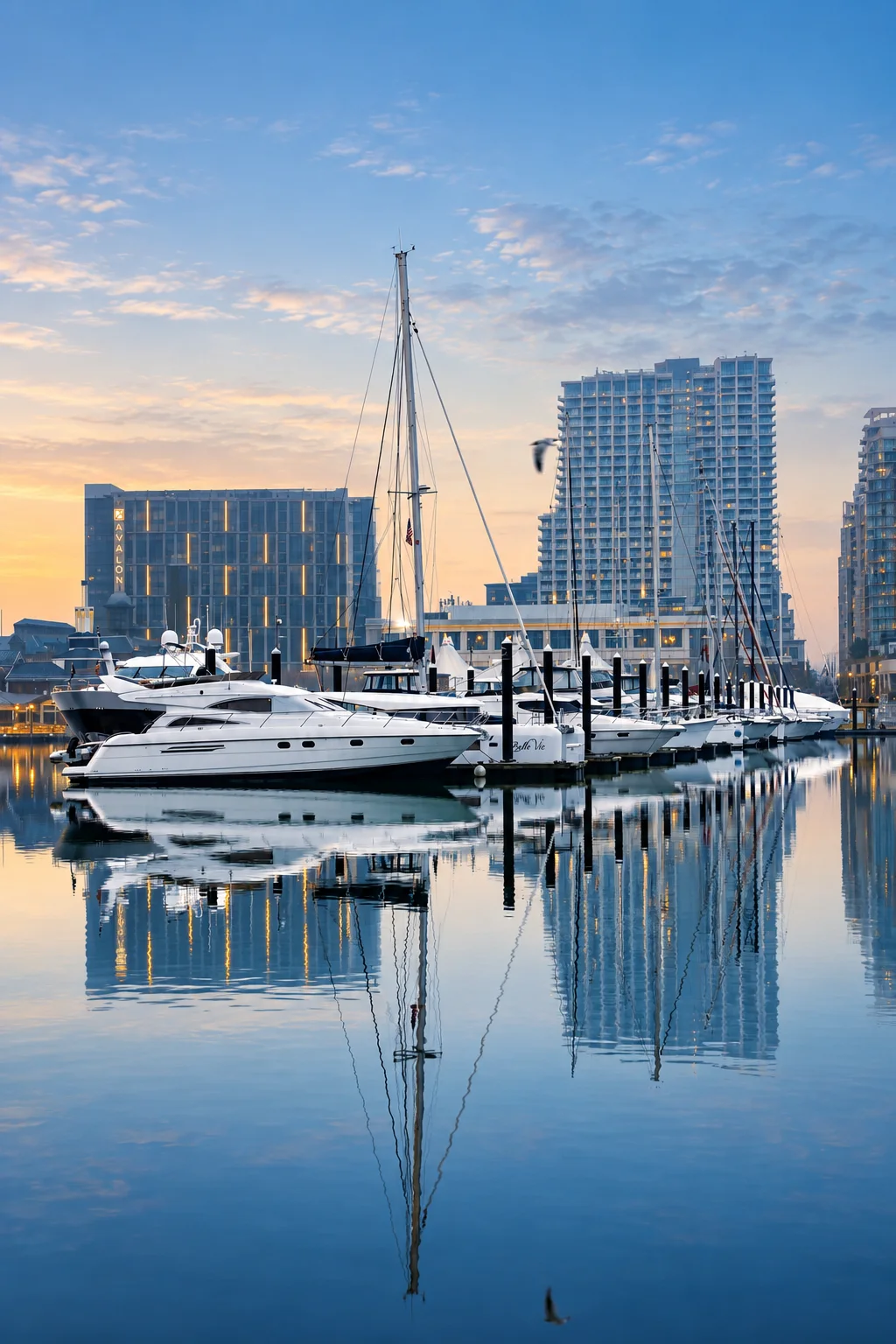
The distinction is more useful than a simple choice between convenience and quiet. A particular city berth may suit an owner's wish for privacy, while a marina farther out may have a lively local community. Explore the actual places before assigning a character to either category.
Walk the day you would spend ashore
At the city option, identify the places you would genuinely use. Could the yacht connect with work, familiar people, cultural interests or an everyday town routine? Decide which of those connections matter often enough to influence the base. Being near many attractions adds little if they are unrelated to the owner's plans.
At the alternative location, look at the pattern it would invite. Perhaps arriving there would mark the beginning of a distinct break, with a different pace and surroundings. Consider provisioning, meeting guests and reaching the activities you enjoy. The shore experience needs substance beyond an appealing description of escape.
Use the same hypothetical visit at both locations: an arrival, time aboard, an ordinary walk ashore and the return. At each, identify which part would connect with the life the owner wants. A central position may be appealing for a recurring shore activity; another setting may make the visit feel like a distinct break. These are possibilities to investigate at the actual places, not properties assigned by their map labels. Ask which arrangement the owner would want to repeat, including the final route to the particular berth.
Examine the links between yacht and city
Follow the actual access route in each case. Road connections, transfers, walking distance and berth access can affect how the owner uses available time. Investigate the times relevant to your own travel rather than relying on a journey made under different conditions.
Ask about the support required by the yacht. The presence of a city nearby does not establish that a particular specialist can reach the boat or that the marina includes the needed service. Equally, a base outside the city may have arrangements worth considering. Obtain current, project-specific answers from the relevant providers.
The access route at the marina itself matters too. A central location can still involve a meaningful walk, controlled entry or separate arrangements for vehicles and service teams. The comparison should reach the berth rather than end at the waterfront entrance.
Compare the kind of transition you want when arriving
For some owners, reaching the yacht means remaining connected with the city in a different setting. For others, the arrival marks a deliberate change of pace. Explain which experience interests you before deciding that central or outside the city describes the answer. The particular route and marina need to make that preference tangible.
A useful comparison can separate the interests:
| Owner interest | What to explore at each candidate |
|---|---|
| Connection with shore life | Which places and activities would actually be used? |
| A change of atmosphere | What makes arriving feel like the intended break? |
| Time at the berth | How does the particular setting relate to the planned stay? |
| Practical arrival | What route and arrangements lead all the way to the yacht? |
The table records questions for actual places. It does not assign a universal character to central or outlying marinas, or establish the conditions of a stay. Current provider information and appropriate professional advice remain necessary where consequential subjects arise.
The desired amount of participation in the surrounding community matters too. An owner can enjoy nearby activity while preferring privacy aboard. Another may want introductions or recurring local involvement. Ask about the specific opportunity and applicable arrangements; location alone does not confer a social relationship or access to a programme.
Include time spent aboard in the setting
How would the surroundings feel during a stay at the berth? Consider the desired balance of activity, outlook, privacy and connection with shore. Visit at representative times where practical, and ask how the particular position and access arrangements work. A broad label cannot describe every part of a marina.
Longer stays require additional confirmation about the intended use, services and relevant terms. If the yacht forms part of a working or extended coastal routine, have that arrangement examined on its own merits. A pleasant neighbourhood does not determine the conditions under which the owner may stay.
Give each candidate base a reason to matter beyond its position on the map. One may connect the yacht with a city life the owner values; another may provide a distinct coastal setting they want to return to. Understanding the routes and support around both turns that preference into a practical home-port decision.
