A walkaround yacht offers an appealing idea of movement: different parts of the deck connected around the shared spaces, with the company able to enjoy more than one view of the day. During a search, the term can quickly become part of the attraction.
The useful next question is how the particular layout works once people have settled aboard. Seats become occupied, belongings find a place and someone wants to move from one area to another. Following those ordinary journeys gives the concept a practical meaning.
Guest Capacity and size range are the two relevant catalogue criteria. They establish the scale of the company and the segment being explored. The actual passenger flow needs to be understood through the individual deck arrangement and its permitted uses.
Begin with occupied seats
Look at the main seating area and imagine your usual guests in it. The deck now has a human scale. A person getting up, a bag placed in its intended storage and a table ready for lunch all contribute to the arrangement you will live with.
Follow the route from that area towards another place guests are permitted to use while the yacht is appropriately settled. Notice how the route relates to seat edges, table space and the positions where people naturally pause.
The route in a deck plan can look continuous while the experience changes with the people aboard. A viewing lets you understand those relationships at close range. Ask the representative to explain the intended passageways and the configuration being demonstrated.
Your own company provides the most useful reference. A couple moving quietly between favourite seats will use the layout differently from a fuller family gathering. The question is whether the arrangement feels convincing for the people you expect to invite.
Ordinary furniture use can reveal another detail. Ask to see how the table and seats are intended to work while people are dining, including the room used when someone stands up. A passage should be understood beside that occupied arrangement. This brings the walkaround idea into the part of the afternoon when guests are using the deck as a living space.
Understand the connections between social areas
A walkaround arrangement can give the bow, cockpit and other areas distinct roles in the same afternoon. Consider how people would move between them and where the company is likely to gather most often.
If one person goes forward for a quieter view while others stay near the table, imagine the return to the main group. The relationship between those places affects how connected the afternoon feels. A separate seating area can offer a welcome change of atmosphere when the route makes sense for its intended users.
Changes of level and the actual width and form of passages deserve attention. Experience them yourself within the representative's guidance, and discuss any individual requirements with the appropriate specialists. The layout name alone establishes little about personal accessibility.
The LYRA catalogue helps narrow the size and guest-capacity group. It is then worth comparing the different ways yachts in that group connect their outdoor spaces.
Keep the permitted configuration clear
Furniture options and opening elements can affect a deck's arrangement. Establish which version is part of the yacht being offered and how the relevant spaces are intended to be used. The responsible team should identify the applicable operating restrictions and conditions.
The exercise here concerns passenger movement in an appropriately permitted setting. Areas available while settled may have different rules during a passage, and those decisions belong with the responsible operator using the yacht's documentation.

An example from the catalogue
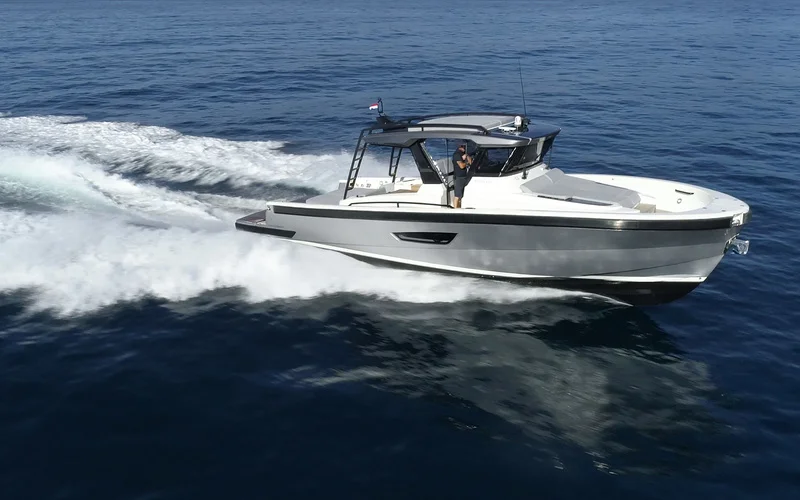
The Bluegame BG42, listed at 13.15 metres, is described in the LYRA catalogue as having a full walkaround deck. It is one example of this layout approach. The usable passages and authorised guest areas need to be understood on the actual yacht and configuration being considered.
Across this segment, compare what the connected route contributes to your particular day aboard. The most useful differences often emerge when seating and movement are considered together.
Follow a complete afternoon
Imagine arrival, lunch and the quieter period afterwards. The company will use the boat differently as the day develops. Notice where people are likely to stand, which routes repeat and how the arrangement supports both shared and individual time.
During a viewing, take the opportunity to pause in each intended social area. The pleasure of moving around the yacht should include worthwhile places to arrive: a comfortable seat, a view you enjoy or a setting for conversation.
Those observations can make your shortlist more personal. You can explain why a particular layout suits your household, beyond its appearance in an overhead photograph.
A thoughtfully chosen walkaround yacht can give an afternoon a pleasant sense of variety. People find their own places, return to the group and enjoy the deck as a connected living space. Assessing that movement through real use helps you recognise the yacht that will make the idea most rewarding for you.