
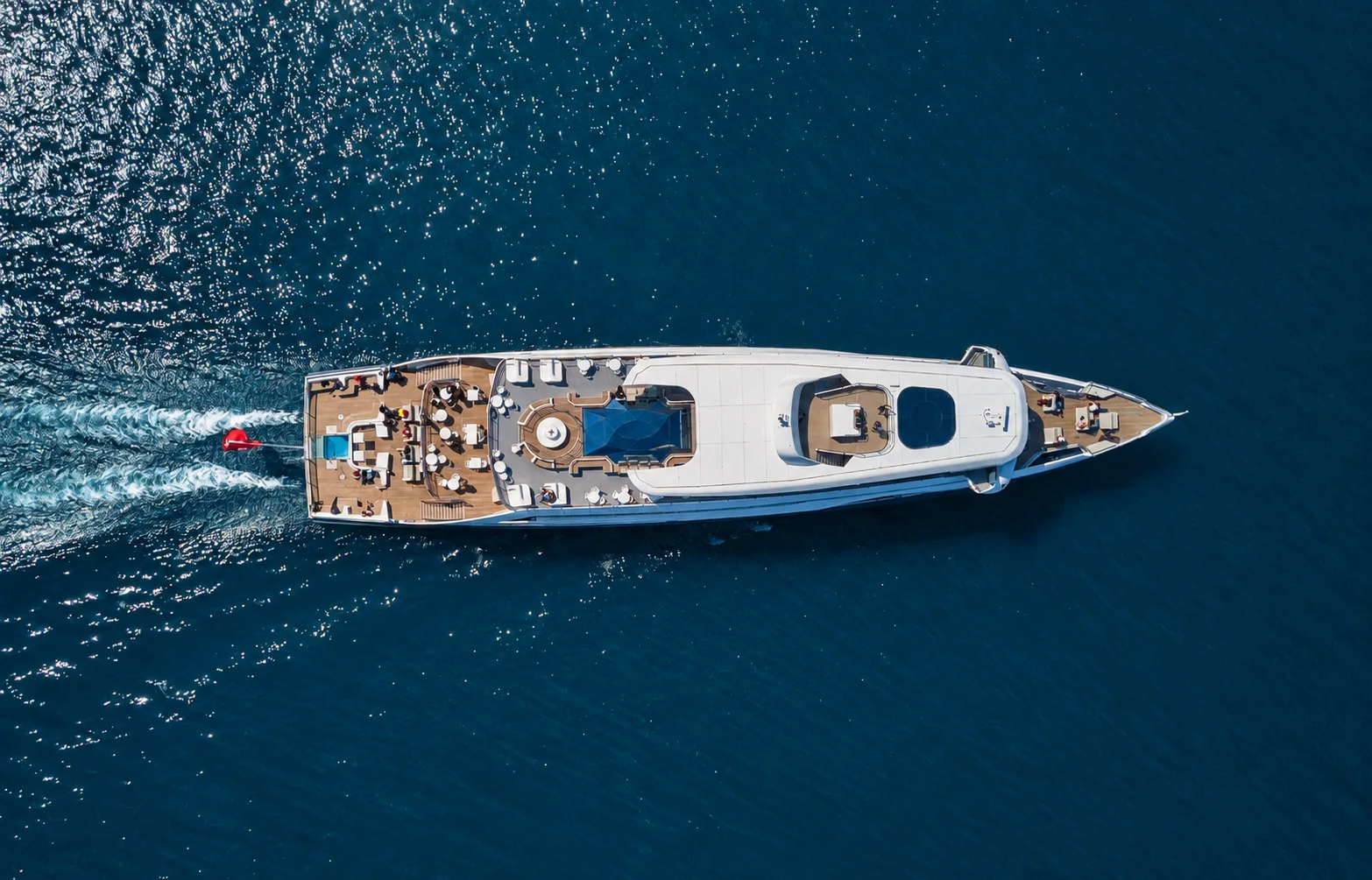
Gather the images you continue to return to and consider what holds them together. Some may express a strong preference; others may introduce a quality you are still trying to understand. The collection can help you explain your taste to an adviser when each reference has a role and you can say what you would like to explore through it.
Look for the experience inside the image
For each photograph, ask what holds your attention. It may be a long view from a seat, the closeness of a table to the water or the way an interior opens towards the deck. Explain the attraction as something you would like to experience.
A description such as “I like how everyone could remain together here” tells an adviser more than a broad preference for modern design. It points towards a relationship between people and space that can be explored in actual layouts.
Several images may express the same idea in different forms. You might discover that an open yacht, an enclosed cruiser and a larger vessel all appeal because they give a gathering space a strong connection to its surroundings. That common thread can help organise the search.
An image whose attraction remains difficult to explain is still worth bringing to the conversation. Present it as something you are curious about. Looking at a comparable arrangement aboard may help you find the words for the feeling. The image can then take a clearer place among the preferences that are beginning to guide the search.
Give each reference an identity
Where possible, identify the model, builder and source of the image. Record whether you are looking at a photographed yacht, a proposed design or a particular interior option. These distinctions help the people advising you understand what can reasonably be investigated.
If a pictured feature becomes important to the purchase, ask the responsible team to confirm the configuration to which it belongs. The answer should identify its place in the yacht or proposal being considered, including any relevant option. Keeping that explanation with the reference connects the attraction you felt with the arrangement you could actually investigate.
A selected view may leave the surrounding layout unclear. Look at a plan or arrange a viewing to explore the spaces beside the area that caught your eye. Understanding that relationship helps you see how the visual idea belongs within a complete yacht and whether it supports the experience you were imagining when you saved the photograph.
An unidentified image can remain a useful visual reference. Explain what interests you and keep its identity open until the source can be established. A particular model or proposed arrangement will need its own confirmation before the image informs a purchase assumption. Your response to the picture is already useful; the factual enquiry gives it a more definite setting.
Resolve the tensions worth exploring
The collection can hold several attractions at once. You may enjoy an open atmosphere in some photographs and a sheltered gathering place in others. Explore the occasions you associate with each. That conversation can reveal how the images relate to your intended time aboard, allowing a preference to develop from the experiences they suggest.
Your intended geography and season can help clarify the answer. So can the people you expect aboard and the way you want to spend the day. These questions connect the visual preference to an ownership intention while allowing the final arrangement to emerge from real choices.
Ask which differences you would enjoy exploring in person. If the collection is dominated by outdoor photographs, seeing how those spaces connect with the interior may be particularly useful. If it centres on rooms, a visit can help reveal whether their relationship with the rest of the yacht suits you.
Use familiar places to explain an unfamiliar boat
A saved image may recall a quality you value in a familiar place: an atmosphere, a comfortable way to gather or a relationship with the surroundings. Share the relevant association when it helps explain your taste. The conversation can stay with the experience you hope to bring into yacht ownership, using the image as a way to make that preference understandable.
Keep the comparison in the language of experience. A welcoming place ashore can help describe how you would like people to feel aboard. The builder and relevant professionals can then examine a defined proposal for the yacht. Your visual brief gives that work a purpose while leaving the practical assessment with the people responsible for the proposed arrangement.
Each reference can have a different job. One may help describe colour or proportion; another may express an occasion you imagine returning to. Keep those roles visible when discussing the collection. An adviser can then understand which images represent an important ownership intention and which contribute to the character you would enjoy exploring.
The direction becomes more coherent when the explanations share a recognisable intention. Different-looking images may belong together because they describe similar ways of spending time. You can then explore real designs through that intention while leaving the people developing the project room to propose another convincing expression of it.
Bring a direction to the next conversation
A concise image brief can explain what you like, why it matters and what remains open. Keep your own words alongside the references. If an assistant organises them, make sure those explanations remain attributable to you. The material becomes easier to discuss when the future owner's response can be heard clearly within it.
Then describe the broader intention in ordinary language. Perhaps you want a yacht that feels connected to the water while supporting unhurried time together. The visual references now have a shared purpose. They give the later discussion of layouts and models a direction rooted in the experience you would enjoy.
As you spend time aboard yachts, bring that experience back to the photographs. Some images may continue to express a valued quality; others may have helped you understand a preference that has since changed. Attach the reason when their role changes. The collection will then remain connected to the direction of the purchase as your understanding develops.
You can now put the images in front of someone and explain the intention running through them. The pleasure of looking remains part of the process, with a clearer connection to the yachts you want to explore. A visual collection has become a personal brief that another person can understand and help develop.
