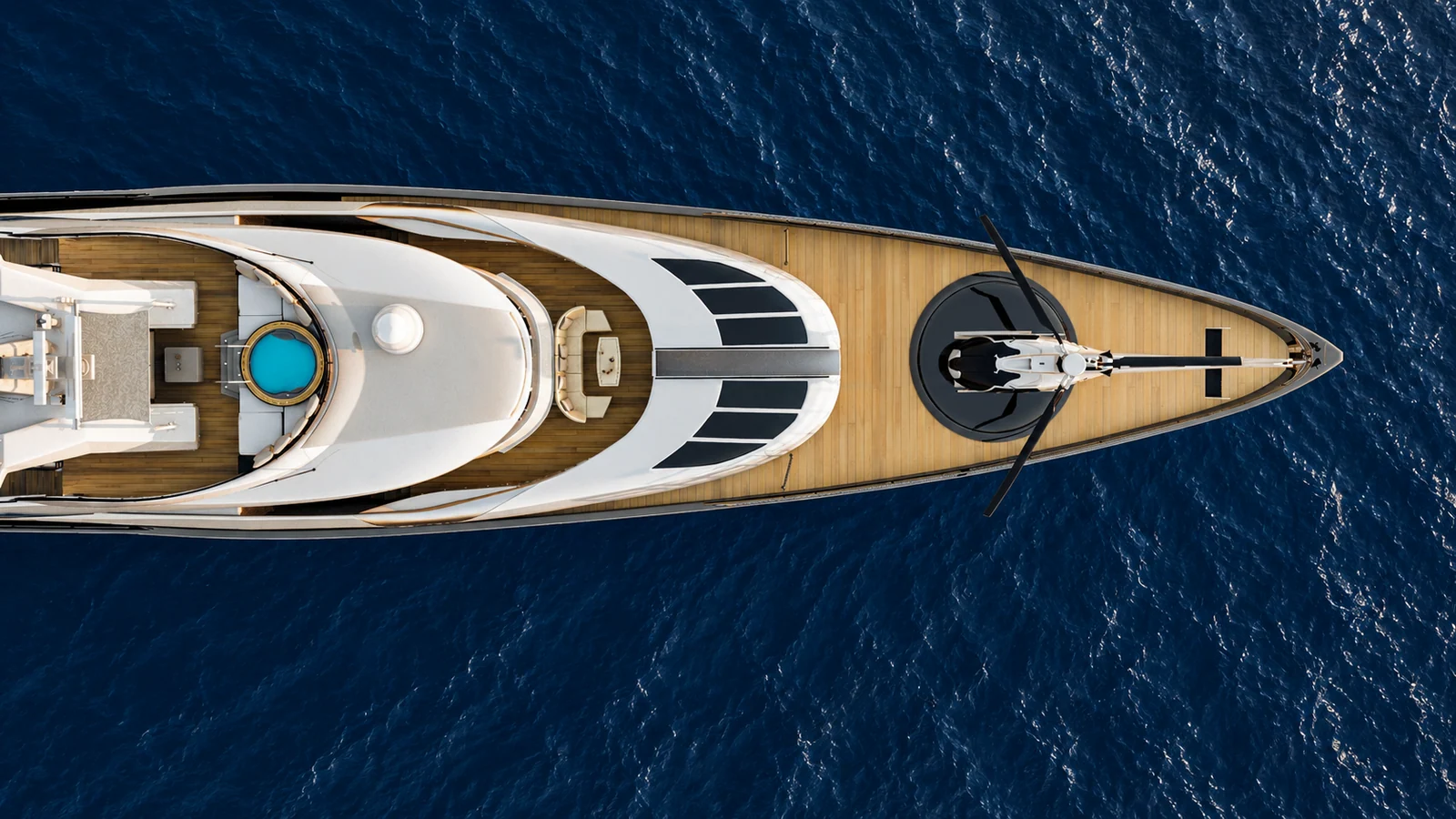
A remote cruising programme can begin long before the owner reaches the yacht. The journey may involve a long-distance flight, an onward aviation connection and a final transfer into a place chosen for its distance from everyday life. When a helicopter is intended to form part of that journey, it deserves an early place in the yacht brief.
The attraction is clear: reaching the yacht in a way that supports the experience you have planned. The useful selection question is how that connection would work for your programme, with the relevant specialists confirming the yacht, aircraft and operating arrangements together.
Helicopter capability and expedition suitability are the two relevant starting criteria in the LYRA catalogue. Their combination identifies a subject for detailed assessment. The answer depends on the specific journey you intend to make.
Identify the connection you actually need
Describe where the aviation part begins and where you expect it to end. A transfer to a shore facility near the yacht is a different proposition from arrival on the yacht herself. Make that distinction explicit in the purchase brief so everyone is assessing the same requirement.
The people and belongings involved also belong in the description. Who is expected to make the connection? What needs to accompany them? How does the transfer relate to the rest of the group's arrival? The aviation professionals can then work from a recognisable owner programme.
Timing should be equally clear. You may want an arrival linked to a particular holiday or a recurring way of joining the yacht during a season. Each gives the specialists a different planning context, including the flexibility available within the wider journey.
Include the connection away from the yacht at the end of the stay. Different members of the company may leave on different dates or continue to different destinations. Give those intended endpoints to the same responsible planning team, with the status of the proposed services clear. The owner can then understand the complete visit while the specialists assess the aircraft, vessel and actual arrangements for each part.
The owner's contribution is a precise account of the intended experience. The technical and operational assessment belongs with appropriately qualified aviation and yacht professionals.
Establish what the catalogue capability means
The helicopter-related category in the LYRA catalogue can encompass an existing capability or the possibility of an installation. That distinction is material to a purchase. A proposed project and a yacht with an established arrangement require different kinds of confirmation.
Ask for a clear description of the function being offered on the individual yacht. The term helicopter access can conceal different assumptions among the people discussing it. Written project information helps identify whether everyone is referring to the same installation and intended use.
The proposed aircraft must be identified at an appropriate level for specialist assessment. A photograph of a helicopter aboard a yacht is an illustration of one scene; compatibility with your proposed programme needs its own supporting information.
This is a useful reason to involve the relevant disciplines early. The yacht representative, technical advisers and aviation specialists can establish which questions the project must answer and what remains to be confirmed. Their conclusions give the owner a sound basis for comparing proposals.
Read remote suitability through the complete itinerary
Expedition suitability introduces the wider context: a yacht intended for journeys away from familiar concentrations of support. The particular destination, season and operating programme still need to be assessed for the vessel being considered.
An aviation connection belongs inside that complete itinerary. Its relationship with shore facilities, the yacht's movements and the owner's arrival needs to be considered as one arrangement. Treating each element separately can leave different people working to different versions of the journey.
The qualified team should define the applicable technical, regulatory and operating requirements. It should also explain the arrangements for changes to the planned connection. These are programme questions to be resolved with the responsible specialists, with conclusions recorded in a form the owner can understand.
For yacht selection, the important outcome is clarity about the service the proposed configuration can actually support. This keeps the remote destination and the owner's reason for going there at the centre of the project.

Make the requirement visible in the purchase decision
Once the specialists have assessed a proposal, return to the original journey. Confirm that the conclusions address the aircraft and access function you intended, and that the yacht specification reflects the arrangement being evaluated.
If development work is part of the proposal, its scope and responsibilities need to be explicit in the purchase documentation prepared by the appropriate advisers. The owner should be able to distinguish established features from work forming part of the project.
That clarity makes a complex requirement easier to weigh. You can compare yachts against the same intended connection and understand how each supports your wider cruising ambitions.
The purpose remains an enjoyable arrival into a remarkable part of your life at sea. A carefully defined aviation connection can support that ambition when the yacht and programme are assessed together. The purchase then brings you closer to the remote experiences you want, with a clear understanding of how the journey to them is meant to unfold.