An experienced owner arrives at a new helm with useful habits already established. The position of the wheel, the feel of the throttles and the view towards the berth are familiar parts of handling a yacht. A joystick introduces another interface, with its own relationship to the propulsion and control systems. Getting to know it can become an enjoyable part of moving into the next yacht.
During selection, the valuable question is how the actual installation will work for you. Single-Handed Operation and propulsion configuration help focus the LYRA catalogue search. A professional familiarisation plan then connects those general characteristics with the yacht you are considering.
Begin with what is installed
The word joystick covers an interface rather than a complete description of the equipment behind it. Establish the manufacturer and system, the propulsion arrangement it controls and the helm stations included. The yacht's exact equipment schedule and operating documentation should support the explanation.
The catalogue's engine-configuration field gives a broad starting reference for the propulsion arrangement. The particular drives, control product and installed version need their own identification in the proposal. Connecting those details helps the instructor explain the yacht you are considering, while the owner can see which equipment and functions the familiarisation is intended to cover. The same word on two equipment lists can therefore lead to separate, precisely defined introductions.
This is particularly important when comparing two candidates. A similar-looking control can be part of different installations, with different functions and operating requirements. Ask the representative to describe the supplied configuration and identify any optional functions separately.
The equipment conversation can use the same drawing as the propulsion discussion. Identify the engines, drives and any associated manoeuvring equipment, then have the instructor explain their relationship to the joystick. The yacht's specification becomes easier to understand when the control at your hand is connected to the installation it serves.
Your previous experience gives the instructor a useful starting point. Explain the yachts you have handled, the controls you used and the kind of berths you know. They can then build the introduction around the differences that matter, allowing existing knowledge to support the learning process.
Use the viewing to understand the helm
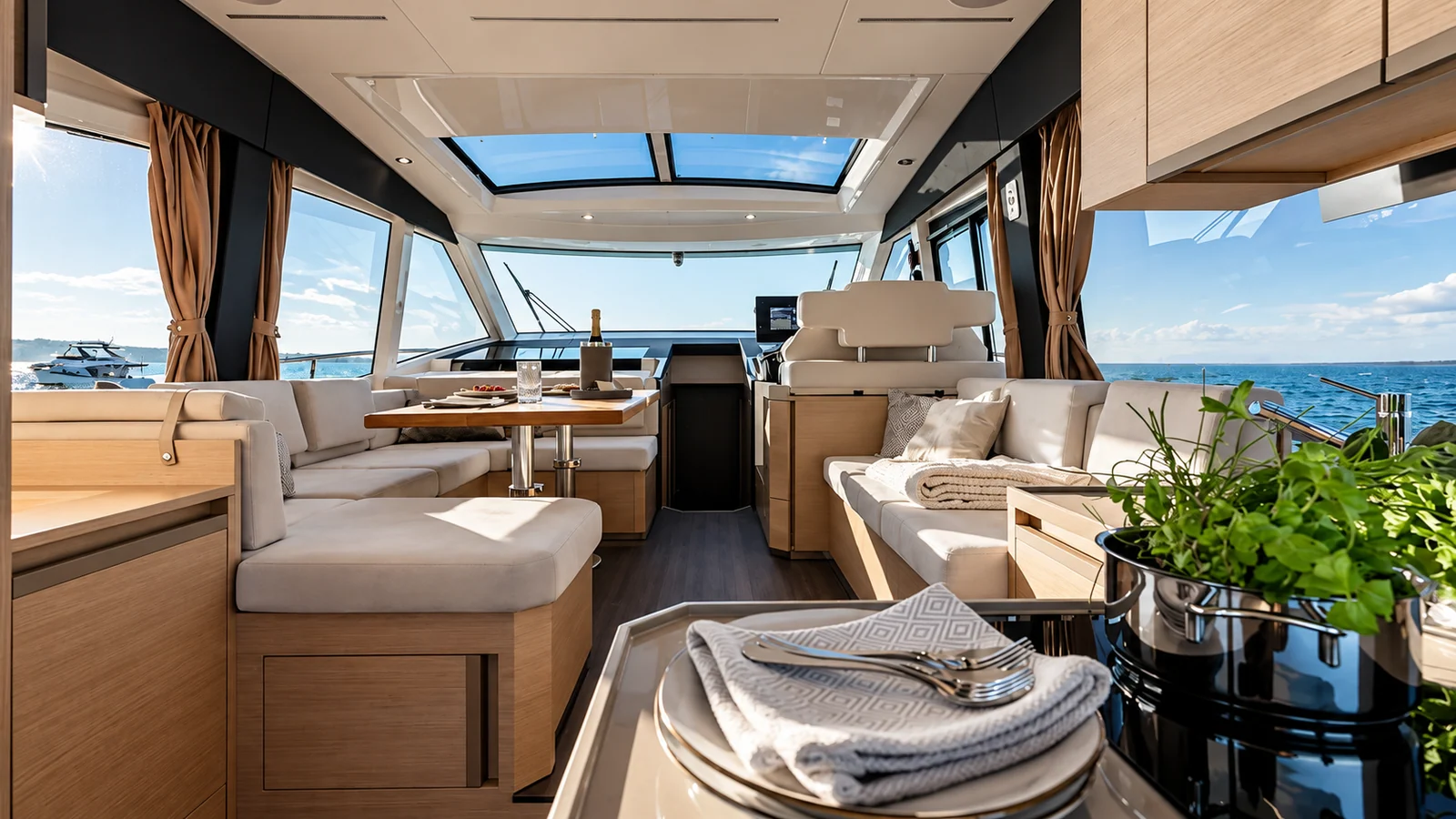
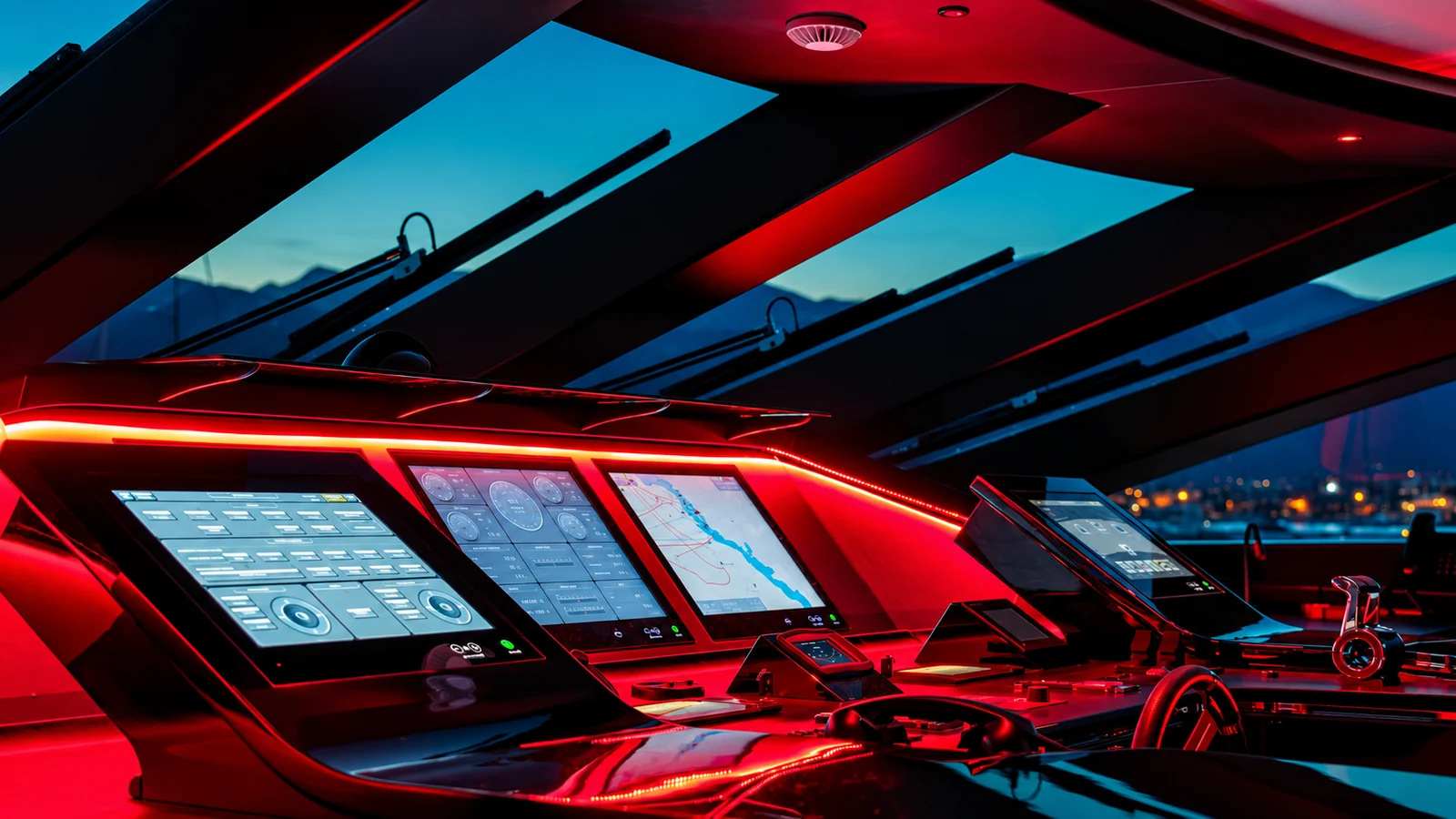
Before any practical session, spend time in the normal driving position. Consider the view, the seat and the relationship between the wheel, throttles, joystick and relevant displays. You should be able to understand where information appears and how the instructor will explain the selected operating mode.
Comfort and reach are personal. A control positioned conveniently for one owner may require another to stretch or change posture. Try the seating adjustment and discuss whether you expect to operate seated, standing or from different stations during the relevant parts of a trip.
Where the proposed installation includes multiple stations, the instructor can explain the relevant status indications and any control-transfer procedure specified for that system. The purchase-stage aim is to understand the supplied arrangement and plan proper training. Operating steps belong to the applicable instructions and supervised familiarisation for the actual installation.
Plan the introduction around your home berth
Your usual marina gives the learning a practical destination. Share the berth layout, typical access and the assistance you expect to have. The instructor and captain can decide how to structure appropriate practice and which conditions are suitable for it.
Allow time for questions between sessions. Owners often find that an explanation becomes more meaningful after they have experienced the yacht's response under supervision. A progressive introduction can connect the controls, the vessel's movement and the available view without rushing several new things into one demonstration.
Include the people who will regularly help aboard where appropriate. Their position, communication with the helm and understanding of the day's arrangements contribute to a coherent operation. A yacht described as suitable for single-handed use still needs an operating plan suited to its owner, location and circumstances.
Understand the boundaries of each function
During familiarisation, ask which conditions and limitations the manufacturer specifies for the installed system. The instructor should also explain how to recognise its status, where the relevant information is documented and what further practice is needed. This gives the new owner a clear basis for continued learning.
If additional assistance features are included, address each by its proper name and confirmed scope. Different functions may have different requirements. Keeping the discussion specific prevents a broad phrase such as assisted docking from becoming the entire understanding of the equipment.
The handover should leave you with the appropriate documentation and a clear contact for further instruction or technical questions. Agree what training is included in the purchase and what can be arranged afterwards. A defined programme makes familiarisation part of a well-prepared acquisition.
Let familiarity become part of the pleasure
Owners who enjoy taking the helm often value the process of learning a new yacht. The controls become familiar, the view from the station makes sense and the relationship between intention and response becomes clearer through appropriate practice.
When choosing between candidates, assess how convincingly each can support that process. The equipment, helm ergonomics and available professional introduction all contribute. A well-matched arrangement lets your experience develop into a confident relationship with the yacht, adding another rewarding dimension to the ownership ahead.