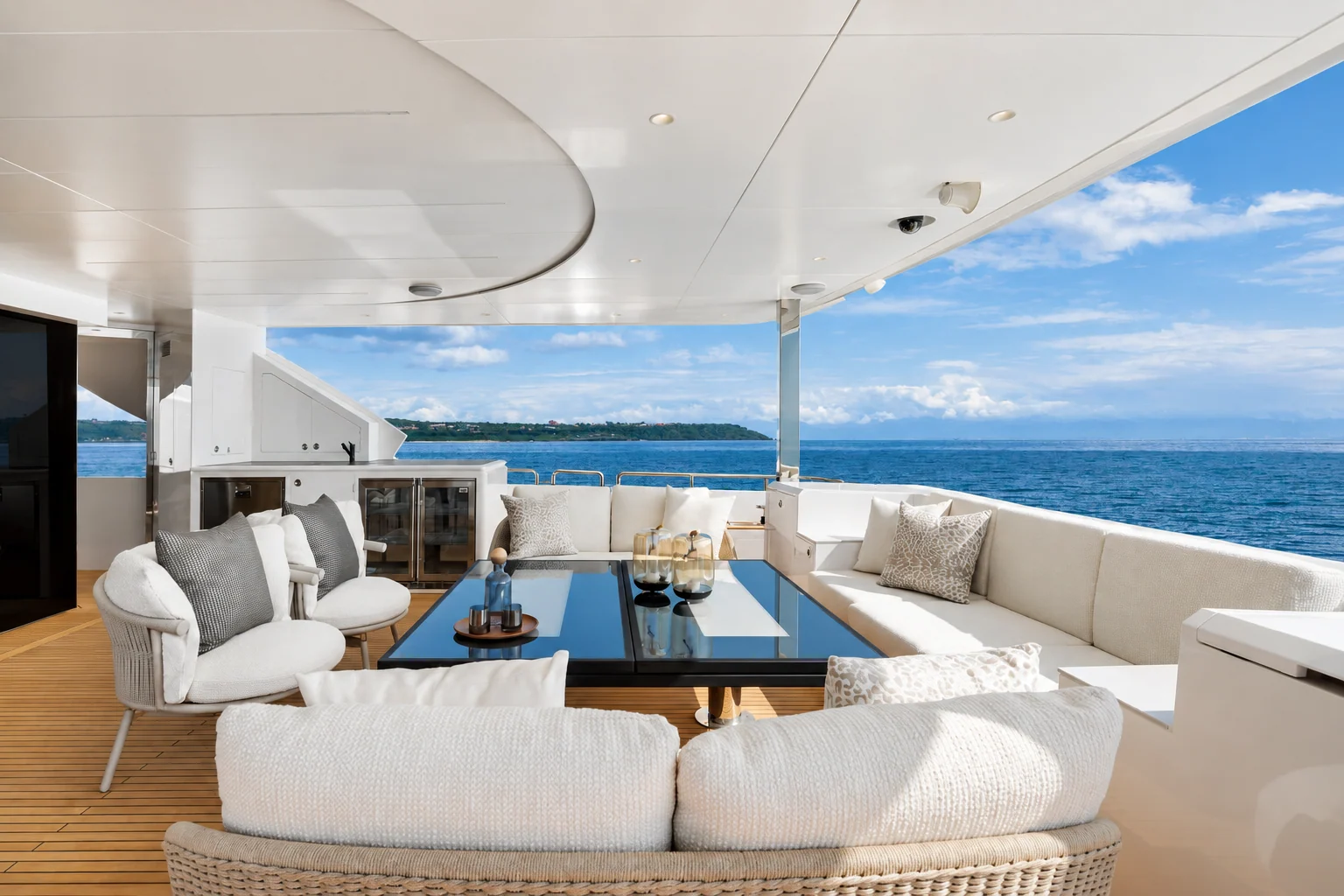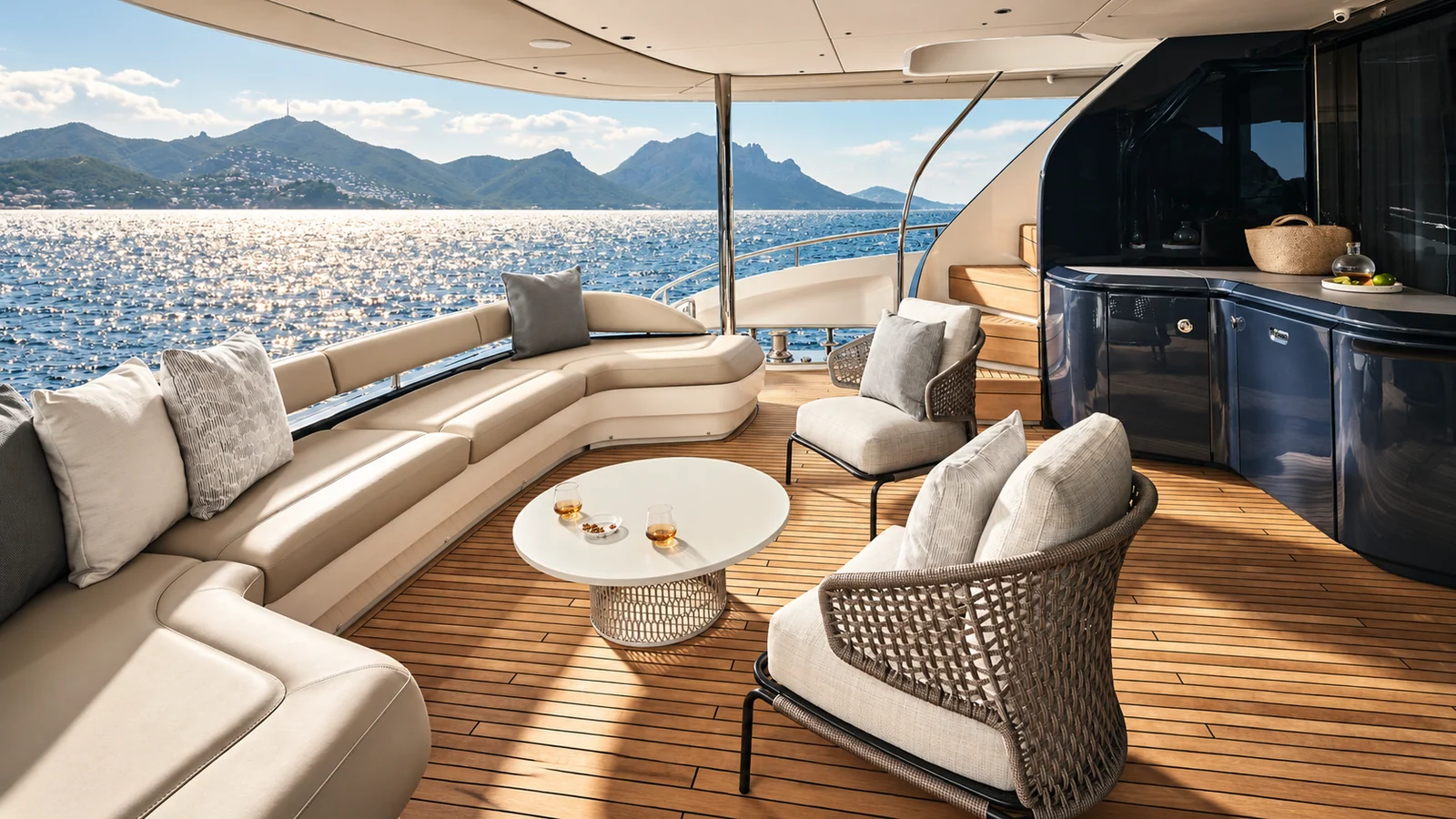
An interior photograph can make evening aboard look wonderfully inviting. The room has a warm atmosphere, surfaces seem carefully balanced and the seats suggest a long conversation after dinner. During a purchase, it is worth discovering how that setting feels through the activities you want to enjoy there.
Reading, preparing food and relaxing together ask different questions of the light. Experiencing the actual arrangement helps you understand how the yacht supports those moments, alongside the appearance that first attracted you.
Liveaboard suitability is the relevant catalogue context. The detailed lighting assessment belongs to the supplied fixtures, controls and room configuration on the individual yacht, with the technical team explaining the installation and any proposed changes.
Begin from the seat you would choose
If you enjoy reading aboard, identify the place where you would naturally sit. During an appropriate demonstration, experience the light there from that position. The room's overall atmosphere and the view of a page are different parts of the same evening.
Ask the representative to explain the lighting intended for that use and any adjustment provided by the actual installation. The equipment should be demonstrated by the responsible person within its intended operation. Your contribution is an account of what feels comfortable and what you want to understand better.
Look at the relationship with neighbouring seats. One person may read while another prefers a quieter setting for conversation. Consider whether the proposed arrangement offers a way to accommodate the household's real preferences together.
Agree whether the demonstration will show the room in conditions relevant to the evening you described. A visit with substantial daylight can answer some questions while leaving the installed lighting's contribution harder to separate. Ask the representative to identify what is being demonstrated and what would need another occasion or a supported design review. Keep the supplied furniture and finishes identifiable at the same time, so a pleasant lighting impression remains connected to the actual room in your proposal.
This gives lighting a human scale. The fixture list becomes connected to a place you want to occupy, an activity you value and the people who share the room.
Visit the working surfaces as well
The galley and other surfaces used for ordinary tasks deserve their own attention. Imagine the preparation you expect to do there and ask to see the lighting arrangement applicable to that use.
Stand in the position you would occupy and notice what you can see on the relevant surface. The representative and technical specialists can explain the intended provision and assess any concerns. The question should relate to the real cabinetry, equipment and fixtures in the proposal.
A small object, sample or other suitable reference can sometimes make the discussion more concrete, where the viewing permits. The aim is to experience the working area through an ordinary action rather than its appearance from across the room.
The LYRA catalogue helps identify boats suited to spending extended time aboard. The evening usefulness of their rooms becomes clearer when individual tasks receive attention alongside the design photographs.
Let the room settle into the evening
Once the practical questions are understood, experience the shared space as a place to remain. Sit with a companion where you expect to spend time and look at the relationship between the illuminated areas, the surrounding finishes and the view beyond the windows.
The atmosphere may feel different from a photograph made under another set of conditions. Ask which lighting state is being demonstrated and which equipment belongs to the supplied specification. Optional decorative pieces should have an identifiable status.
Consider the transition between activities. Dinner may give way to reading, or a conversation may continue while someone moves towards a cabin. The representative can explain the ways the installed controls support the intended room uses.
The owner should understand the arrangement at a practical level, with any technical assessment or alteration handled by the appropriate specialists. A personal preference becomes a useful design brief when it can be described through the actual evening you want.

Preserve the experience in the specification
If lighting matters strongly to your purchase, record the fixtures, arrangement and relevant observations with the project information. The responsible team should make clear which version of the room and equipment has been assessed.
Changes to furniture or finishes may give you a reason to revisit the demonstration. A reading seat moved to another position creates a new relationship with the surrounding installation. The design and technical teams can assess the completed proposal together.
At delivery, ask for an appropriate introduction to the installed controls and applicable information. The people using the rooms should understand the arrangement intended for their ordinary activities.
The reward appears in familiar evening moments. You find a comfortable place for a book, prepare something in a galley you understand and settle into a room you enjoy sharing. Choosing the light through those experiences gives the yacht's interior a more personal meaning, allowing the atmosphere you admired to become part of the life you actually live aboard.