A part of the yacht can begin the day as equipment space and later become a place the company enjoys close to the water. The appeal lies in that changing role. During selection, the owner should understand how the actual design connects tender storage, preparation and the appropriate use of nearby guest areas.
Tender Garage and Water Toys Facilities are the relevant catalogue considerations. They introduce practical facilities that may share space or routes within a vessel. The exact configuration and professional operating arrangement determine which uses belong together and how the day moves between them.
See the space with its equipment in place
Begin with the yacht's normal stored arrangement. The actual tender and selected equipment should be identified in the proposal, including the dimensions and associated items relevant to their carriage. The yard and captain assess compatibility with the vessel and handling installation.
The owner can look at how that state relates to everyday life aboard. Which guest areas are available, where do people pass and what role does the neighbouring space have? The appropriate use should be explained by the qualified people responsible, with the configuration shown clearly.
This gives the facility a physical meaning beyond its name. A garage occupies part of the yacht's architecture, and its relationship with the company depends on the design. The buyer should be able to describe that relationship in the actual vessel being considered.
Understand the alternative state
Where a space has another intended use, the representative should explain the complete arrangement and any conditions relevant to it. The owner needs to know which functions are supplied, which are alternatives and which depend on a particular equipment package. Drawings and the specification should refer to the same version.
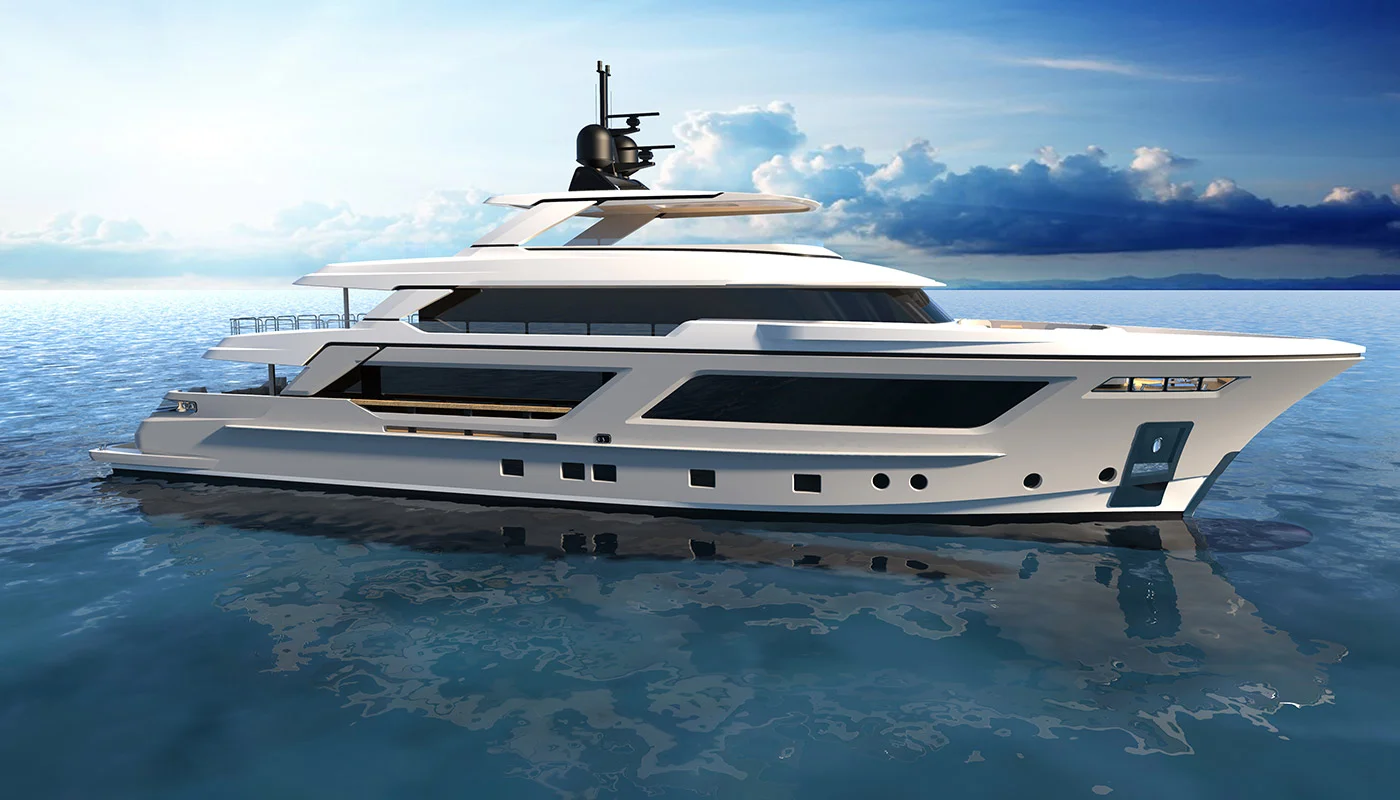
Catalogue example: the Cantiere delle Marche RJ Class 130, listed at 40.5 metres, describes carrying a tender from the upper deck and the possibility of using garage space as a beach club. It illustrates a design relationship between equipment location and guest space. The actual selected arrangement needs confirmation in the offered yacht.
For candidates with changing functions, experience the relevant states through a suitable demonstration where possible. Furniture, access and supplied pieces should be understood in each. The owner can then assess the guest experience while the professionals determine the technical and operating requirements.
In the LYRA catalogue, the garage and water-toy parameters help identify facilities to investigate. The individual design supplies the detail. Their presence should lead to an exact review of the installed package rather than an assumption that every activity is available in the same area at once.
Give preparation its own room in the day
The tender and equipment have a professional sequence around use. The captain and yard should explain the handling system, responsibilities and relevant requirements for the actual vessel. The owner needs an understandable account of how that work fits the intended programme.
Guests may be enjoying nearby areas while preparation takes place elsewhere, according to the captain's arrangement. The layout should be assessed through the actual people and routes involved. For example, some guests may want a conversation by the water while others are waiting for an equipment activity. Ask which seating and routes form part of the captain's arrangement for each group. Their towels and personal bags also need places within that setup. A beautifully furnished area becomes more intelligible once the different people and belongings have been placed in the scene.
The return of equipment deserves the same attention. Care and stowage must follow the documented requirements and professional plan. The owner should know when and how any alternative guest use becomes appropriate through that process, with the responsible people confirming the state of the area. If a second activity follows later, include that change in the discussion too. The day may involve several distinct arrangements, each with its own preparation, rather than a single transformation that remains fixed until evening.
The practical question is repeated use across a real outing. A feature that transforms beautifully in a photograph should also have a clear preparation arrangement within the yacht's household and operation. The people doing the work can explain what the actual proposal involves.
Choose the guest experience alongside the machinery
Once the area is appropriately prepared for guest use, consider why the company would enjoy spending time there. The seat, view and connection with other rooms make the space part of the yacht's social life. The owner should assess those personal qualities directly.
Compare candidates through the same intended activities and company. The equipment package and professional programme need their relevant assessment, while the owner evaluates the atmosphere and comfort of the supplied spaces. Both belong to one complete purchase.
The final proposal should preserve the chosen scope. Changes to the tender, equipment or furniture need review for their effect on the arrangement. The owner should understand which combination the yacht will actually deliver.
A well-considered shared area gives practical space a rich role in ownership. The equipment has an appropriate home, the work has a defined arrangement and guests enjoy the places prepared for them. The yacht's architecture supports the whole day through a sequence the owner can clearly picture.