
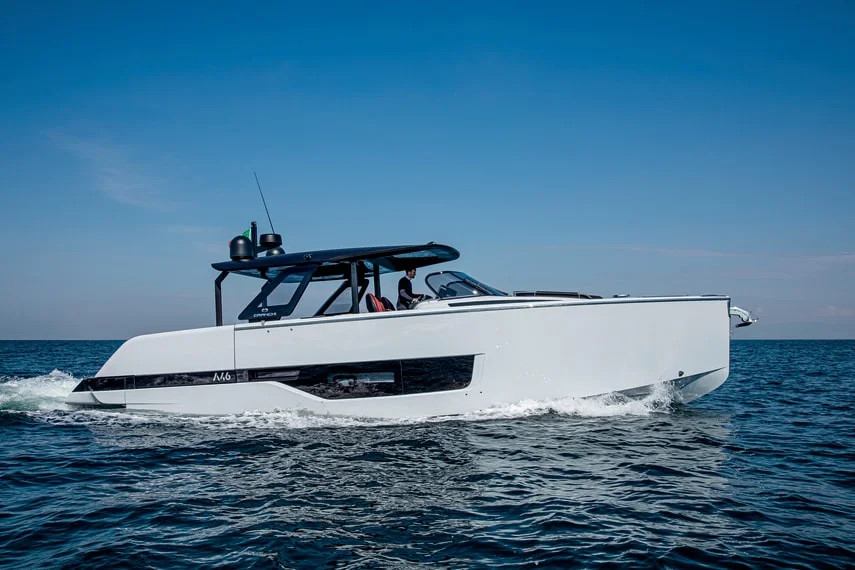
There is pleasure in seeing boats become possibilities for your own life. Let that initial response register. Then look across the suggestions and consider how much of the direction you already understand. Familiarity with the names and understanding of the ownership they could offer are different kinds of knowledge; each can suggest a different way forward.
Read the direction of the result
Start with the ownership idea that the suggested yachts appear to share. They may express a similar scale, a particular relationship between living spaces or a form of use you described. Ask which parts of your answers made that group relevant.
An explanation in ordinary language makes the group easier to use. You might recognise that the suggestions relate to regular coastal visits you described, while still being unfamiliar with the arrangements aboard. That identifies an appropriate level for the research: discover how those arrangements would feel in use, with the original intention available as a reference.
Differences within the group can be revealing. Boats responding to a broad intention may give that intention quite different physical expressions. Pay attention to a difference that catches your imagination. It can become the subject of the next comparison, especially when you can describe what you would enjoy understanding about it.
Keep the distinction between a concept and a specific boat visible. A concept helps organise what you might enjoy owning. Investigating a model, a particular specification and an available purchase opportunity involves further questions that an initial result cannot settle on its own.
Match the research to your present understanding
The next action depends on how well you understand the direction. If the group feels relevant but unfamiliar, explore a few identifiable models and look at how they express the common idea. Plans and visits can help make the differences tangible.
If one candidate attracts you immediately, record why. You can then discuss that reason alongside the other options. A strong reaction is useful information, particularly when you can relate it to the way you want to spend time aboard.
If the relationship between the suggestions and your answers is hard to follow, ask for that relationship to be explained. The difficulty may concern the wording of an answer or an unfamiliar concept. Understanding which of these needs attention lets you resolve the interpretation before arranging research around an assumption you have yet to recognise as your own.
An assistant or family office can prepare this work for an owner. The useful handover includes the stated preferences, the relevant model references and the questions still requiring the owner's view. It should preserve the distinction between information supplied by the owner and an interpretation made during preparation.
Find a distinction worth experiencing
An initial group often leaves room for a personal discovery. You may understand why the boats belong together while wondering which expression of the idea you would enjoy most. Choose a distinction you could actually explore during a visit. This gives the result a practical use beyond browsing: it helps determine what the experience aboard is intended to reveal.
The distinction might concern the experience of shared time, the character of a space or the participation you would enjoy. Keep it tied to an occasion you can describe. An impressive feature can remain interesting, but its role in the next comparison is clearer when you know what it is meant to contribute to your ownership.
Consider the horizon behind the result as well. Exploring ownership for a chapter of life and developing a continuing personal project can make similar concepts interesting for different reasons. Bring that intention to the discussion of models and acquisition routes. Questions about an eventual change of boat can then be identified in their own context and receive attention on their actual basis.
A term, a rationale and a physical arrangement call for different kinds of explanation. A professional can discuss the meaning of a category or the basis of a suggestion. A visit can give an arrangement a scale and atmosphere that descriptions leave abstract. Identify the kind of understanding you are seeking so the person helping you can prepare an appropriate response.
Keep your response to the result alongside its original basis. You might recognise one preference more clearly and discover another that remains open. A later consultation can then start from the learning already done, while the adviser still has room to question an assumption or introduce a meaningful alternative. The result becomes more useful as your own understanding develops around it.
Take the result into a consultation
When you consult an adviser, the result can become a starting document. Explain what feels right, what you do not yet understand and where your answers were provisional. This gives the professional a more developed picture than a model name alone.
The conversation can then move towards ownership questions that need individual attention. Your likely horizon, the geography in which the yacht would live and the part you want to play in the purchase can influence the next comparison. These matters deserve discussion in their actual context.
Ask for an explanation of why a specific model should progress. It may fit the concept well and still require a closer examination of the details important to you. The next piece of research should make that case clearer.
You can also decide how much of this work to undertake yourself. Some owners enjoy investigating models and arranging further experiences. Others prefer a professional to coordinate the work and bring back the choices that need their attention. The initial result can support either arrangement.
The range of suggestions matters through the possibilities it makes understandable. Once you can describe a direction and the experience or information you want next, the result has given the search a workable focus. That focus can be broad at first and become more specific through the research you choose to undertake.
Bring that focus to the next exchange. The original answers explain where the result began; your response explains where the enquiry should now go. Together they let an adviser prepare a consultation, a visit or a research task around something you already want to discover, carrying the excitement of the initial selection into a more personal understanding of ownership.
