A yacht can make an immediate impression through a photograph and a few specifications. I welcome that moment. It draws a buyer toward a style of life they may soon make real. A model page presents the design and may show a particular configuration; an exact available yacht or sales offer is a separate proposition. Those things deserve to be read separately.
In the LYRA catalogue, the initial facts help an owner find a manageable field of possibilities. They do not have to answer every question at once. A strong search begins when the owner notices which attractive qualities need to be connected to a particular yacht, a particular family and a particular offer.
Which yacht does the number describe?
Length and cabin count are often stable enough to orient the first comparison. Speed, range, displacement and even accommodation can depend on engines, options, load or layout. A photograph may show a different interior package from the yacht being offered. A published figure may come from a test craft rather than the exact build under consideration. The number is not useless; its job simply changes according to the source behind it.
I would ask for a current, dated specification of the offered yacht, then place the model's general presentation beside it. Which options are included? What is still selectable? Where are the numbers based on a defined test condition? Where do they represent an aspiration for the design? These questions turn an attractive model into an intelligible proposal.
This matters especially with a yacht still being built. A buyer may have meaningful influence over layout and equipment, while the final performance and delivery details remain tied to an agreed configuration. In a previously owned yacht, the installed equipment, condition and maintenance history deserve their own evidence. One model name cannot carry all of those facts.
Can the plan hold a normal day?
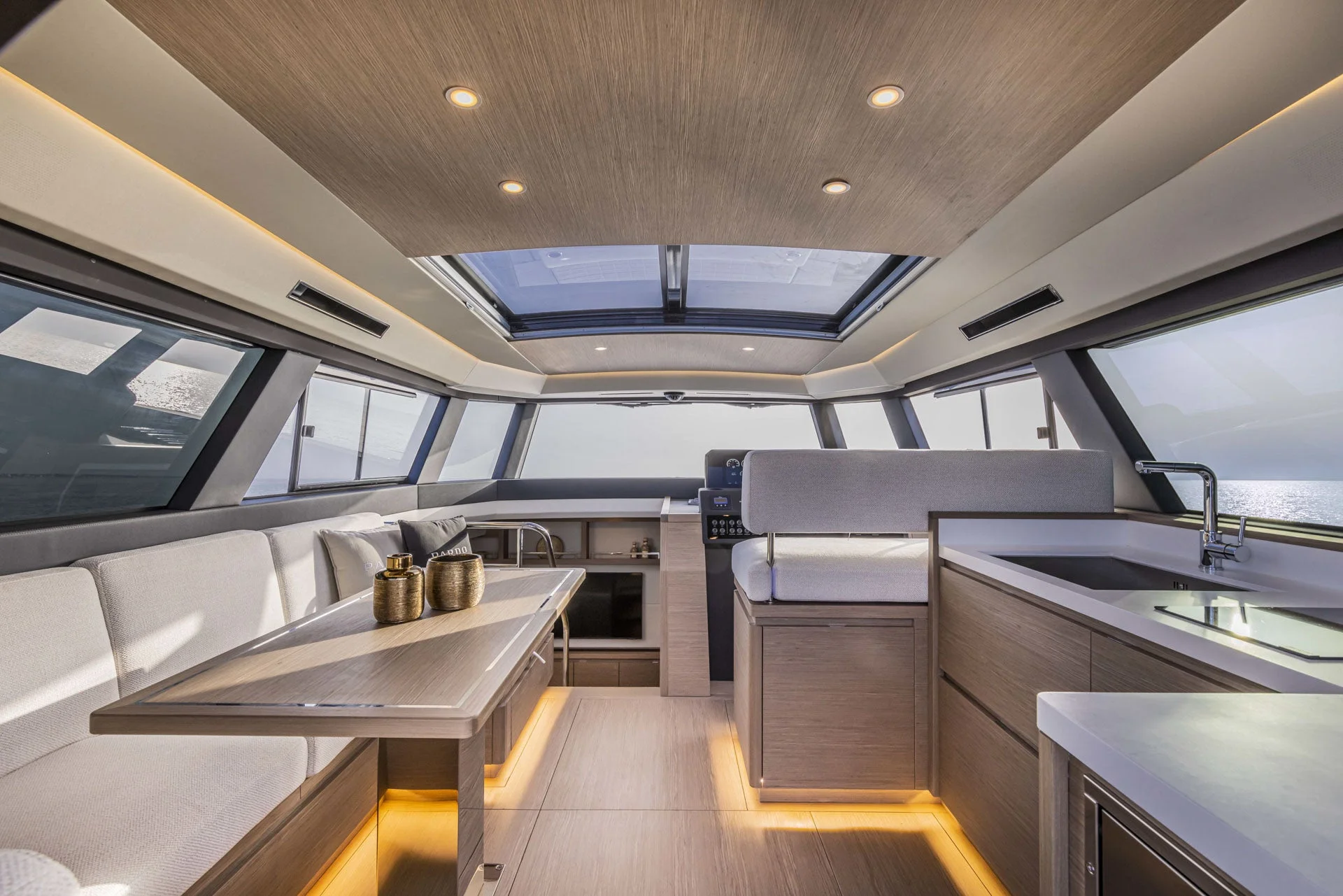
Drawings can show that a yacht has four cabins. They are less able to show how eight people pass one another after swimming, where wet towels go, or whether breakfast in the cockpit interrupts someone still asleep below. I like to walk through a day rather than inspect a plan as a set of rectangles: arrival, departure, time at sea, swimming, lunch, quiet hours and return to berth.
That sequence changes what we notice. Storage near the boarding point might matter more than a decorative detail in the saloon. The route from a guest cabin to a bathroom may matter when the yacht is full. A family that expects children to spend the whole afternoon in the water will use exterior circulation differently from a couple planning long passages.
Neither a plan nor a photograph should be blamed for these omissions. They are invitations to ask more precise questions during a viewing. In the LYRA yacht-selection process, those questions become part of the brief, not an afterthought once a model has already become the favourite.
What does a sales phrase mean in practice?
“Easy to handle” may describe good visibility, responsive controls or equipment that assists docking. It says little on its own about the owner's experience, berth, training, weather or support. “Long-range” needs a speed, load, reserve and comfort expectation. “Family-friendly” becomes meaningful when the family's ages, privacy and daily rhythm enter the picture.
These phrases often point toward real design strengths. I prefer to translate them into an experience the buyer can observe. If easy handling is central, watch the yacht manoeuvre and ask who performs each task. If range is central, examine the operating assumptions behind a representative journey. If family comfort leads, spend time aboard with the intended use in mind. A quality becomes more persuasive when it survives that translation.
Price requires the same discipline. The advertised figure may describe a base configuration or an exact offered yacht. Delivery, selected options, commissioning and owner equipment can sit in different parts of a proposal. The buyer should be able to see what will be ready for use at handover and which commitments remain outside the quoted scope.
Build confidence in layers
No brochure needs to become a survey, contract and sea trial at the same time. I would build confidence in layers: catalogue data for discovery; a current specification for the exact yacht; plans and a viewing for spatial fit; suitable performance evidence for the intended use; and qualified technical, legal or financial advice where the transaction calls for it. Each layer has a different authority.
The sequence also preserves excitement. An owner can admire a design without pretending to know everything about it. As the questions become sharper, the yacht either earns a stronger place in the shortlist or reveals which alternative deserves attention. That is progress, not a loss of enthusiasm.
What specifications leave unanswered is ultimately personal: whether this exact yacht will make the owner's intended days aboard feel natural. The answer emerges from the meeting of design, configuration, evidence and lived use. That is a more rewarding foundation for a purchase than either a beautiful picture or an impressive number alone.