One person looks forward to the helm, the controls and learning the yacht. Their partner imagines a comfortable seat, the coastline and lunch together. Both can enjoy the same ownership when the purchase brief recognises those different pleasures. The operating arrangement should reflect the roles each person actually wants.
Single-Handed Operation focuses the search on owner involvement; Recommended Crew brings the support into view. The captain or instructor can assess an arrangement suited to the actual vessel, experience and intended use, with the partner’s preferred day included in the brief.
Put the preferred roles into words
The owner can explain which parts of involvement they enjoy and what experience they bring. Their partner should be equally free to describe the day they would like aboard. A clear conversation gives the adviser useful information before the yacht's layout and equipment are compared.
The partner may enjoy occasional participation, with the scope agreed appropriately, or prefer to spend the outing as a guest. The professional operating plan needs to be based on confirmed roles and available support.
Keep the people aboard and the people undertaking operating duties separately identifiable in that discussion. A partner who wishes to be a guest should appear in the plan in that role. The captain can then assess the support needed across departure, passage and return. This makes the assistance included in the proposed ownership arrangement explicit and gives both people a shared understanding of the day they are choosing.
This is a practical foundation for shared pleasure. The owner's enthusiasm for taking part can have its appropriate place, while their partner has a comfortable role that feels chosen. The yacht serves the relationship through an arrangement both recognise.
Assess support for the actual owner involvement
In the LYRA catalogue, single-handed suitability identifies models to explore for this kind of brief. The exact configuration, owner's experience and operating circumstances require professional assessment. The marker should be followed through to the vessel and systems being offered.
Recommended Crew introduces the support conversation. The captain can explain the team or assistance appropriate to the intended programme and how responsibilities will be divided. The owner should know which tasks they will undertake within that arrangement and which belong to others.
The home berth gives the discussion a concrete context. Share its actual layout and the arrangements available there, so the professionals can assess the complete visit. Departure, passage and return each need an understood plan for the people involved.
Give the partner an appealing place
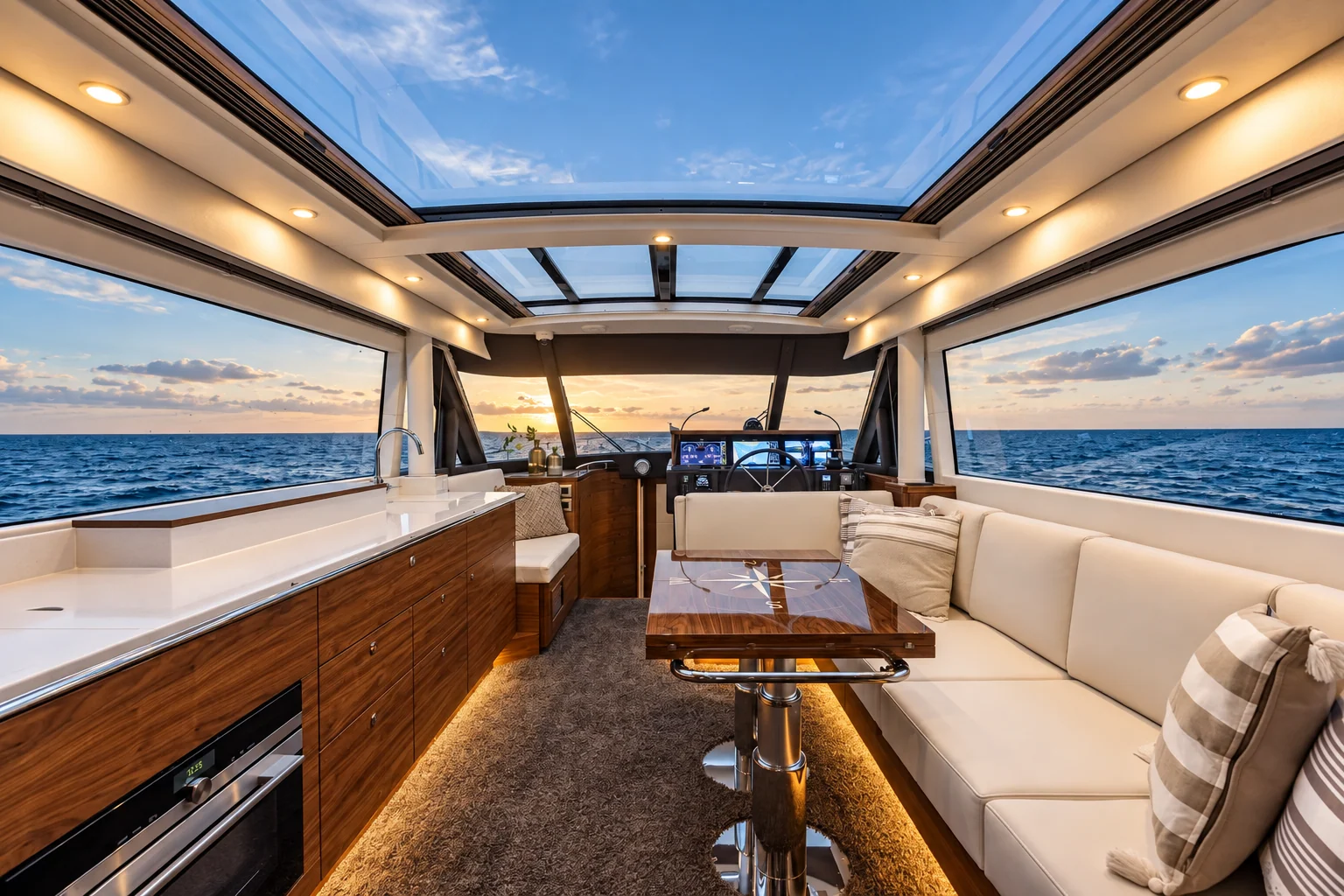
The partner's experience deserves direct attention during viewings. Where would they sit during the passage, enjoy a drink or read while the yacht is settled? Those places should feel welcoming in their own right.
The relationship with the helm can be particularly personal. Some people like sitting nearby and sharing the view with the person operating the yacht. Others enjoy a more separate guest area, with appropriate communication and movement under the captain's plan. The actual arrangement should suit the couple's preferences.
Try those positions together where practical. Seat proportions, shelter and the view from seated height can make one layout feel especially comfortable. These observations help the adviser understand why a particular yacht suits the pair beyond its equipment list.
The shared table remains important too. An outing may include different roles during operation and a fully shared experience once everyone settles for lunch. The layout should make that transition inviting, giving both people a place to enjoy the reason they came aboard together.

Let familiarisation support the chosen roles
The appropriate professional introduction should explain what each person needs to know aboard. The owner may have a more involved programme, while the partner receives the relevant guest briefing and any agreed familiarisation. The captain or instructor determines the scope for the actual vessel and use.
The guest introduction and any voluntary participation have distinct purposes. Both people should understand the information relevant to their agreed role, with the captain or instructor setting the appropriate scope. The partner can become familiar with the yacht as a guest while the owner develops the assessed involvement they enjoy.
The couple can then enjoy learning the yacht at the level each wants. Personal preferences may develop over time, with any change of role assessed and agreed through the proper process. The initial purchase should already support the arrangement they choose today.
Clear preparation also helps the visits feel personal. Belongings, food and the household routine can be organised around the couple, with professional support defined where it is part of the plan. The yacht becomes a familiar setting for both versions of the day.
Choose a shared experience with room for difference
When comparing candidates, describe the outing from each person's perspective. The owner should see an appropriate path to the participation they enjoy. Their partner should see a comfortable day they would happily repeat.
A yacht can bring those pleasures together through thoughtful selection and support. One person enjoys the satisfaction of involvement, the other the freedom to settle into the view, and both return to the same table. The purchase then reflects the life they want to share on the water.