An open helm keeps the owner close to the setting that makes boating appealing: light, the view and the movement of the yacht through the water. The place behind the windscreen has a particular role in that experience. Its proportions should suit the person who wants to spend time there, with a working environment assessed for the intended use.
Single-Handed Operation and climate suitability are relevant catalogue starting points. They frame owner participation and the period in which the yacht will be enjoyed. The actual glass, seat and surrounding structure then need a personal assessment supported by the right professionals.
Begin at your normal eye level
A screen looks different from the centre of the cockpit and from the position at the controls. Sit and stand as the representative explains the intended arrangement. Seat adjustment and posture determine where your eyes are in relation to the glass and its upper edge.
The view should be comfortable from the position you will use, with reach to the relevant controls assessed at the same time. A taller owner and a shorter partner may have different responses to one station. Those observations are useful to discuss with the captain or instructor developing the actual operating arrangement.
This is one reason to spend unhurried time at the helm during a viewing. The physical relationship between you, the seat and the screen gives the design a personal scale. It can help explain why one attractive yacht feels particularly suited to your involvement.
Understand the protection as a complete arrangement
The windscreen sits within the surrounding layout. Side glazing, the console, seating and any overhead structure contribute to the space being assessed. Establish which elements are included in the offered configuration and how they relate to the demonstration yacht.
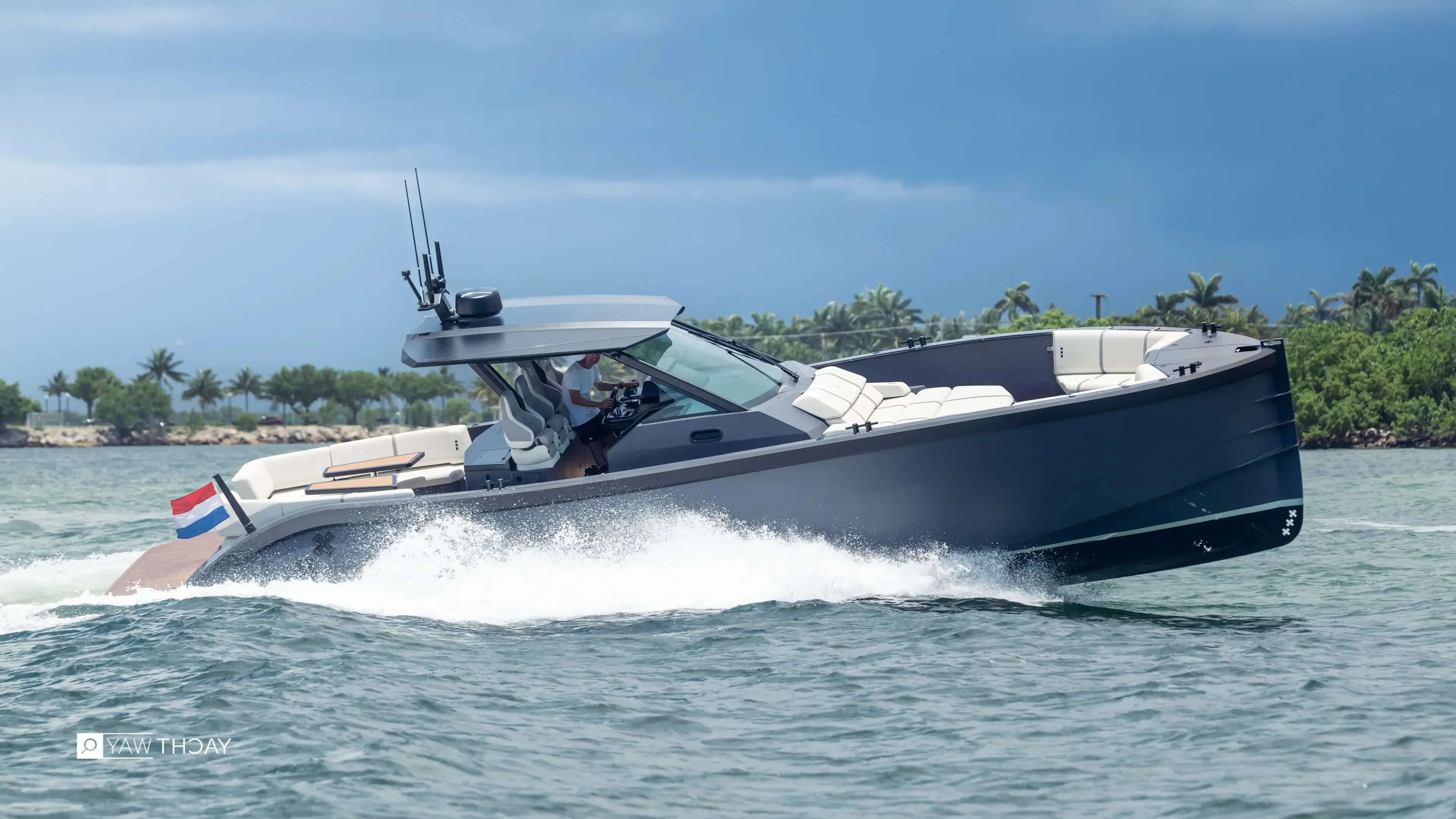
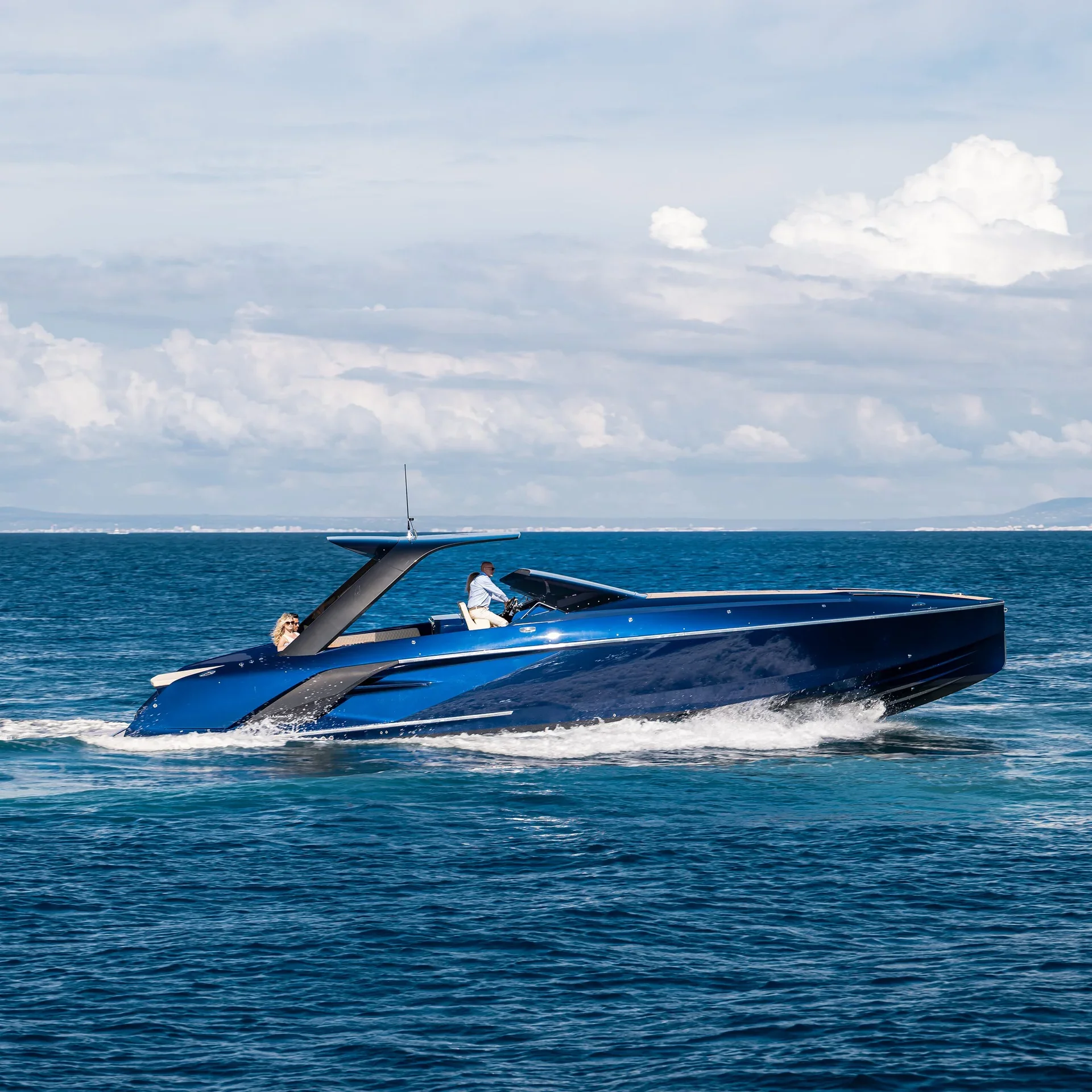
Catalogue example: the Frauscher 1414 Demon, listed at 13.91 metres, describes a frameless tinted windscreen and carries the single-handed suitability marker. It illustrates a specific open-helm design to experience through the owner's actual position, with the operating arrangement professionally assessed.
For candidates with optional arrangements, ask the representative to identify the exact proposal. A photograph of one version should be connected to the yacht you intend to purchase. The relevant glass, seat and structures belong to the same specification.
Keep those details together when discussing the preferred candidate. If a different seat, screen or surrounding element is proposed, ask which observations from the demonstration still apply and what needs another assessment. The physical position you enjoyed has a specific configuration behind it. Tracing that configuration to the offer helps the owner preserve the qualities that made taking the helm appealing in the first place.
Climate suitability in the LYRA catalogue helps introduce the intended season. The owner should describe the conditions and periods in which they expect to enjoy the yacht, so the professional assessment has a concrete use in mind. The broad selection parameter and the personal experience serve different parts of the choice.
Arrange a demonstration with a clear purpose
A suitable trial can help address questions that remain after the stationary viewing. The captain determines the appropriate operation and conditions, with the owner experiencing the positions made available under that arrangement. Explain beforehand that the helm environment is an important purchase question.
Keep observations specific to the actual position and circumstances. The owner can describe comfort, the view and the experience of remaining at the station. Technical and operational conclusions should come from the qualified people assessing the vessel.
If the proposed configuration differs from the trial yacht, those differences need their own explanation. The adviser can arrange the relevant next assessment rather than treating every version as equivalent. The owner should know which evidence supports the final choice.
The partner or regular companion may also use a nearby seat. Consider the companion’s place in its own right. Record where they sat and what they experienced in that position, with the demonstration conditions understood. The owner’s impression at the controls gives a different point of view from the one beside or behind it. Comparing both lets the couple describe the passage they would like to share more precisely, while the professional assessment addresses the vessel and appropriate use. The layout should welcome the people who will return to those places throughout the season.
Give personal comfort a place in the final decision
Compare the leading candidates through the same intended use. A station that invites you to spend time at the controls has a direct relationship with the pleasure of ownership. Record the seat position, view and supplied arrangement that made the experience appealing.
The captain or instructor should establish familiarisation appropriate to the actual yacht and owner's experience. That preparation connects the physical fit with a clear understanding of the equipment and role aboard.
An open motor yacht can offer an especially immediate relationship with the coast. Choosing the helm carefully gives that attraction a comfortable place for the owner, ready to become familiar through professionally supported use. The view ahead then belongs to a yacht selected around the way you want to enjoy it.