
On ordinary days aboard, the room is a place to work. A laptop, papers and a comfortable chair give part of the week a practical home. When friends join, the same room becomes their cabin. A well-designed arrangement can give both uses a proper place within one yacht, with the change understood before the purchase is fixed.
Overnight accommodation and Liveaboard suitability are relevant starting parameters. They connect the people staying aboard with the longer rhythm of life on the yacht. The dual-purpose room then needs to be assessed through two complete experiences: working there and sleeping there.
Give the working day a credible desk
Begin with the equipment and activities that define your work. A short call and several hours reviewing documents ask different things of a room. The desk, chair and available surface should suit the use you actually intend, with power and connectivity addressed through the relevant installation assessment.
Sit at the proposed position during a viewing and consider daylight, posture and space for the equipment. The room's location matters too. If others pass through it regularly or use nearby spaces, think about how the work would fit alongside their day.
Storage gives the room much of its usefulness. Papers, devices and accessories need a suitable place between sessions. A room that feels comfortable for sustained work will have a coherent arrangement for those items, rather than relying on every shared surface remaining clear elsewhere in the yacht.
Give the guest a complete cabin
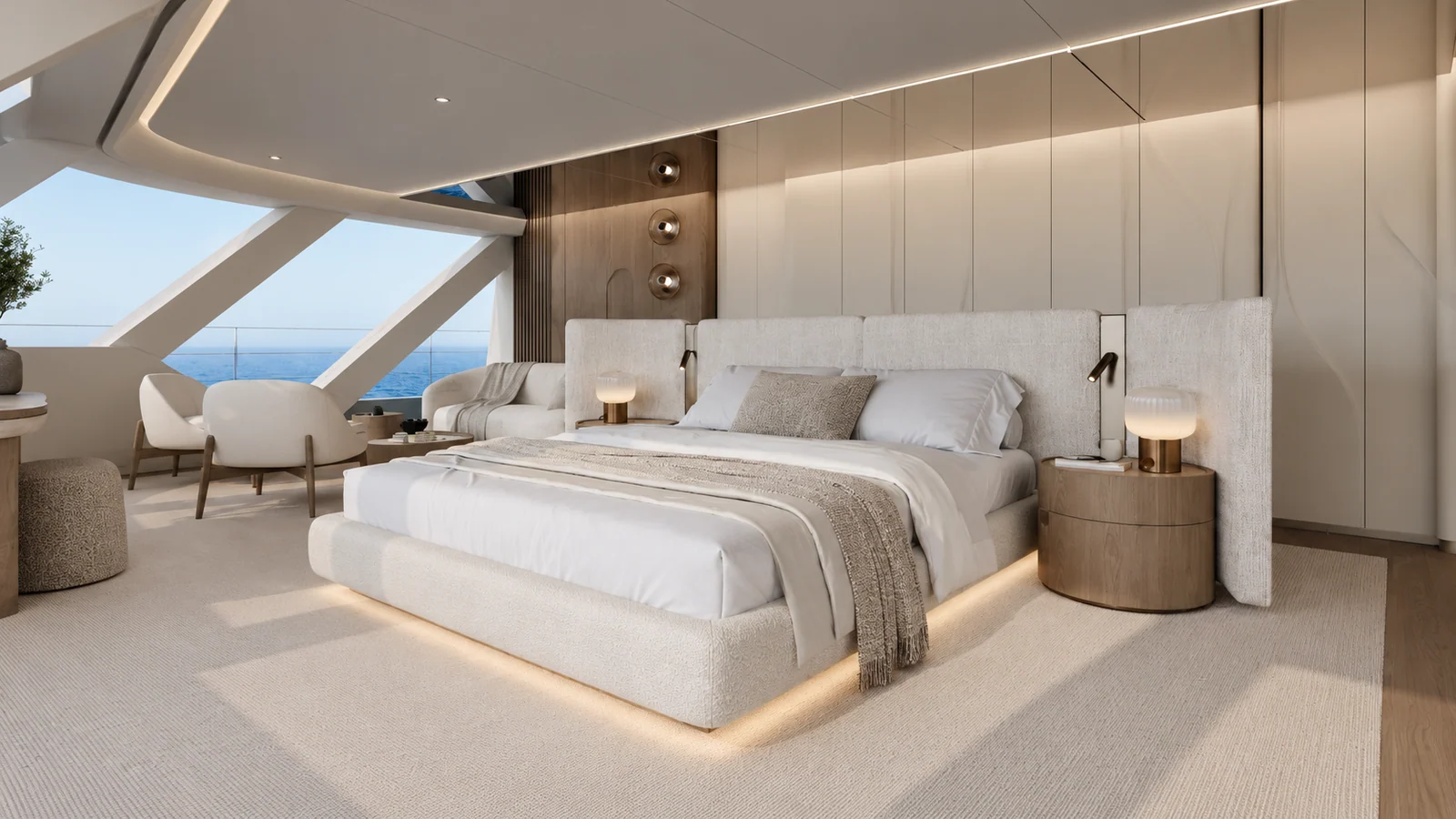
When the room changes purpose, assess it from the guest's perspective. The berth, access around it, lighting and space for personal belongings all contribute to a pleasant stay. The guest should be able to settle into the room with a clear place for their own things.
Bathroom access belongs to that experience. Identify the facilities serving the cabin and the route used in the evening and morning. Overnight capacity in the LYRA catalogue begins the accommodation comparison; the exact plan shows how the proposed guest will live aboard.
Catalogue example: the Mishi 88, listed at 26.82 metres, describes a midship cabin with bunks that converts to an office. It illustrates a room designed around two functions, with the actual conversion and equipment to be confirmed for the version under consideration.
For yachts with such arrangements, spend time in each state where a demonstration is available. A drawing can show the principle, while the occupied room reveals the proportions around the desk and sleeping places.
Follow the belongings through the change
The conversion involves more than furniture. Work equipment must be put away appropriately, bedding has to be available and the guest needs usable storage. Establish where each set of items belongs when the other purpose takes over.
This is particularly relevant to personal or confidential work material. The owner should have an appropriate storage and information-handling arrangement before guests occupy the room. The practical plan can then protect privacy while making the cabin welcoming.
Ask the representative to explain the physical change from beginning to end. Identify which pieces move, where they are stored and who will prepare the room. The time and effort involved help determine how naturally the feature would fit the frequency of your guest visits.
A room changed occasionally may suit a different arrangement from one converted every weekend. The useful comparison keeps your own calendar in view. Flexibility earns its value through the way you would actually use it.
If work continues during the guest’s stay, give that period a place in the plan too. The owner may have another suitable working position or arrange the work around the visit. Explain that preference when comparing layouts. It helps the room feel like a complete guest cabin while occupied and keeps the working routine understandable elsewhere in the yacht.
Distinguish a conversion from a layout choice
Some yachts offer an office or a cabin as alternative factory layouts. Others provide a room intended to change between those roles during ownership. The exact proposal should make clear which kind of choice is being offered.
Where a conversion is important to the purchase, its furniture, equipment and supplied pieces should be identified in the specification. The yard can assess the complete design and explain any relevant limitations. This gives the owner a confirmed arrangement to evaluate.
The room also sits within the yacht's wider accommodation. Place the usual company in the complete cabin plan, including the periods when this space is used for work. You can then see how the flexible room supports the ownership pattern across the season.
Follow the return to office use as well. Guest belongings have left, bedding needs its agreed home and work equipment returns to the desk. Understanding both changes shows how the room would fit the frequency of visits you expect, with each use prepared deliberately.
Let both uses feel intentional
The strongest dual-purpose room feels credible in each role. Work has a comfortable setting on ordinary days, and guests arrive to a cabin prepared around their stay. The transition has a known place for furniture and belongings, with the appropriate people responsible for it.
Choosing that arrangement carefully gives the yacht another way to fit your life. The same space can support a productive morning and a friend's weekend aboard, each as an intended part of the purchase.