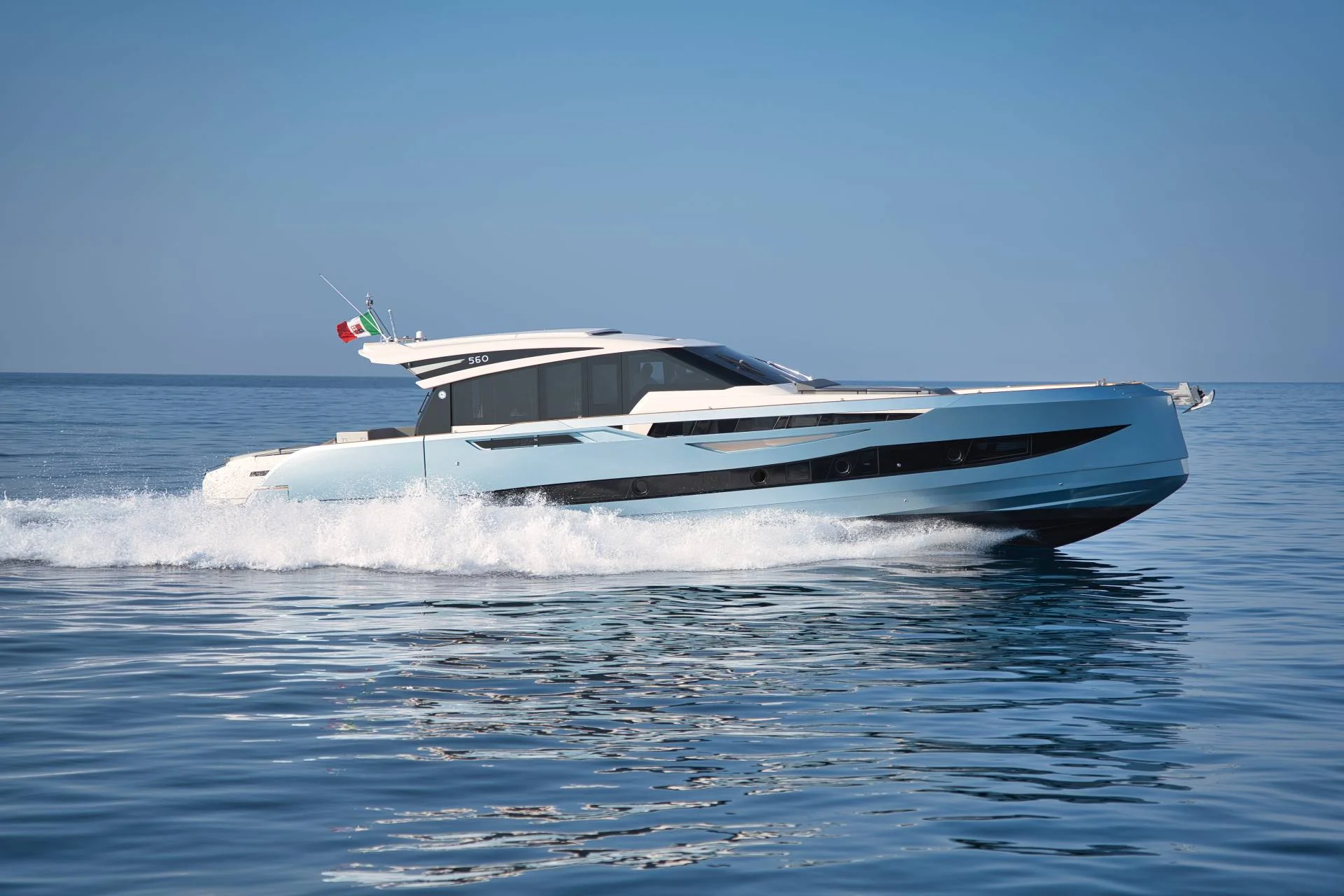
There is a particular pleasure in watching the coast from a warm seat aboard your own yacht. Lunch takes on a different character when everyone settles around an indoor table, with the shore remaining part of the view. An enclosed saloon can make a cooler-season outing an anticipated part of ownership, giving the day a comfortable centre in which to spend time together.
Climate suitability and the Travel marker are two useful starting points in the LYRA catalogue. They help frame a search around the waters and months you want to enjoy. Within that selection, the saloon's arrangement determines how pleasantly the season can expand.
Begin with the seat you will actually use
Wide windows look impressive when you stand in the middle of the saloon. Sit down and the experience becomes more specific. A window's lower edge, the height of a backrest and the depth of the sofa determine how much of the sea remains in view. For an owner imagining unhurried afternoons aboard, that seated view deserves time during a viewing.
Try the dining table as well as the lounge. Someone reading in one corner should have suitable light, while people eating together benefit from seeing the water without constantly leaning forward. A protected interior feels especially rewarding when it preserves the visual connection that brought everyone to the yacht.
The helm's relationship to this space also matters. Some arrangements keep the person navigating close to the conversation; others give the helm a more separate position. For your regular company, decide how much togetherness you want during the coastal passage and how much separation helps the skipper concentrate.
Warmth is a property of the whole room
For cooler months, discuss the installed heating and ventilation with reference to the complete saloon. Glazing, doors, air distribution and the route people take in and out all influence the result. A heated seating area beside a frequently opened door will feel different from a more enclosed room with a small entrance zone.
Bring the question down to a recognisable day: two people reading, someone making coffee, a jacket drying after a trip ashore. Where will those activities happen? A sensible place for outerwear keeps damp clothing away from upholstery. Ventilation helps the room remain pleasant as people cook and spend longer inside. The layout should give these everyday items somewhere to belong.
Owners who intend to use the yacht in cooler weather can ask to experience the interior in comparable conditions where practical. Even a harbour visit can reveal draughts around a door or how the ventilation sounds beside a favourite seat. Weather and passage suitability remain decisions for the skipper; a comfortable saloon improves life aboard within those decisions.
Spend a little time in the room while the relevant installed systems are being appropriately demonstrated. The way conversation feels at the table or quiet reading feels in a particular seat can be useful to describe afterwards. Bring those observations to the technical team, who can explain the supplied arrangement and assess questions that need more than the impression gained during a visit.
The opening between two ways of living
Enclosure can coexist with an easy summer arrangement. Sliding doors, opening windows and retractable panels offer different degrees of connection to the cockpit. The useful comparison concerns the room in both states: closed for a cool afternoon, open for lunch on a warm day.
Catalogue examples: the Cayman Yachts 560 Sedan, at 17.16 metres, describes a main deck with retracting closures and glass panels. The Marex 440 Gourmet Cruiser, listed at 13.7 metres, describes sliding access and an enclosed saloon with alternative interior arrangements. These examples show how protected living can be approached at different lengths; the selected version determines the precise arrangement.
With yachts of this kind, examine where the opening elements go. A door stacked beside a chair can affect that seat; a panel folded away can change the passage to the cockpit. The best arrangement for your use feels composed in both configurations, with furniture and circulation that continue to make sense.

Put a cool-weather lunch into the viewing
Imagine your regular company coming aboard after a walk ashore. They need places for coats, a comfortable table and a way for someone to prepare a simple meal. The saloon should accommodate that small sequence with ease. You may discover that a well-positioned dining area means more to you than additional outdoor seating.
Include the end of that same afternoon. The company leaves its seats, collects belongings and moves towards the next part of the outing within the operator's plan. A comfortable view from the table, appropriate places for coats and an understood route through the room can make the saloon feel welcoming throughout the visit.
The intended coastal base belongs in the seasonal brief too. Establish the relevant berth and support arrangements with the actual providers for the dates you hope to use the yacht. The operator can assess the programme in that setting, while the owner understands how a comfortable interior connects with the shore visit and return. Coastal suitability then has a practical role alongside the climate criterion.
A longer cruising season begins with choosing the experiences you would enjoy outside high summer. A saloon that supports them gives the yacht a broader place in your calendar. You gain more kinds of days to look forward to, each with its own view through the glass.