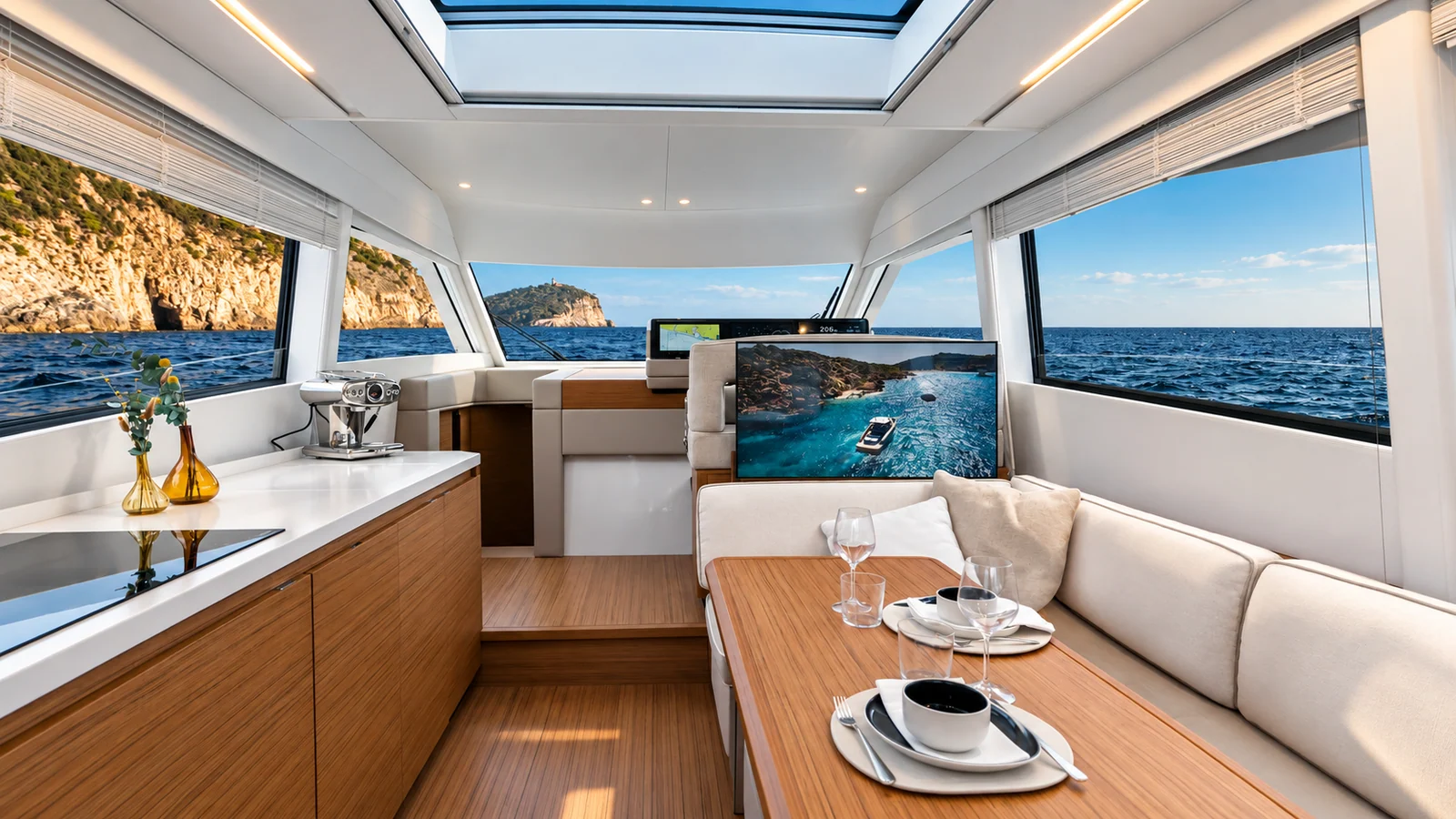
The galley begins to feel personal when the equipment reflects how you want to eat aboard. A proper oven, a preferred coffee machine or the refrigeration needed for a longer stay can each contribute to that experience. Before the order is fixed, those wishes need to be connected to exact appliances and a workable layout.
The footprint is a useful starting point. An appliance has dimensions while closed, space it occupies during use and installation requirements the yard must accommodate. Bringing all three into the purchase discussion helps turn an appealing kitchen concept into a coherent part of the yacht.
Describe the work before choosing the appliance
Begin with the person who will regularly use the galley. The owner, a family member or a professional chef may have different preferences about equipment and working space. Their intended meals and routines give the specification a practical direction.
A frequent cook may have a clear preference for the oven arrangement or the location of refrigeration. A professional service programme may call for a different scale of storage and preparation. The brief should describe those uses so the yard can propose equipment and an arrangement suited to them.
Full-Service Galley and the listed starting price are relevant catalogue considerations where that level of kitchen provision forms part of the search. In the LYRA catalogue, the galley suitability marker helps introduce the subject. The exact appliances, layout and purchase scope then need to be established for the yacht being ordered.
Look at the open door
A refrigerator can fit within its cabinet while its door opens into a route someone needs to use. A dishwasher may require space for a person to stand while loading it. The useful drawing shows these operating positions alongside the closed equipment.
Discuss the galley with the doors and drawers represented in their open states. Where will the cook stand? Can the relevant storage still be reached? Does someone entering the room interrupt the task? These are questions about the complete working arrangement.
The same thinking applies to smaller equipment. A coffee machine may need access for filling, cleaning or removing a container. A preferred appliance should be assessed using its exact model and documentation. That gives the yard a concrete item to incorporate into the design.
Worktop space deserves to remain visible in the conversation. Installing another appliance changes the surface available for preparing and serving food. The person using the galley can help identify which areas need to stay clear for the meals they intend to make.
A familiar appliance from home can make the brief easier to explain. Its appeal may come from a particular function, the way it opens or the routine built around it. Describe that preference to the yard before treating the domestic product as the final choice for installation. The proposed onboard equipment needs its own assessment against the vessel and its systems.
Let the yard resolve the installation
The equipment's installation requirements belong with the qualified yard and relevant specialists. Power supply, ventilation, clearances, mounting and service access should be assessed for the chosen appliances and vessel. The owner's brief states the desired use; the technical design establishes how it can be delivered appropriately.
Ask for the resulting arrangement to be shown in the specification and drawings. Where a proposed appliance requires a different cabinet or a change to adjacent equipment, that consequence should be understandable before the order is approved.
Service access is particularly useful to discuss at this stage. Equipment will eventually need inspection, maintenance or replacement. The yard can explain the intended access and how the proposed installation supports it. A clear answer helps the owner understand the room beyond its finished appearance.
Connect the kitchen drawing with the quotation
A complete purchase comparison identifies the actual appliances included, their versions and the layout to which the price applies. A brochure image may show optional equipment or another configuration. The order should describe the galley that will be supplied.
Where alternatives are being considered, compare them on the same basis. The appliance price may be only one part of a change; cabinetry, installation or associated systems may also be affected. The yard's offer should make the relevant scope clear.
Record any agreed substitutions through the purchase process. Equipment availability can change during a build, and a replacement should be assessed for the same physical and functional requirements. A similar name or capacity figure does not describe every part of the fit.
The substitution record should connect the revised equipment reference to the revised drawing and offer. That keeps a later choice from being checked against an earlier cabinet arrangement. The owner can then see which version is being approved and what changed with it.
Return to the person making breakfast
Before finalising the layout, walk through an ordinary meal with the person who will prepare it. Open the refrigeration, take out ingredients, use the worktop and reach the relevant appliance. A drawing or mock-up can support that conversation during a new build.
The galley should have a recognisable rhythm: storage, preparation, cooking and clearing away, arranged around the intended use. Each appliance earns its place through the experience it helps create.
Choosing the equipment this carefully gives the kitchen a personal purpose within the purchase. The finished yacht can then support the meals you look forward to sharing, with the practical details already considered behind the cabinetry.