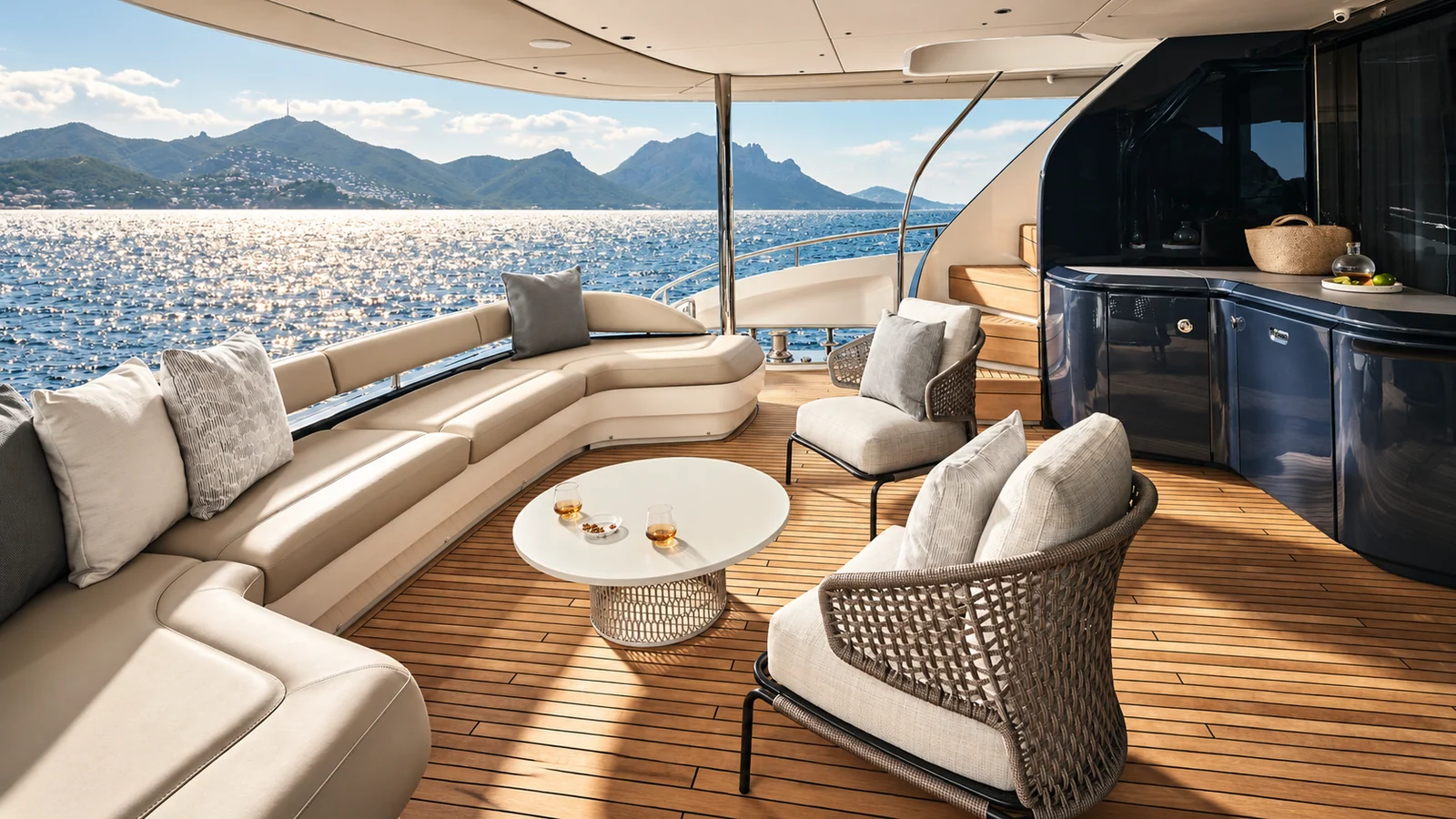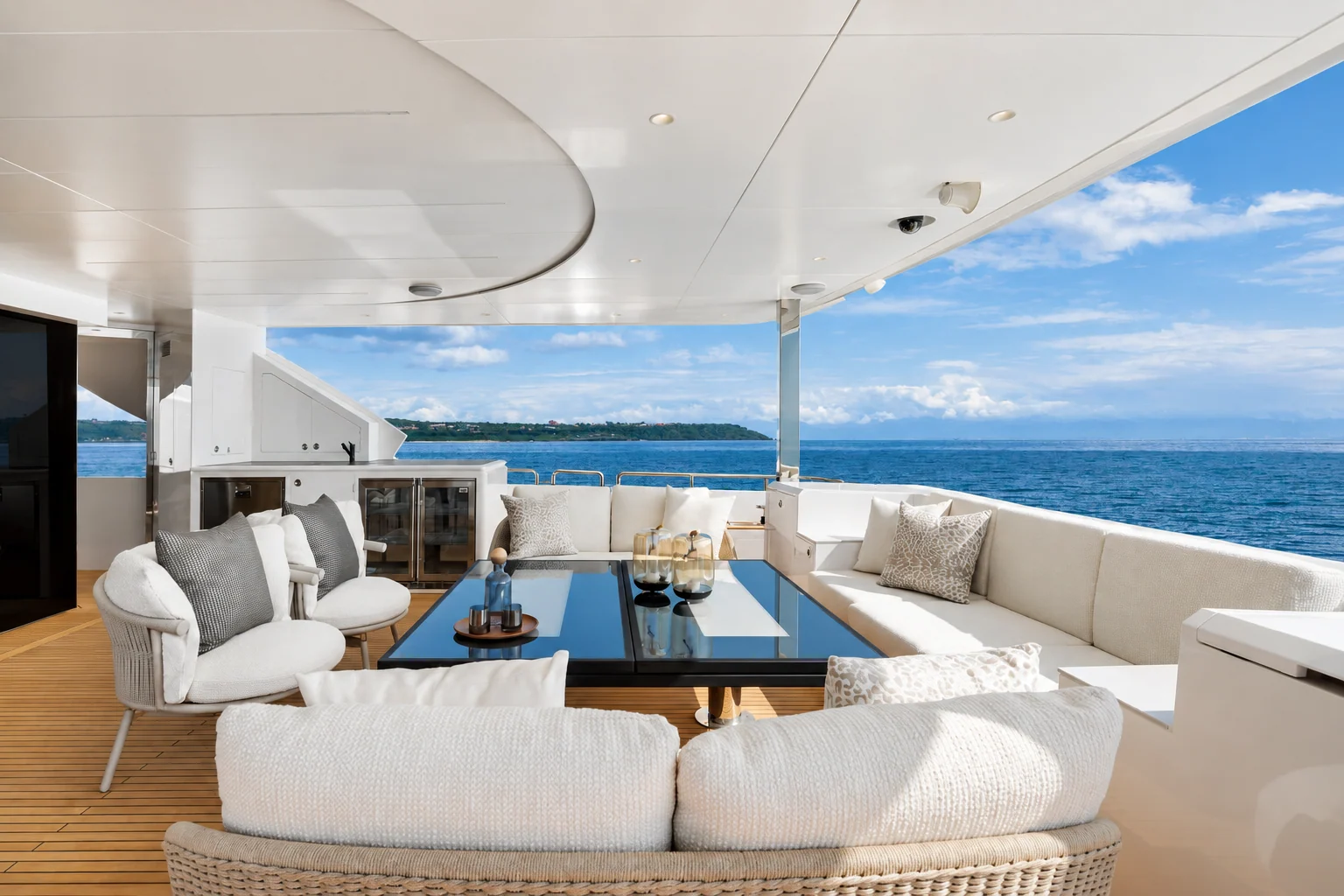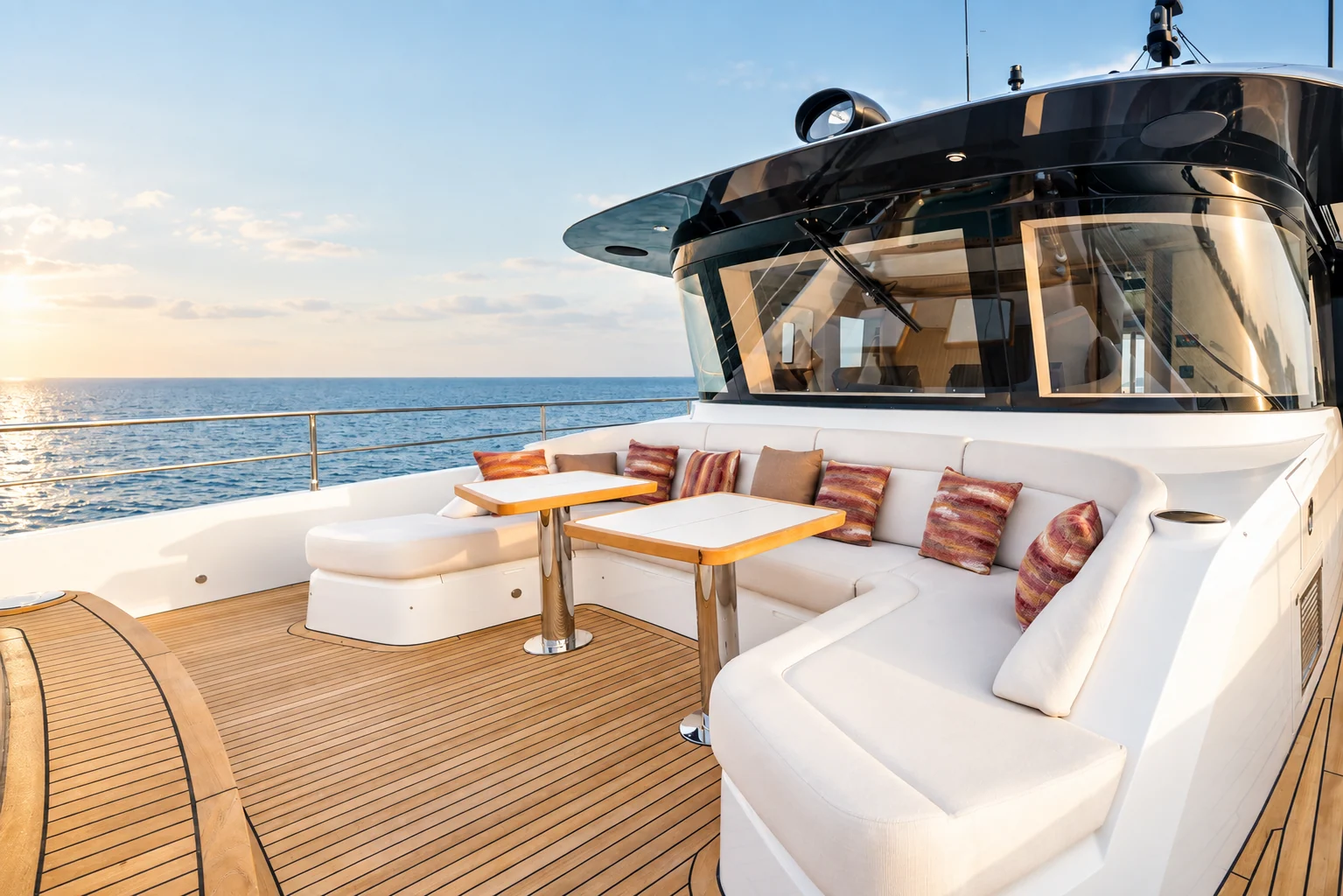
A comfortable day aboard includes many small journeys. You stand up from a seat, go below for something, return to the company and later move towards a cabin. The ease of those repeated movements can have a strong influence on how the yacht feels to inhabit.
If you prefer to move at an unhurried pace, give that preference a clear place in the search. The actual routes, changes of level and space around furniture deserve attention through your own experience and that of the people who will join you.
Size range and family suitability are useful opening criteria in the LYRA catalogue. They frame the segment and shared use. Individual comfort and any specific access requirements must be assessed on the actual yacht, with appropriate professional advice where needed.
Follow the journeys you will repeat
Begin with a familiar sequence: leaving the main seat, reaching the interior and moving towards the room you expect to use. During an appropriately arranged viewing, experience that route at your normal pace with the representative's guidance.
Notice where the arrangement changes. A threshold, a step or the relationship between two pieces of furniture can become more apparent when you move through the space yourself. Ask the team to explain the intended use and any relevant limitations.
Repeat the exercise for the routes that matter most to your household. The connection between a cabin and shared seating may be particularly important if you expect to spend longer periods aboard. Each journey gives the layout a personal scale.
Give each regular companion a chance to describe their own most-used route during the agreed viewing. Your preferred connection from saloon to cabin may differ from theirs. Keep those observations attached to the actual seat, doorway and offered arrangement, so the adviser understands whose experience a question concerns. The resulting brief can preserve several personal preferences within the same family yacht, with specific requirements taken to the appropriate specialists.
This is a practical way to compare yachts within a preferred size group. Overall length can organise the search, while the allocation of space determines the particular experience of moving through a boat.
Include the moments of sitting and standing
Movement begins and ends in the places you occupy. Spend time in the seats you expect to use, then discuss what you notice when getting up or settling in. The representative can explain the arrangement and any adjustment intended for the supplied furniture.
Look at the space around the table when the seating is occupied. A comfortable place to sit should relate sensibly to the route you use to leave it. The presence of other people makes that relationship easier to imagine.
Consider the private rooms in the same way. A cabin is experienced through ordinary actions as well as its appearance: entering, reaching belongings and settling for the night. The right layout for you should feel convincing through those familiar movements.
The LYRA catalogue introduces family-use characteristics. It does not establish personal accessibility. The viewing and any specialist assessment should address the actual people, configuration and intended programme.
Understand the boat in the states you will use
Furniture, doors and opening elements can change how spaces relate. Ask the representative to explain the configurations included in the proposal and which are intended for the relevant parts of your programme.
Experience the routes in those appropriately demonstrated states. A dining arrangement and a space prepared for another purpose may leave different room to move. The useful assessment concerns the form in which you would actually inhabit the yacht.
The operating team should establish where people may be and how movement is managed during the actual outing and conditions. A viewing at a berth gives information about one setting. The qualified professionals can explain what further assessment is appropriate for your intended use.
If you have a specific mobility or health-related requirement, describe it to the appropriate specialists and seek individual advice. Any adaptation needs a proper assessment for the person and yacht. Broad layout descriptions should remain distinct from confirmed suitability.

Choose the route as part of the room
After visiting a shortlist, compare the movements that felt particularly natural. You may find a preference for a closer relationship between shared spaces or a cabin route that suits the way you want to live aboard.
Keep those observations specific. A statement about a particular route helps the team explain the configuration and resolve relevant questions. It also gives the people joining you an opportunity to contribute their own experience of the spaces.
The boat should offer places you enjoy arriving at as well as appropriate ways to reach them. A favourite seat, an inviting cabin and a view from the shared area all belong within the same personal assessment.
A yacht selected around your own pace can feel especially rewarding in ordinary use. The small journeys of the day become part of a familiar living environment, connecting the company, quiet moments and surroundings you want to enjoy. Choosing the routes alongside the rooms helps that life aboard feel more fully your own.