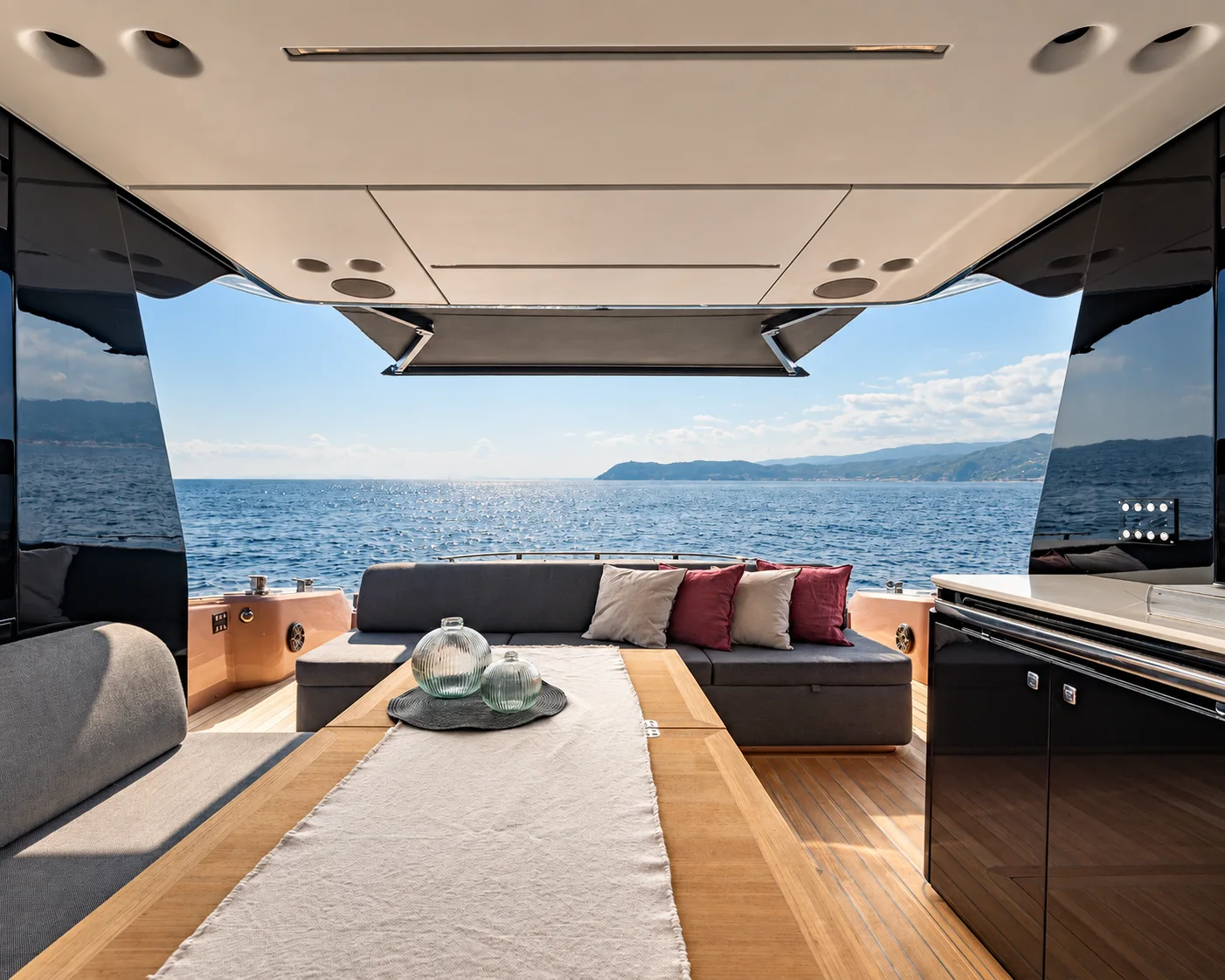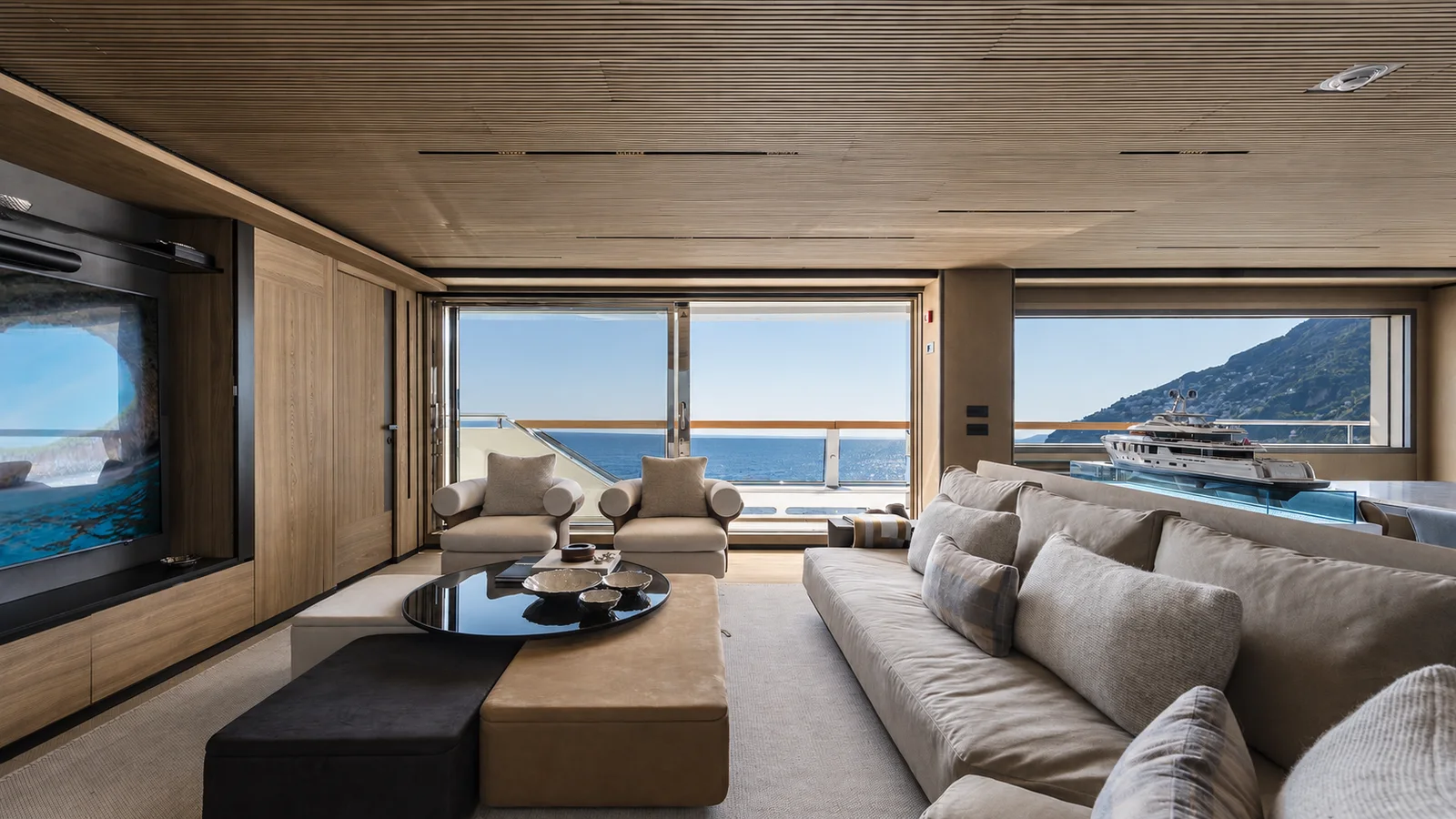
Two yachts can be almost identical in length and feel as though they belong to different worlds. One may lead guests through a narrow side passage to a generous aft deck. Another may spread its living spaces across a broad platform, giving the family room to separate without losing sight of one another. A comparison based only on length will place them in the same row. The owner's experience will not.
The most useful second number is often beam: the yacht's width. Length overall and beam together give an early sense of the footprint being offered. They also raise a practical question about the home berth. A buyer who compares these dimensions as a pair learns more than someone who ranks yachts by LOA and treats width as a footnote.
Start with a like-for-like size band
The LYRA catalogue can bring yachts within a chosen length range into view. Keep that range narrow enough to make the comparison meaningful, but wide enough to include different design responses to the same owner brief. A few metres of LOA can matter; the purpose of the exercise is to see where they matter, rather than assume every additional metre is an improvement.
For each candidate, write length and beam in the same units. Check that both figures belong to the configuration under discussion. A model family can include versions with different equipment or arrangements, and the shipyard specification is the reference for the yacht that will actually be offered. If one dimension is missing, leave a visible gap rather than inventing an estimate.
Now place a short description of the intended use beside those two figures. A family wanting a comfortable afternoon at anchor may prize deck width and easy movement around the table. An owner who returns to a narrow berth in a crowded marina may see that same width as an operating constraint. The numbers are identical in both cases; their meaning comes from the life planned around them.
Width is an invitation to inspect, not a space score
Beam can suggest the potential for more lateral space, but it does not state how that space has been arranged. A broad yacht might allocate substantial width to side decks, hull separation or technical areas. A narrower yacht might feel unexpectedly open because of its glazing, sightlines and the way interior and exterior spaces connect. The general arrangement is where those possibilities become visible.
Consider two hypothetical yachts in the same length band: one a monohull with a compact footprint, the other a multihull whose platform extends much farther across the water. Their beam figures signal different design and berthing questions. They do not, by themselves, answer which yacht has the better saloon or more comfortable cabins. That answer requires plans and time aboard. The pair of dimensions tells the buyer what to investigate.
This is a better use of a comparison table than a single column marked “size.” It preserves the design difference instead of collapsing every dimension into a score.
The berth belongs in the comparison
The yacht has to live somewhere. Before the owner becomes attached to a broad-beam concept, its dimensions should be considered against the intended marina, access and operating plan. An attractive layout can still be the right choice if the berth and support can accommodate it. The important point is to understand that relationship early, while the buyer can still explore the whole segment.
Length itself may also meet a hard berth or yard boundary. When it does, the comparison should show that boundary plainly. A yacht that exceeds a limit is not “nearly compliant” because it wins in another column. The owner can consider a different berth or a different yacht, but the decision should be conscious.
The LYRA yacht-selection process starts with the buyer's goals and lifestyle. For a size comparison, that means the table should end with a human observation: where will people spend time, how will they move and where will the yacht be kept? The catalogue fields help select candidates; the owner brief explains what counts as an advantage.

Read beyond the two numbers
Once length and beam have identified promising design directions, look at the layout and walk through the yacht. Follow the route from boarding to cockpit, saloon, cabins and swim platform. Notice whether people can move without interrupting one another. Ask whether the space that looked generous in plan remains useful when furniture, equipment and guests are present.
Other measurements and specifications will matter at the next stage, especially when a particular berth, cruising area or configuration creates a fixed condition. They need not crowd the first comparison. LOA and beam have done their work when they reveal that similarly sized yachts can offer very different lives aboard. The buyer can then pursue the design that fits their plans, with a clear reason for the choice.