Suppose two yachts both appear capable of reaching a favourite destination. One page displays the larger range number. The natural reaction is to assume it offers more freedom. Yet if that number was obtained at a slower pace than the owner intends to travel, the comparison may be answering the wrong question. Both yachts need to be placed on the same proposed passage before their ranges can be judged fairly.
LYRA's catalogue can filter by range and shows published values on model pages. These figures are a useful discovery layer. The buyer should treat each one as attached to an operating basis that needs to be confirmed; the public figure alone may not reveal all the conditions that generated it.
Start with the same passage
Choose the route that matters to the owner: departure, planned arrival and the alternative stop that would be available if conditions change. Identify the longest leg between reliable fuel points. Then specify the sort of passage the owner would actually enjoy: expected pace, people and stores aboard, and the season in which the trip would be made.
This shared scenario protects the comparison from drifting. A yacht whose claimed range is very high at a low-speed point should not be ranked against another's value at a different speed without explaining that difference. Nor should the buyer assume that the largest fuel tank produces the longest usable reach. Hull efficiency, engine package, speed and reserve all contribute.
Some candidates may be sailing yachts and others motor yachts. Their means of making distance are different enough that a single range league table becomes particularly unhelpful. They can still be compared through the same owner's intended route, provided the passage method and auxiliary-power assumptions are stated for each.
Make the evidence comparable
For each serious candidate, collect the range statement, speed at which it applies, exact engine option, carried load, fuel capacity and reserve assumption. Where the yard has performance curves, these can show how reach changes at other speeds. Operating records or a relevant trial may help for the exact yacht. If any key part of that basis is missing, mark the comparison incomplete rather than filling it with an estimate disguised as fact.
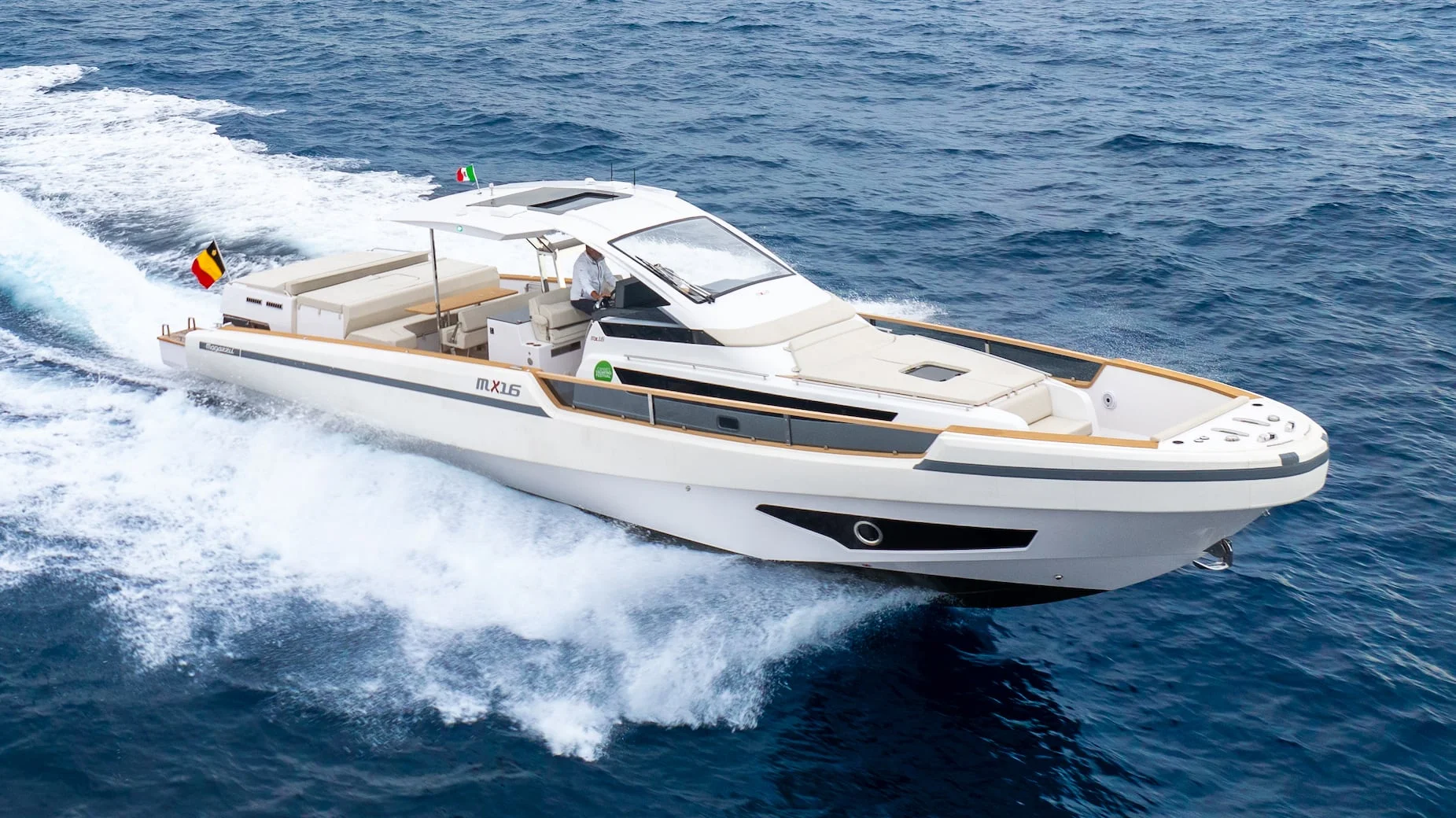
As LYRA examples, the Magazzù MX-16 and Bering BC60 publish different range values. They are not presented as direct substitutes or recommended finalists. Their distinct hull forms and programmes demonstrate why a larger published number is not enough to conclude which yacht better serves a particular passage.
A useful comparison can show more than one pace for each yacht. The owner may prefer a quicker outbound passage and a quieter return, if conditions and the yacht permit. The relevant question is whether that pattern works with the fuel and reserve plan. A single static range figure cannot describe every variation, but it can start a more informed conversation.
The outcome should be a travel choice
When the evidence is aligned, the owner can see which yacht makes the intended passage feel natural. Perhaps one supports a preferred speed with comfortable margins. Another may invite a slower but more expansive voyage. The answer is not a universal ranking of autonomy; it is a decision about the kind of travel the owner wants to live.
A captain or technical adviser should test any route-dependent safety conclusion for the exact yacht and current conditions. That specialist step does not diminish the value of an editorial comparison. It gives the buyer a clear question to bring into the next conversation, with the assumptions already visible. LYRA's selection philosophy keeps those technical details in service of the places and experiences that drew the owner to yachting.