Some buying briefs begin with a place. The owner wants to keep the yacht near a favourite coast and make spontaneous afternoon departures. Others begin with a passage: a crossing that the family intends to make repeatedly, perhaps at a particular time of year. CE design category moves closer to the front of the second conversation because the expected environmental conditions are part of the purchase brief itself.
The field is shown as Navigation Category on individual yacht pages in LYRA's catalogue. It identifies a declared design category, while the owner supplies a planned use. The decision is to give the category priority when the intended passages make that declared envelope material, and to keep it in proportion when other characteristics shape daily use more strongly.
Let the most demanding normal passage set the question
An owner's annual programme often contains one journey that differs from the rest. It may cross a more exposed stretch of water, extend the time between suitable harbours, or take place during a season in which weather windows need particular care. That journey deserves to be described before anyone compares letters on model pages. Name the likely route, departure season, number of people aboard, expected crew and the alternative plan if conditions change.
This is a better starting point than imagining the most ambitious passage a yacht could theoretically make. The normal programme, including its meaningful exceptions, is what the yacht must serve well. If the owner is buying for a longer cruising life, those demanding legs are central. If the pattern is chiefly sheltered day use, length, boarding, single-handed manageability or the home berth may lead the early selection instead. The CE category still has to be checked for each serious candidate, but it need not dominate an unrelated lifestyle decision.
The distinction also protects pleasure. A category chosen solely for its position in an A-to-D sequence may lead the discussion away from the features that make the yacht inviting to use. A category chosen because it answers a real voyage question adds confidence to an otherwise exciting purchase.
Use the category as an early technical boundary
The categories concern defined wind and wave design conditions. They do not grant a distance-from-shore permission, and a declared category does not decide whether a specific forecast or crew makes a voyage sensible. The early shortlist can therefore do two useful jobs: identify yachts whose declarations merit closer study and record which candidate needs more documentation before a route-dependent conclusion is drawn.
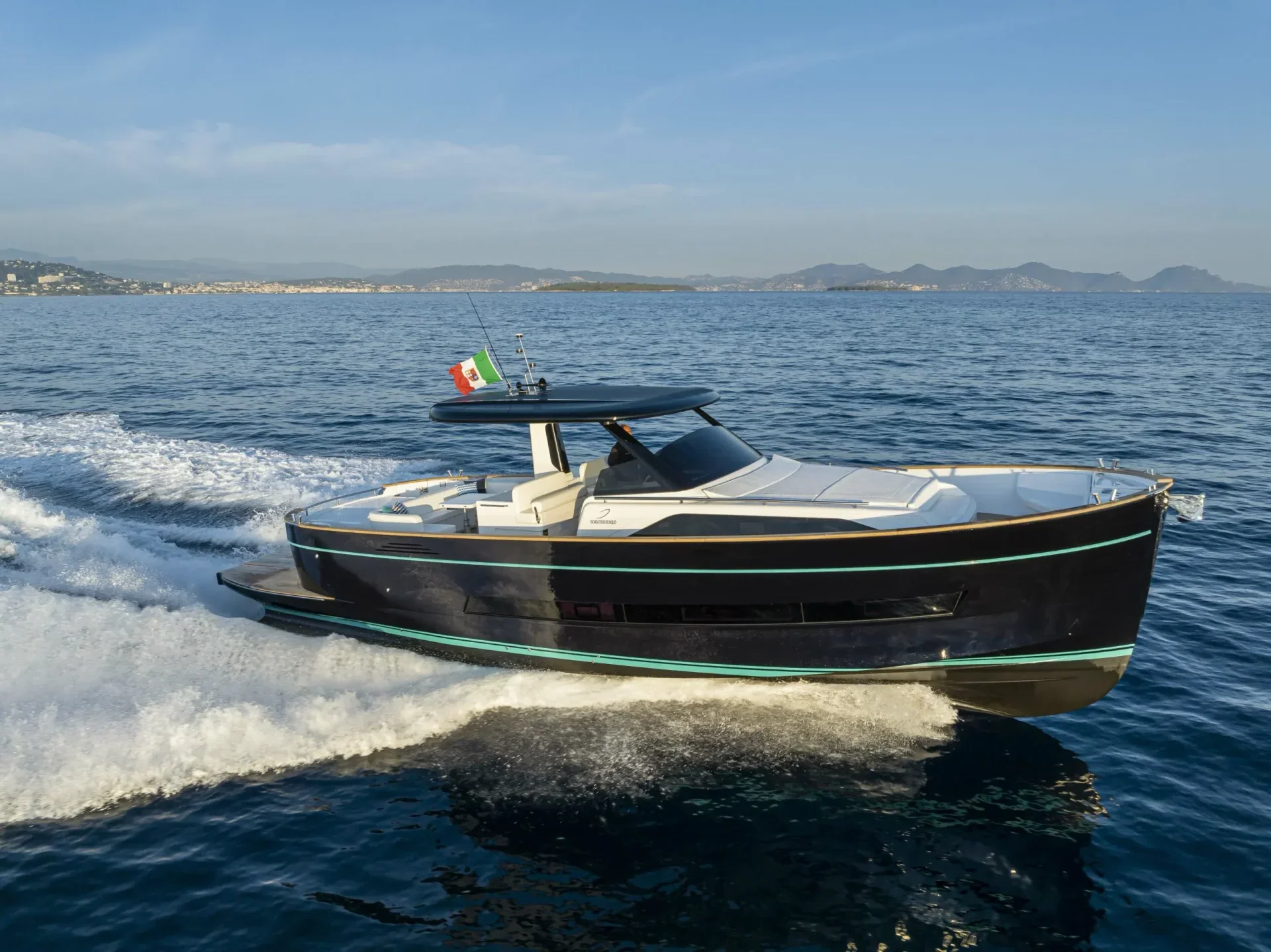
For illustration, LYRA model pages list the Apreamare Gozzo 45 in Category B and the Elling E6 in Category A. These are examples of different yacht segments, not alternatives selected for the same buyer. After seeing how the field appears, the owner should look across the suitable type-and-size segment. The more useful question is whether each yacht's declared conditions, configuration and operation fit the actual itinerary.
When the planned programme makes the difference between declarations consequential, the category can narrow an initial field. A buyer can then devote attention to the yachts that deserve deeper inspection. When the distinction is immaterial to the intended use, other priorities can lead, while the category remains part of the final technical check. Both paths are disciplined; neither treats a letter as a quality ranking.
Know when the shortlist must become a document check
A public model page may not identify every option, version or limitation of the yacht ultimately offered. Before a category is used to accept or exclude a serious candidate, confirm the declaration for that exact craft and read the owner's manual, loading and operating information. A captain or suitably qualified adviser should assess the intended passages, yacht and crew together. An attractive listing can move through the search while a material document is pending; the gap should simply remain visible.
The buyer can then give every yacht a reason to remain: it supports the intended programme, brings a valued ownership experience, and has a defined evidence path for any open technical point. LYRA's selection approach keeps that sequence connected to the life the owner wants to build. CE design category matters most when it helps make that life both possible and well understood.