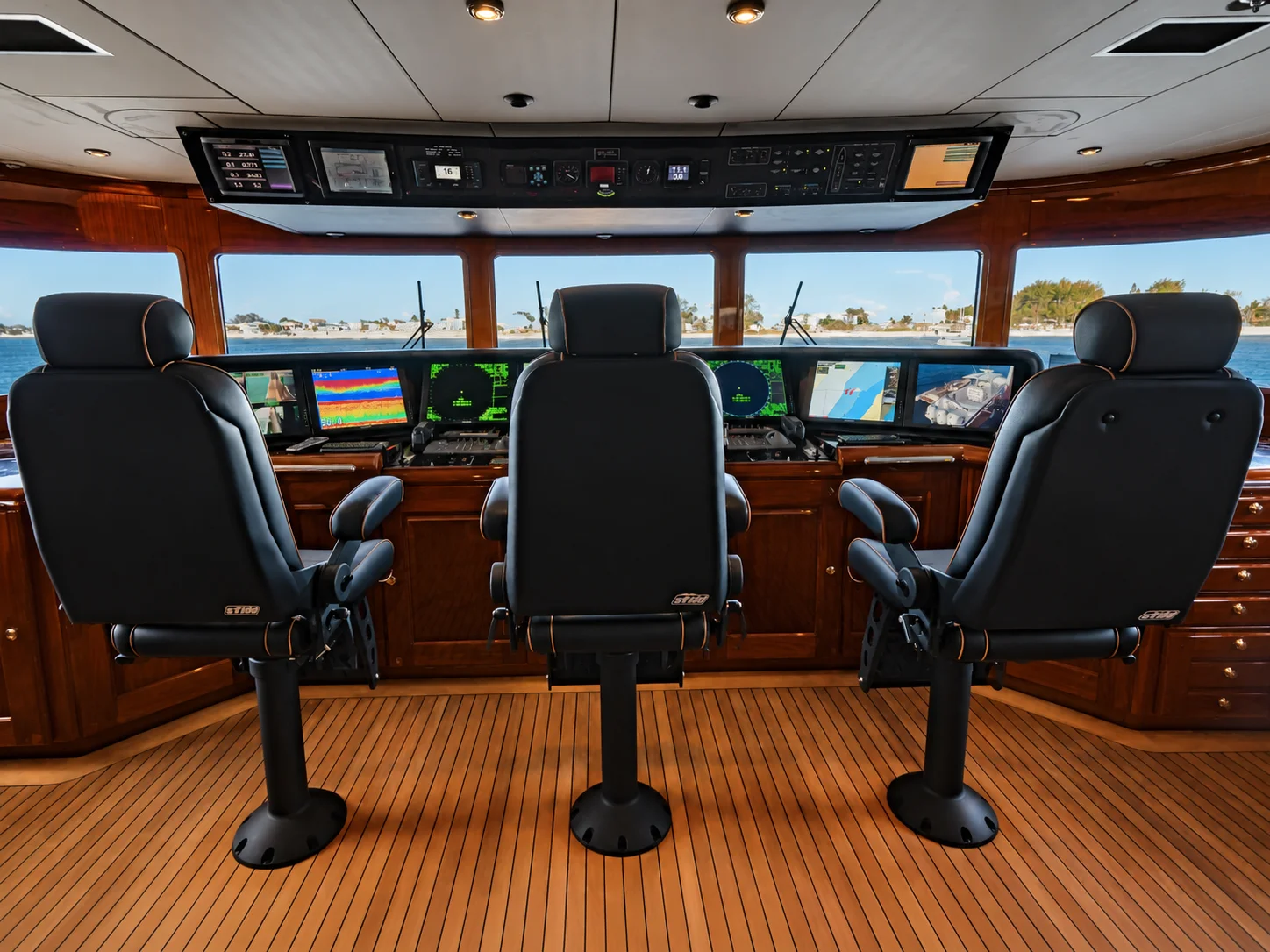
On a yacht, propulsion is often most noticeable during an unhurried moment: easing away from a familiar quay, changing direction in a crowded fairway, or settling back into the berth after a long day. The arrangement behind that experience matters to an owner. A model page's engine-type field is a helpful first clue, although it cannot describe the entire installation or predict how a particular yacht will handle.
LYRA model pages may identify an engine type as inboard or configurable. The catalogue therefore lets a buyer see a broad category; the exact engines, drives, controls and options have to be understood on the candidate yacht. “Configurable” is especially important to read as an invitation to specify which version is being discussed, not as a single technical package.
What the label leaves open
An inboard label tells the buyer that the machinery is installed within the vessel. It does not reveal the number of engines, their position, the type of drive, the propellers or the steering controls. Nor does it explain the space available around the machinery for inspection and maintenance. These details can affect the way a yacht is operated and supported.
An outboard option, where offered, places a different arrangement at the stern. But it is still an option attached to a complete yacht: the transom design, fuel system, controls, access and service plan all need to be considered together. Neither arrangement deserves an automatic ranking based on the broad label. The relevant question is how the offered package works with the yacht's hull and the owner's intended use.
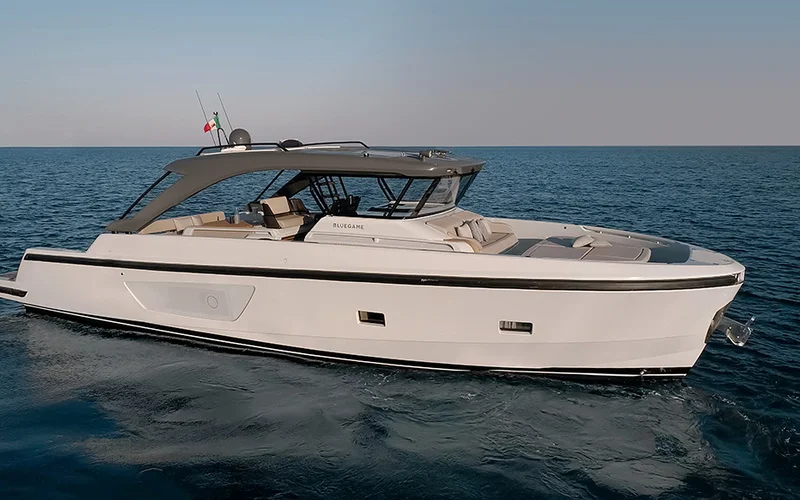
The distinction is visible in LYRA examples. The Bluegame BG54 is listed with inboard propulsion; the Seanfinity T6 is listed as configurable, and its page describes alternative inboard and outboard packages. These are examples of how the field is recorded, not a two-yacht shortlist. Their size, layout and purpose must be considered before any buyer compares their operation.
The moments that reveal the arrangement
During a viewing, imagine four parts of an ordinary outing. First, leaving the berth: how does the driver control the yacht at low speed, and what visibility do they have? Second, travelling: what is the noise and vibration like where people actually sit? Third, arriving: how does the yacht respond when approaching a quay or anchorage? Fourth, returning home: what does the crew or owner need to inspect and secure afterward?
These are not questions that can be answered from engine type alone. They point to a sea trial of the actual configuration, its technical specification and a conversation with the people who know its systems. A quoted maximum speed is not a substitute for the way the yacht feels in the manoeuvres the owner will repeat every week.
The support story belongs in the same conversation. Where can the installed package be serviced along the owner's normal route? What access does a technician have? Which components are covered by the builder's and engine manufacturer's arrangements? The answers may vary by configuration and region. A buyer should attach them to the exact package they are considering.
Bring the technical question back to ownership
The purpose of reading propulsion carefully is to make the yacht easier to enjoy. A clear understanding of its controls, maintenance arrangements and intended performance lets an owner approach the helm with appropriate confidence and organise support ahead of time. It also makes comparisons between candidates fairer: each yacht is described as equipped, not as its model name might be equipped.
LYRA's selection approach begins with the experience the owner wants. Engine configuration becomes meaningful when it explains how that experience will be delivered in the real conditions of departure, passage and return. The model-page label opens the door; the precise installation and a trial complete the picture.