A guest arrives at the berth, sees the yacht and looks for the way aboard. Within a few moments, they will move from the quay into a different setting: a seat, a view and a welcome from the people already there. That short journey is a revealing part of yacht selection, especially when you expect to invite friends and family regularly.
Guest capacity and overall length give the search a useful frame in the LYRA catalogue. The route from the boarding point to the social area shows how the yacht receives those guests in practice.
Begin at the berth you intend to use
Boarding takes place between a yacht and a particular shore arrangement. A side berth, a stern-to position or a finger pontoon creates a different starting point. Share the intended home berth with the representative so the relevant access can be assessed.
During a viewing, have the appropriate people explain the actual boarding arrangement and provide the assistance needed. The owner and regular guests can then experience the route in a suitable, supervised setting. Their observations will reflect their own comfort and mobility.
Bring the ordinary arrival into the picture. Someone may have a small bag or a jacket, while another person follows close behind. Identify where the first guest can pause comfortably while the next person boards.
A pause is worth distinguishing from the final seat. Someone may stop to greet the host, remove a jacket or ask where a bag belongs. During the supervised viewing, consider where that brief welcome would happen in relation to the agreed access route. The first impression includes the people already aboard as well as the person arriving. The yacht's welcome begins with those small movements.
Follow one route all the way to the seat
Stay with a single guest in your imagination. From the access point, they may cross a platform, pass a gate and take a step towards the cockpit. Look at the turns, handholds and changes of level along that specific route.
The furniture should be in the arrangement expected during use. An empty cockpit can make a passage feel different from one with chairs, cushions and personal items in place. Ask to see the relevant configuration so the route remains connected to the yacht you are considering.
At the destination, give the guest a realistic place to sit. Can they settle comfortably while others continue moving? Is there somewhere suitable for the bag they brought? A well-arranged arrival ends with the person feeling at ease, with the view and company ready to enjoy.
An example of a choice within boarding arrangements
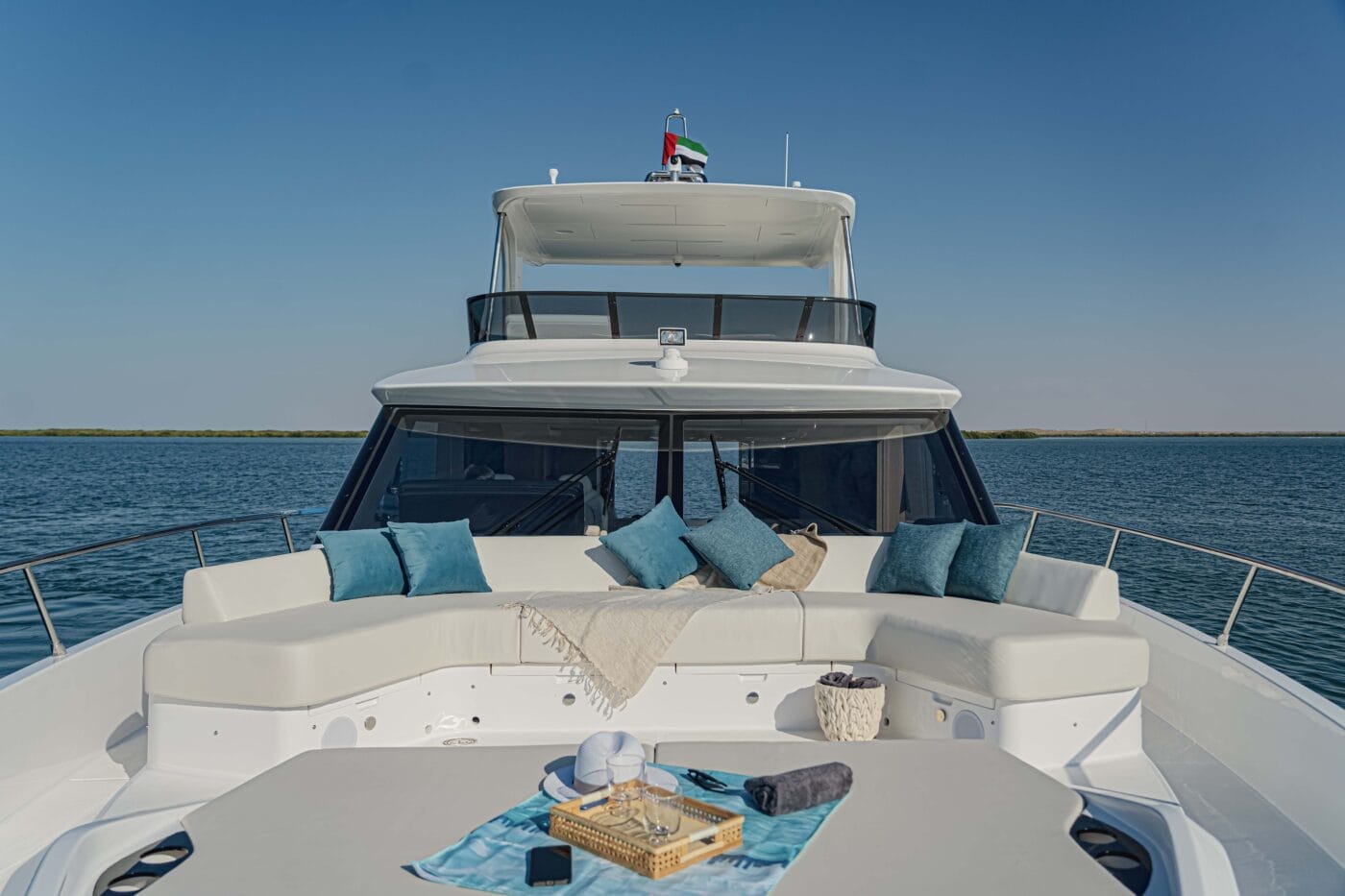
Catalogue example: the Majesty 60, listed at 18.39 metres, describes a swim platform and optional side boarding gates. This illustrates why the access arrangement should be considered for the actual specification. An optional gate shown or described for a model needs confirmation in the yacht being offered.
When candidates provide different boarding points, compare them against the intended berth and guests. The yard or representative can explain how each arrangement is used, while the captain assesses its appropriateness for the vessel's operation.
Length alone will not describe the experience. Two yachts of similar size can place the boarding point, cockpit and steps differently. Following the complete route gives those differences a personal meaning.
A simple note of the route can help the representative understand what mattered to you: the relevant access point, a particular turn and the destination seat. Keep it tied to the berth and configuration seen. If you later consider another berth or an alternative gate, those are specific details to reassess with the captain.

Picture the social area already occupied
Guests rarely arrive in a perfectly empty room. Some people may already be seated, the table may be prepared and drinks may be served. Look at the arrival route with that scene in mind.
The first people aboard should have comfortable places while others join them. Notice whether a chair interrupts the passage or whether someone must stand each time a new guest arrives. These observations help explain how the yacht handles the company you expect most often.
The service arrangement belongs in the picture too. The captain and crew can explain how welcomes, belongings and preparation will be managed for the intended visit. Their plan should make practical use of the spaces available.
Include the people whose comfort matters
Invite regular family members or guests to contribute where possible. A person less familiar with yachts may notice a threshold or turn that an experienced owner crosses without thinking. That difference is valuable when the purchase is intended to bring those people aboard.
Parents can assess the route with their children in mind, and other guests can explain their own needs directly. The relevant specialists can then advise on appropriate arrangements or feasible options. Personal observations and professional assessment each inform the choice.
The route should also make sense in reverse when guests leave. Bags return, people gather their belongings and the company heads ashore through the captain's agreed arrangements.
A welcoming yacht reveals itself through these ordinary moments. The guest arrives, finds the way with suitable help and settles into a place they enjoy. Choosing with that journey in mind gives hospitality a physical form, ready for the people you look forward to inviting.