
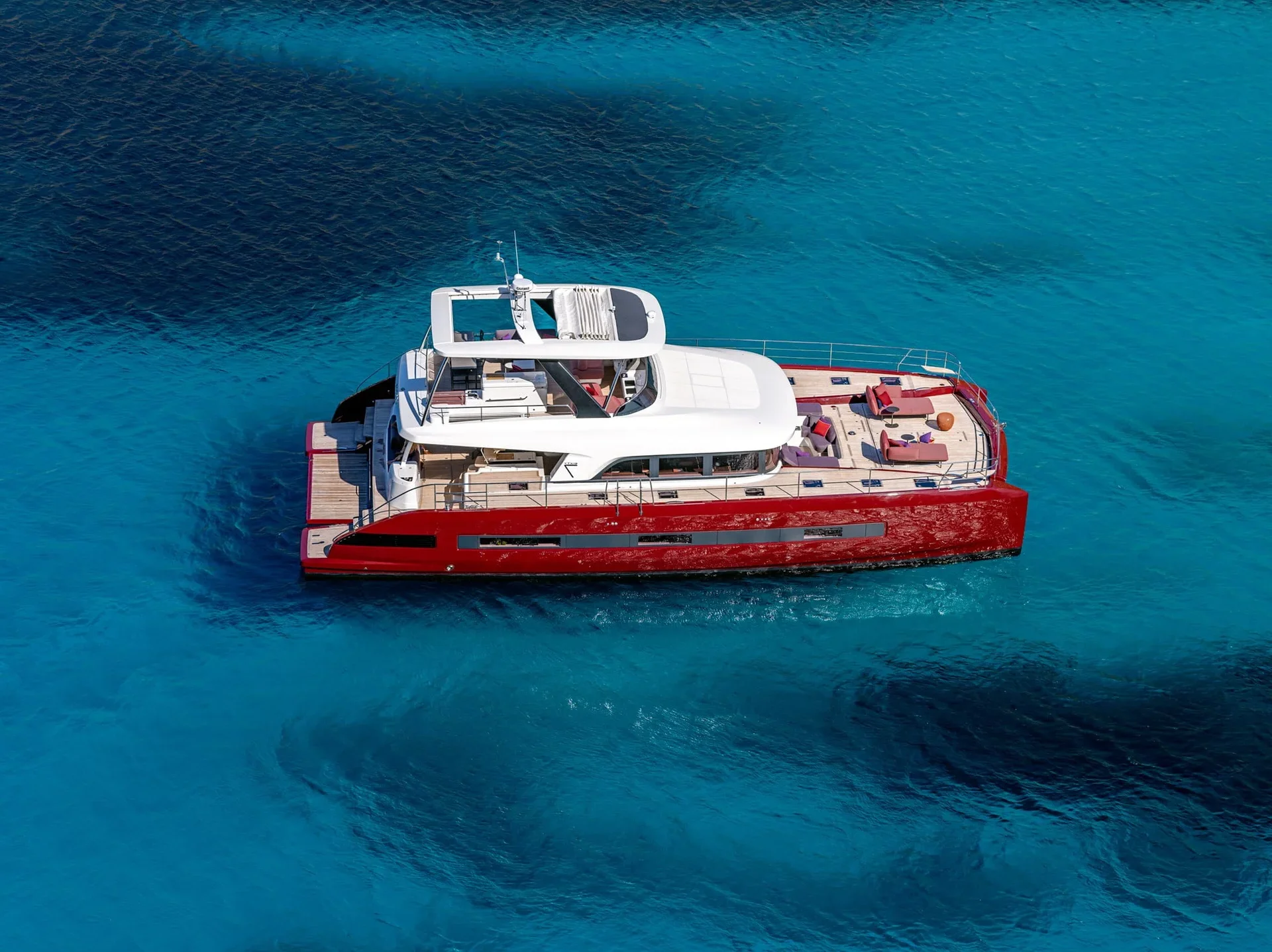
Start with LYRA's French-built yacht collection to identify candidates by build origin. Then follow the arrangement of the boats that appeal to you. A country collection can bring different concepts into view without establishing a hierarchy of innovation, comfort or finish.
Understand where the living space goes
A description of generous space becomes more informative when you know how it is distributed. Consider the relationship between saloon, cockpit, upper deck and cabins, where these exist on the candidate. A large gathering area may suit the intended day particularly well, while a different distribution may better support privacy or separate activities.
Lagoon's SEVENTY 8 page provides a concrete motor-catamaran example. It describes an upper living area around the flybridge and presents several layout possibilities, including different galley positions. Those model-specific choices let a buyer consider how shared space, food preparation and movement might interact. They are not a description of every French boat.
Imagine a buyer who enjoys cooking as part of time with guests. Another may prefer preparation to happen apart from the main gathering area. Looking at the galley's relationship with other spaces helps them ask different questions about the same model. The better arrangement follows the intended experience, not a general rule that a more open layout is always preferable.
Explore light from the places you would use
A bright interior can make an immediate impression. During a visit, also consider the outlook from a seat, the view from the owner's intended position and how private areas feel when other people are aboard. Ask about the arrangements for shade, privacy and ventilation rather than inferring them from extensive glazing.
Follow the route between inside and outside. Are the spaces you would use together connected in a way that feels natural to you? Where would someone go for a quieter moment? How would people with different plans share the day? Plans and photographs can guide these questions, while the yacht provides a more complete experience.
The selected configuration matters. A model shown with alternative furniture or cabin arrangements should not be treated as though every illustrated possibility exists aboard one boat. Establish which version is being considered before deciding how well the spaces fit your use.
Read the same spaces through more than one occasion
A single imagined day can make an arrangement seem complete before the owner has considered how their interests vary. Choose another occasion that also belongs in your plans. You may want company at one point and a quieter setting at another. Follow how the actual configuration responds to both rather than assume that a generous area settles the whole question of life aboard.
Imagine a meal where you would enjoy preparing food while staying part of the conversation. Then picture a quieter morning when someone else is already using the shared space. Ask which places you would use on each occasion and what you would like to see or hear from there. A plan can show the relationship and a visit can help you judge how it feels from the places you would actually sit.
After the comparison, note which relationship you want to carry forward. It may concern the connection between activities, a place to spend time quietly or an outlook you found personally meaningful. Describe the reason so another candidate can offer a different response to the same intention.
Relate the concept to the whole ownership plan
An appealing arrangement still needs a suitable practical setting. Discuss the candidate's dimensions, base options, preparation and support with the appropriate professionals. Any operating capabilities or restrictions require yacht-specific evidence; neither a multihull label nor a national design image settles them.
Likewise, a description of innovation is a reason to investigate what has actually been developed. Ask what a particular solution changes for the owner, which assumptions it depends on and how it would be supported. A feature earns its place when its contribution to the intended experience is understood.
Exploring French design through space and light can make an aesthetic response more precise. The buyer begins to recognise which sightlines, gathering places and private areas matter. That understanding travels beyond any one model, helping the eventual choice serve the days the owner wants to spend aboard.
