Lunch outdoors is one of the pleasures many owners picture first: the table set, the water close and conversation moving at an easy pace. The comfort of that setting depends partly on the day. A yacht with suitable shelter and an appealing alternative dining place can give the meal more ways to remain enjoyable as circumstances change.
Climate suitability relates the dining plan to the intended season; Guest Capacity frames the company. The table, supplied protection and relationship with other spaces show how the particular yacht could welcome those people to the meal.
Assess the seat under the shelter
Start with the outdoor table you expect to use most. Sit in the actual places and consider how the supplied hardtop, canopy or other arrangement relates to them. The extent and character of protection should be understood for the selected configuration.
A table can have seats in quite different positions. One may feel more enclosed by the surrounding structure; another sits closer to the open edge. The owner and regular guests can identify which places they would enjoy during a longer lunch, with the captain assessing the appropriate use in the actual conditions.
The question concerns the complete setting. The view, seat comfort and space for the meal all contribute alongside shelter. A particularly attractive outdoor table should be experienced as a place where the company would remain happily for the intended part of the day.
Give the alternative table equal attention
An indoor or more protected area can offer another atmosphere for the same gathering. Look at its actual seating and surface, placing the regular company in the room. The alternative should suit the meal you intend rather than simply provide somewhere for a few people to pause.
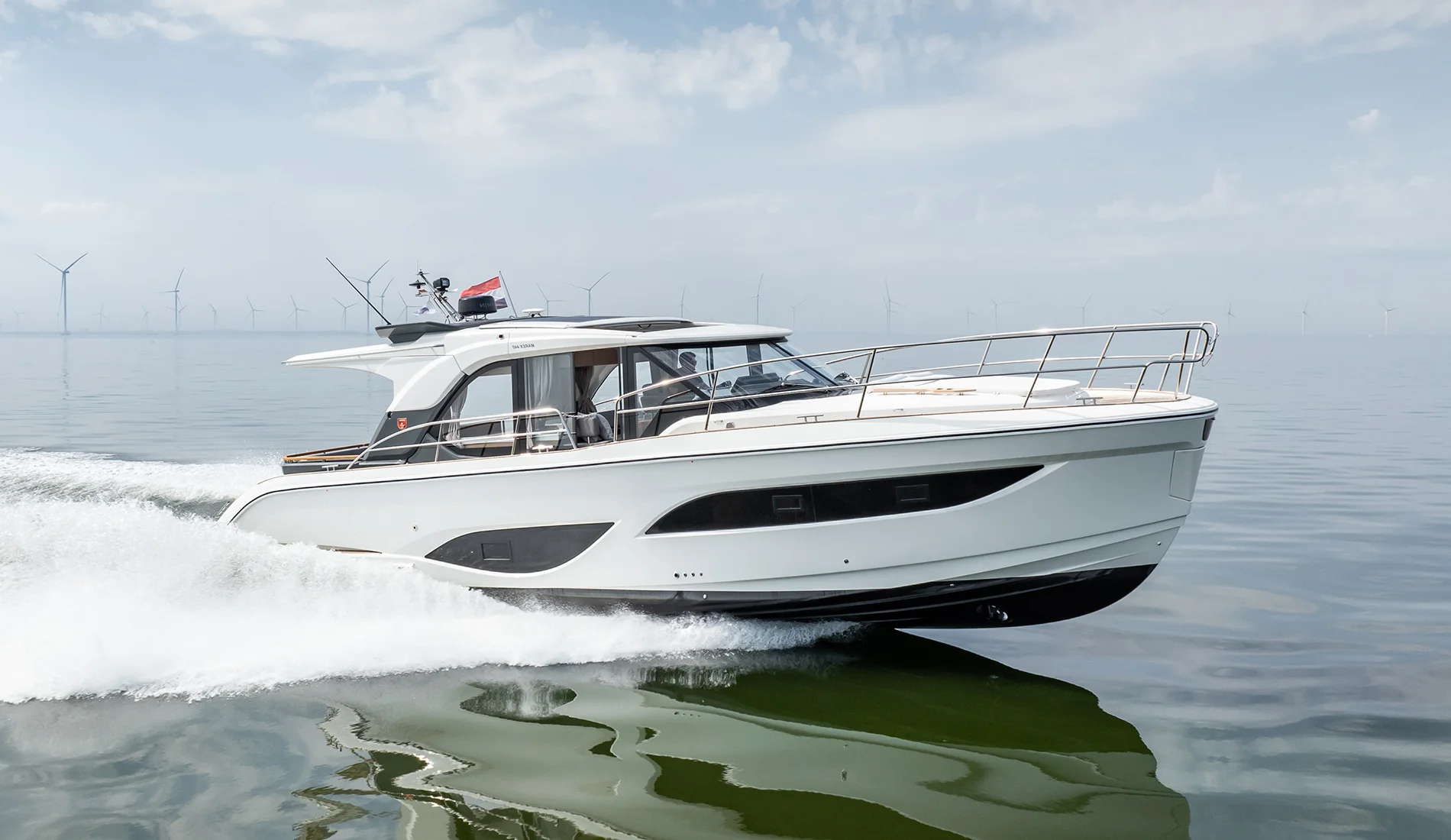
Catalogue example: the Marex 440 Scandinavia, listed at 13.7 metres, describes an enclosed saloon and a cockpit dining table. It illustrates the relationship between protected living space and outdoor dining within one yacht. The actual table arrangements should be assessed in the offered version.
The capacity of each dining place deserves a direct comparison. The yacht's maximum guest figure and the places at one table are separate details. In the LYRA catalogue, Guest Capacity helps begin the search, while the real furniture plan shows how the intended meal will work.
Consider the view and comfort of the protected area as well. A pleasant room can make the change of setting feel like another enjoyable part of the day. The owner should be able to picture the same company continuing the meal there.
Establish how that protected place would be available at the relevant moment. It may already be arranged as a lounge or serving another agreed household purpose. The people preparing the meal can explain what would need to change and where any moved items belong. The comparison should show the actual space ready for the same company, with the appropriate preparation understood. That gives the alternative table a recognisable role in the lunch you want to offer.
Follow the move between the two places
Where two dining areas are available, their relationship matters. The route should be assessed with the yacht furnished for use, including chairs and any relevant doors. People and service items need a practical passage within the captain's arrangements.
The person preparing or serving the meal can explain what the change would involve. Food, dishes and the table setting may need to be moved through an agreed process. The layout's usefulness becomes clearer when that whole sequence is understood.
The owner can compare how naturally each candidate supports the transition. An alternative on the same level creates one relationship; a table elsewhere has another. The preferred arrangement follows the company and style of hosting you enjoy.
Understand the configuration and its use
Climate suitability in the catalogue introduces the broad intended conditions. The actual shelter, opening elements and installed systems need assessment for the vessel, season and location. The captain determines the appropriate use of the yacht and spaces during the visit.
Ask the representative to explain the supplied arrangement and any options relevant to the dining areas. The demonstrated yacht and the offer should have an understood relationship, especially where shades, doors or furniture differ. The buyer should know which setting the purchase includes.
The useful owner observations remain personal: which seat felt comfortable, how the view worked from the table and whether the protected room invited the company to stay. Technical and operational questions receive their appropriate professional review alongside that experience.
Keep hospitality at the centre
A good meal aboard depends on the company and the atmosphere as much as the initial choice of table. A yacht with thoughtful dining alternatives gives the host room to preserve that atmosphere through the day.
When comparing candidates, picture the complete lunch and the places where it could comfortably continue. The owner should recognise the hospitality they want to offer in both settings.
That flexibility becomes part of the pleasure of ownership. The water remains the view, the company stays together and the yacht provides an appealing place to enjoy the meal. The setting can change while the afternoon retains its welcome.