There is a particular pleasure in sharing an interest that lets each person experience it from the inside. On a yacht, that might mean both partners wanting time at the helm, understanding how the boat is organised and becoming more involved in the day together.
The idea often begins quite simply. One person enjoys the view ahead; the other becomes curious about what they are doing. Over time, both would like a more active role. A yacht chosen with that intention can support a richer shared relationship with the sea.
In the LYRA catalogue, suitability for solo operation and suitability as a first yacht offer two useful starting points. Together they help frame a search around manageable owner involvement and an approachable introduction to the individual yacht. Each partner's experience and responsibilities then need their own assessment.
Talk about the involvement each of you wants
Shared ownership can welcome very different ambitions. One person may be fascinated by handling the yacht, while the other wants to understand enough to participate more confidently and enjoy occasional time at the helm. Those preferences can coexist comfortably.
Describe them before choosing the boat. Consider what each of you enjoys during an outing, which parts you are curious about and how much attention you want to give to learning. This conversation helps an instructor or captain build familiarisation around the people who will actually be aboard.
It also protects the pleasure of the day. When roles reflect genuine interest, participation can feel inviting. Each partner has room to develop without turning every weekend into an assessment of who has progressed faster.
Experience should be described individually. A shared history of holidays aboard may include very different levels of practical involvement. Understanding that starting point allows instruction and any continuing professional support to be appropriate for both people.
Each partner can bring their own questions to the instructor before the shared discussion. One may want an explanation of a display, while the other wants to understand the position from which they would learn. Keeping those observations identifiable helps the professional assess two individual introductions within the same yacht and family programme.
Use the two catalogue markers for their intended purpose
Solo suitability can help identify yachts whose design and arrangements merit consideration for a more direct owner role. First-yacht suitability adds a perspective on entering ownership and learning the particular boat. Both are useful selection signals within the LYRA catalogue.
For a couple, their combined relevance is the possibility of a yacht that each person can get to know properly. Neither marker establishes that a particular owner is ready to operate independently, or determines the qualifications and support required for a programme. Those questions depend on the people, yacht and intended use.
An example from the catalogue
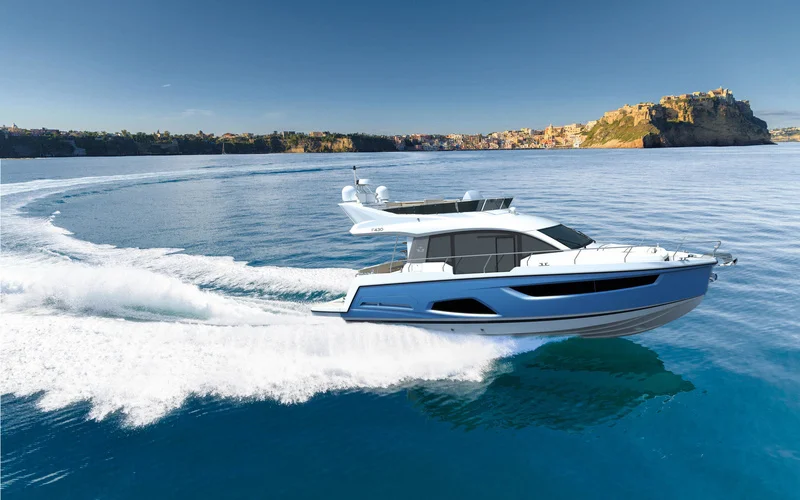
The Sealine F430, listed at 13.55 metres, carries both the first-yacht and solo-suitability markers in the catalogue. It is one example of how the two criteria can meet in a motor-yacht search. The individual specification and each partner's familiarisation still belong in the purchase assessment.
Across this segment, the useful comparison is how comfortably each of you can understand and engage with the boat you intend to own. The catalogue narrows the conversation; time aboard makes it personal.

Look at the helm from two positions
People of different heights can experience the same helm very differently. Visibility, seating and the relationship between a comfortable position and the controls deserve attention for each partner. A viewing becomes more informative when both spend time in the position they expect to use.
Ask the person showing the yacht to explain the installed arrangement, then let each of you describe what feels comfortable or unclear. This is a chance to establish questions for a properly supervised assessment. It is also a useful reminder that an arrangement which suits one person beautifully may need a different adjustment for the other.
The surrounding space matters as well. Can a partner remain comfortably nearby during familiarisation? Where would the rest of the family spend their time? A shared interest in the helm should sit within an enjoyable day for everyone aboard.
These observations help connect owner participation with the yacht's living spaces. You can imagine moving naturally between concentration, conversation and relaxation as the day develops.
Build a shared understanding over time
An instructor or captain can help establish an appropriate progression for each person, using the equipment and arrangements on your yacht. The aim is a clear understanding of individual responsibilities and the level of support suited to the intended outings.
Learning together can make later conversations much easier. Both partners recognise the questions being discussed and can express their preferences with greater confidence. That common understanding becomes part of ownership, even where professional help remains a regular feature of the programme.
Keep revisiting what each person enjoys as experience grows. One may discover an enthusiasm for a particular aspect of boating; the other may value being able to take a more involved role occasionally. A suitable yacht gives those interests room to evolve.
The result is a form of shared leisure with more texture. You have a beautiful place to spend time together, and a common interest that deepens through using it. Choosing the yacht with both people in mind helps that involvement become an enjoyable part of life aboard.