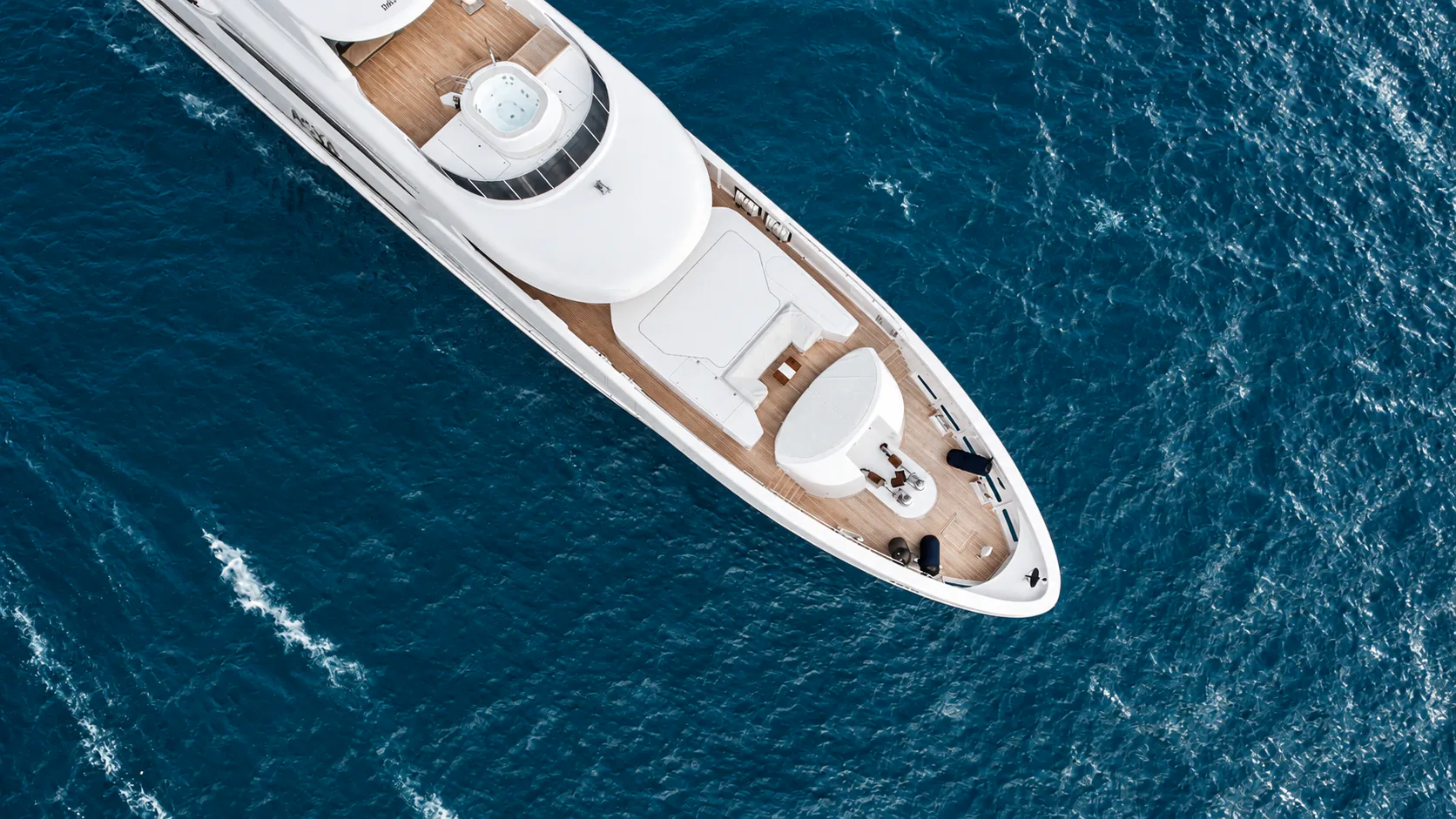
Two yachts can occupy the same part of a catalogue, share a similar length and offer a comparable number of cabins. To a buyer new to the market, they may seem like variations on one idea. Spend a day imagining how people would move through each, and the difference can become striking.
The numbers are still useful. They place the yachts in a sensible field for comparison. They cannot, on their own, describe the life created by a particular arrangement of space.
Think in journeys between spaces
Consider two hypothetical yachts of similar size. In the first, the owner moves easily from the helm into an open social area and down to the water. The yacht encourages direct involvement: people can speak across spaces, swimming becomes part of the day and departure feels informal.
In the second, the main guest area is more enclosed and protected. Movement between private and social spaces is more deliberate. The arrangement may support longer stays, quiet conversation and a greater sense of separation between guests and operations. Neither design is inherently superior. Their virtues answer different habits.
A deck plan shows the locations of spaces. A visit—or a careful walk through the plan with the owner's actual group in mind—reveals the journeys between them. Those journeys are repeated every time someone comes aboard.
Privacy is a spatial decision
Privacy is often described as a feature a yacht either has or lacks. In reality, it can mean several things. Can a guest retreat without leaving the group entirely? Can family members use different areas without constantly crossing one another? Does crew movement support service without making the yacht feel crowded? Is the owner comfortable with the degree of separation the design creates?
One buyer may love a yacht that keeps everyone together. Another may need spaces that allow the family to gather and disperse throughout a long stay. The comparison has to begin with the people, not a generic promise of comfort.
The same area can serve a different hour
A saloon can be a passage through the yacht, a quiet retreat or the centre of a family's day. The label on the deck plan is the same; its position, connections and atmosphere change its role. An exterior dining area can feel like an extension of the interior on one design and a separate destination on another. These relationships influence whether people naturally stay together or spread apart.
I would look at the yacht at more than one time of day. In the morning, where does someone who wakes early go without disturbing others? After swimming, how do wet guests return to a comfortable space? In the evening, can a person withdraw without disappearing entirely? A design may answer one of these moments beautifully and another less well. The owner should recognise which moments matter most to their group.
That is why photographs alone can be misleading. A single image isolates a room at its most attractive. Life aboard is a sequence of transitions, and the quality of each room depends partly on what lies before and after it.
Decide what role the owner wants
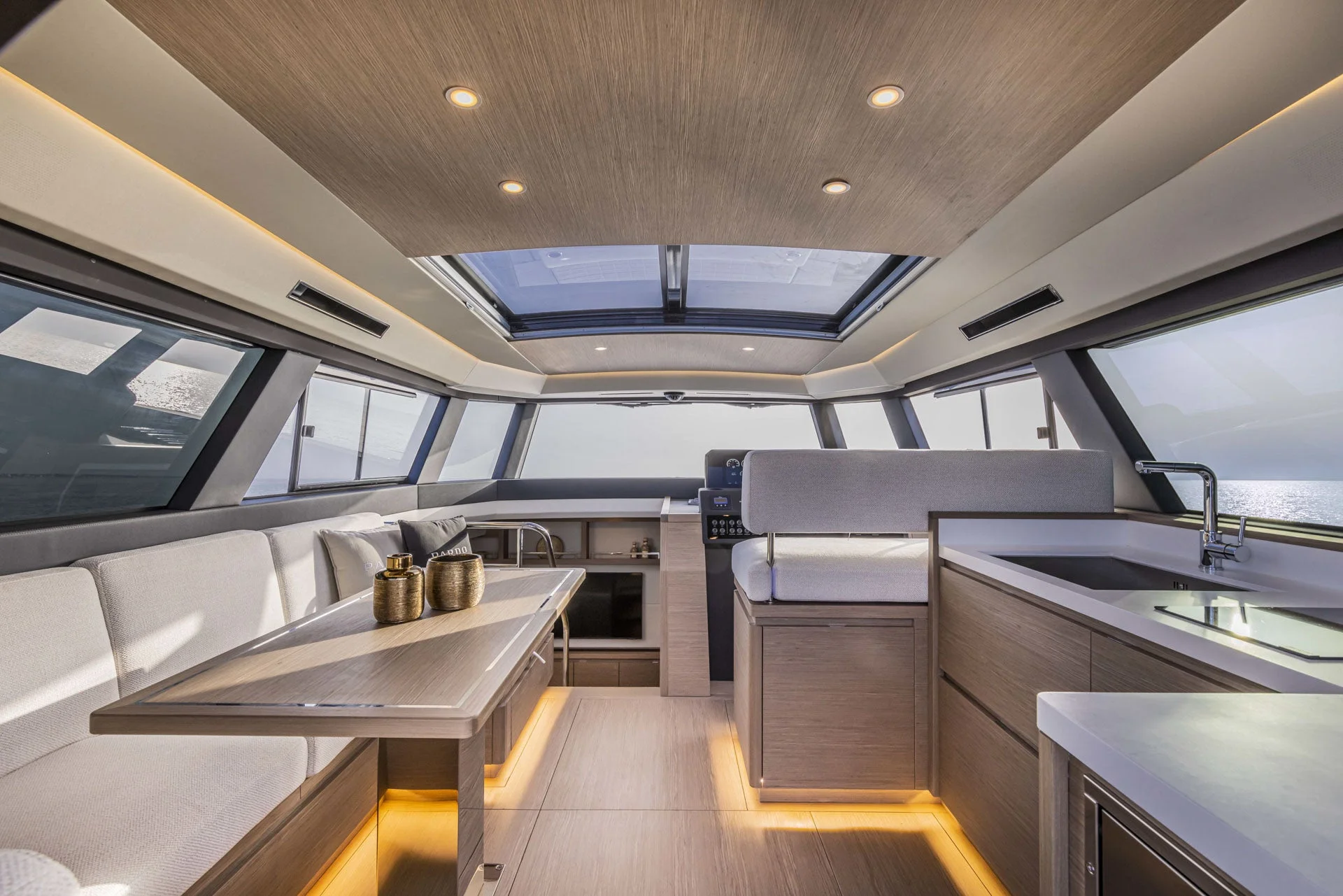
Layout also expresses an operating philosophy. A yacht that invites the owner to take the helm and participate in every departure can feel very different from one designed around being looked after. This is not merely a technical distinction. It affects how spontaneous a trip feels and how the owner relates to the vessel.
The LYRA catalogue helps identify yachts within a relevant size and concept. The deeper selection question is what those yachts ask their owners to do, and what they make easy for everyone aboard.
I would compare similar-size finalists by narrating the same day in each. Where does the owner begin? Where do guests naturally gather? What changes when someone wants solitude? How does the day end? If the stories differ, the yachts are not equivalent simply because their dimensions do.
The right comparison makes space tangible. It allows the buyer to choose the life a yacht's design creates, rather than the number that first placed it in a search result.
Similar dimensions are a useful invitation to compare, not a promise of equivalence. The owner may find that the smaller-feeling yacht is the one that gives people the right amount of connection, while a more expansive design offers the privacy another family needs. The measurements set the stage; the arrangement determines the experience.
The difference can become even more apparent in changing weather or at night, when the beautiful photograph is no longer the reference point. Protection, movement and the ability to find a comfortable place for everyone begin to matter in new ways. A comparison should be able to survive those less glamorous hours as well as the perfect afternoon.