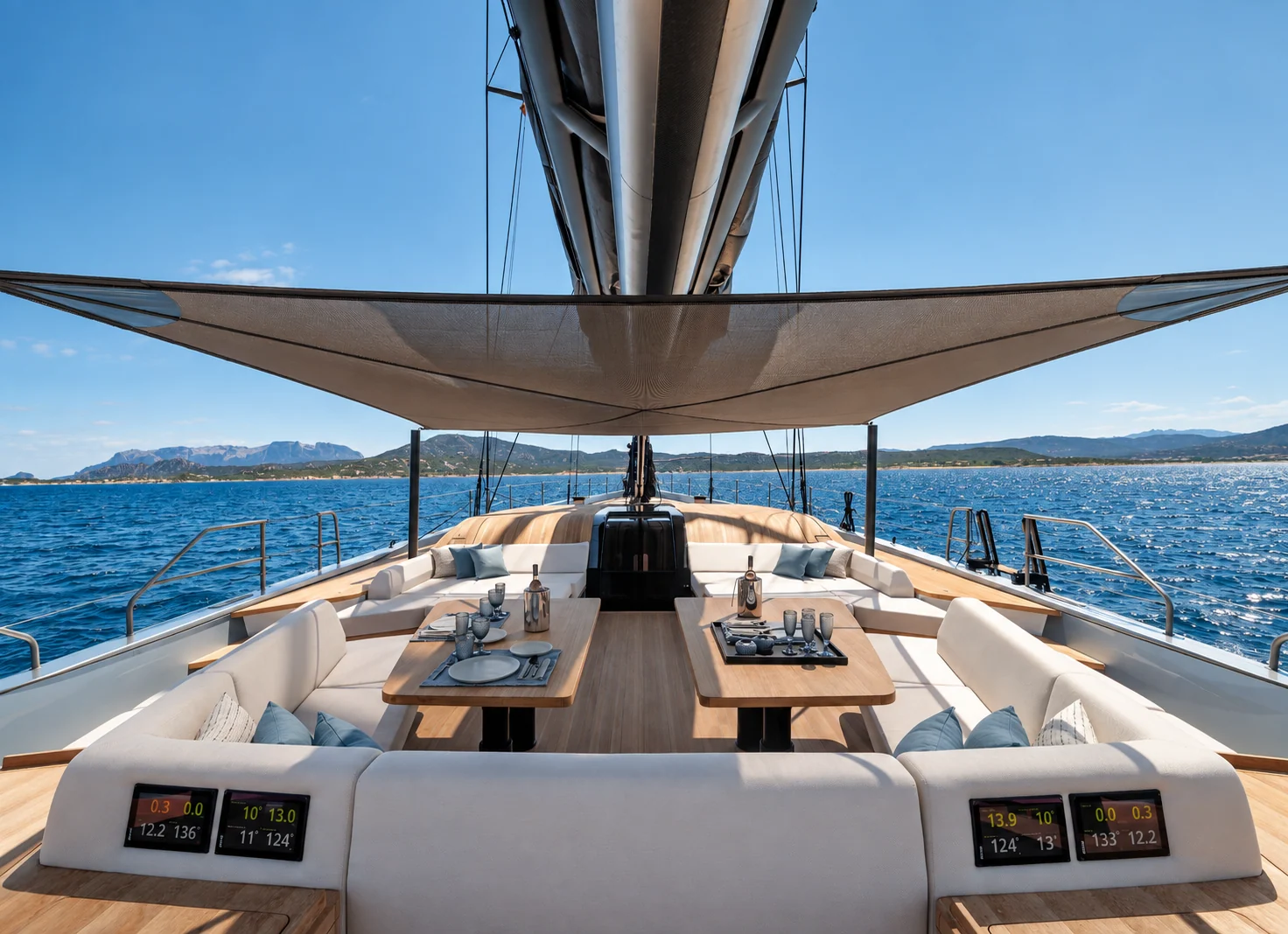
The table is set outside and the company has settled into the view. Food arrives from the galley, a drink is brought over and the meal becomes part of the afternoon's easy conversation. The route supporting those small movements can make a real contribution to how comfortably a yacht hosts people.
The galley brief describes the meals and service you want, while Guest Capacity helps identify candidates for the company you will invite. Their connection becomes physical in the route to the outdoor table, with the yacht arranged as it will be used.
Follow one meal through the room plan
Begin with the lunch you expect to enjoy regularly. A simple meal for family gives the route a recognisable purpose. The person preparing or serving it can explain where food is made ready and how the outdoor table is reached through the proposed arrangement.
The path may pass through the saloon, a doorway or a change of level. Each part belongs in the assessment, including where the relevant doors rest and how furniture affects the passage. A drawing shows the connection; an appropriately arranged viewing reveals how the occupied space feels.
The owner should consider the whole sequence under the captain's and service team's appropriate arrangements. The aim is to understand a working route during purchase, with the professionals assessing the actual use and procedures for the vessel. The exact configuration should be clear.
Put people in the dining seats
A route can look generous before chairs are occupied. Place the intended company around the table and look at where people pass behind them. Someone may want to get up, return from another area or reach a facility while the meal is being prepared.
Guest Capacity in the LYRA catalogue provides an initial search reference. The actual places at the outdoor table give the meal its scale, with permitted numbers and operation confirmed for the yacht. A dining arrangement should be assessed for the company you really invite.
Look at the approach to the table as well. The person serving needs an arrangement suited to the selected meal and furniture. The owner can identify what feels comfortable from the guest's seat, while the relevant professional explains how the work would be organised.
The relationship can influence the atmosphere of hosting. A route that keeps the cook close to the company may suit an owner who enjoys preparing food personally. Another arrangement may support a more separate professional service. The preferred role of the host gives the choice meaning.
Give preparation and clearing their own places
The journey includes more than the first dish arriving. The people preparing the meal need suitable surfaces and storage, and used items need an agreed route back to the relevant facilities. The whole galley and service arrangement should support that routine.
Consider the point when a fresh dish is ready and used items are returning from the table. The person managing service can explain how those movements fit the particular route while guests remain seated. A useful review identifies where the work happens and how the occupied furniture relates to it. This gives the connection a working context beyond its distance on a drawing, with the actual method assessed for the vessel and team.
When professional cooking facilities form part of the brief, Full-Service Galley provides a relevant catalogue reference. The actual equipment, layout and route to the table can then be assessed together for the intended menu, service and company.
The cook or chef can contribute particularly useful observations during a viewing. A convenient surface, the position of a door or access to storage may affect the proposed routine. Their assessment should be connected to the actual specification, with technical matters addressed by the yard and relevant specialists.
The owner then sees a complete picture. The kitchen supports the intended meals, the dining area accommodates the guests and the route connects the two through an understood service arrangement. Food and hospitality are considered together within the purchase.
Compare the connection in its everyday state
Convertible tables, movable seats and opening panels can alter the room plan. Establish the positions expected during a normal lunch and understand any preparation required to reach them. The supplied pieces and arrangements should be identifiable in the offer.
Follow the same meal through each leading candidate. Keeping the company and intended service consistent makes the differences more useful. The adviser and professional team can address any remaining questions for the actual yacht.
The owner can record concrete impressions: a pleasant connection with the galley, a convenient doorway or enough space for the company to remain comfortably seated. These observations explain the personal appeal more clearly than a general claim that the yacht is good for entertaining.
A well-considered route supports the meal quietly. Guests enjoy their table and view, the people preparing food have an appropriate arrangement and the afternoon remains centred on the company. Choosing that connection carefully gives everyday hospitality a lasting place in the pleasure of ownership.