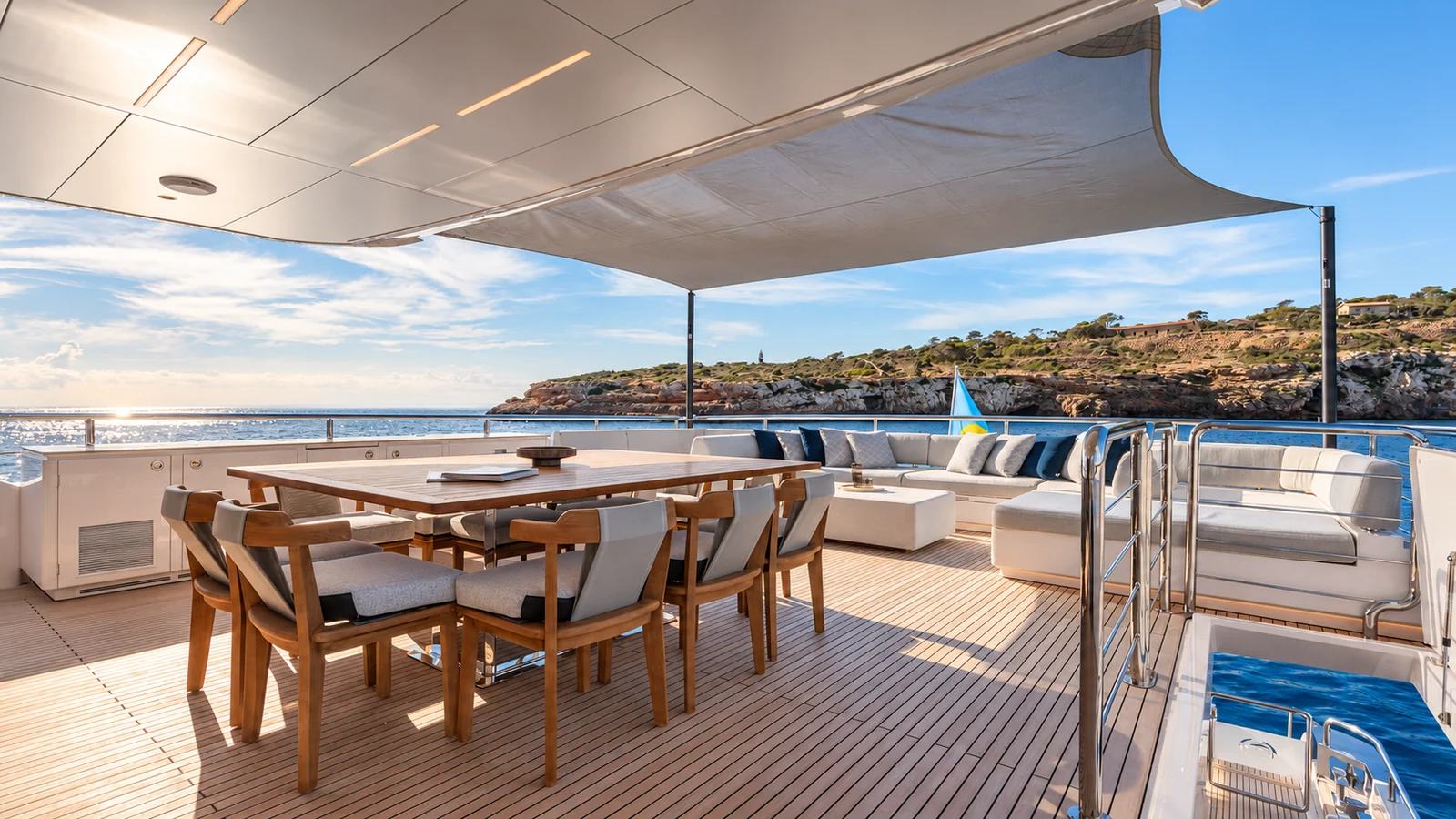
A familiar stretch of coast can become a rich part of ownership. You return with different friends, enjoy another kind of lunch and see the same view in changing light. The destination may be close to the home port, while the day feels distinctly its own. Your yacht provides a personal place through those variations, ready to become part of a regular coastal rhythm.
The Travel marker helps focus the search on the local outings, and climate suitability relates it to the intended season. The actual yacht and operating arrangements can then be assessed around the days you would be happy to repeat.
Let familiarity give the day a personal character
Knowing what you enjoy nearby can make the purchase conversation unusually clear. A favourite view, a preferred kind of shore visit or a table setting you would use often gives the yacht a specific role. Describe those experiences to the adviser and captain as a concrete part of the purchase brief.
The company changes the outing as much as the place. A quiet visit with a partner has another atmosphere from lunch with friends or an afternoon with family. The layout should offer comfortable places for the people who will regularly share the coast with you.
This is a useful way to assess space. A table enjoyed every weekend, a shaded seat used for reading or a protected saloon can each become central to the ownership. The value comes through the hours spent there, with familiar surroundings allowing attention to settle on the company and the day itself.
A memory of a good local afternoon can contain precise preferences. You may remember the view from one seat, the way people gathered around the table or a comfortable place to settle after lunch. Bring those qualities into the viewings. They give the adviser something tangible to connect with the layouts, while the captain assesses the actual outings in the place you know.
Choose the rooms around repeated local visits
In the LYRA catalogue, the Travel marker helps frame the style of use. The actual layout provides the places where that use becomes enjoyable. Sit in the relevant seats during viewings, with furniture arranged as it will be occupied.
Think through the simple domestic sequence. Belongings arrive, food is prepared and the company gathers before choosing different places to sit. Suitable storage and convenient movement can make these ordinary moments comfortable without requiring a large change of programme each time.
The cabin's role should also be clear. Some owners want occasional nights aboard within their local routine; others mainly use the protected room for resting or changing during the day. The actual accommodation and equipment should suit that intended role, with the appropriate professional assessment of the vessel.
The home berth joins the picture early. The captain and providers should confirm the yacht's access, dimensions and support arrangements for the base. The owner can then see how arriving for a short visit connects with the experience aboard. A coherent preparation routine can make the local pattern particularly satisfying to repeat.
Give the season a range of comfortable settings
Climate suitability introduces the periods in which you expect to use the yacht. The actual shelter and installed systems need assessment for the vessel and location by the relevant professionals. The owner's personal comparison concerns the places they would enjoy through those visits.
An outdoor table can be central to one kind of day, while a protected interior offers another atmosphere. The relationship between them may let the company choose comfortable positions as preferences and circumstances develop. Experience those spaces from the seats you will actually use.
The captain develops the appropriate operating programme for each outing, including suitable alternatives. Familiarity with the coast gives the owner clear preferences, while the professionals assess the actual conditions and arrangements. The desired experience can remain recognisable across different appropriate plans.
This gives local ownership variety through a consistent base. You keep the familiar yacht and company while the light, meal or view contributes something new. The pleasure grows through attention to the places and habits you already know you enjoy.

Make the return part of the routine
The end of the visit should have an understood arrangement. Guests gather belongings, the captain manages the appropriate arrival and the yacht passes into its agreed after-use care. The owner should know who confirms relevant preparation for the next outing.
Personal items can have familiar places aboard, with the household team understanding what remains and what travels home. Those details give the yacht continuity between visits. The next arrival begins in a place already associated with your preferred way of spending time.
When comparing candidates, picture several ordinary outings across the season. The leading yacht should support the company, rooms and preparation that make those days appealing. Technical and operational questions receive their professional review alongside that personal assessment.
Staying close to home can give ownership a generous place in everyday life. The sea becomes somewhere you return to regularly, with your own yacht holding the meals, conversations and quiet moments that make familiar waters worth enjoying again.