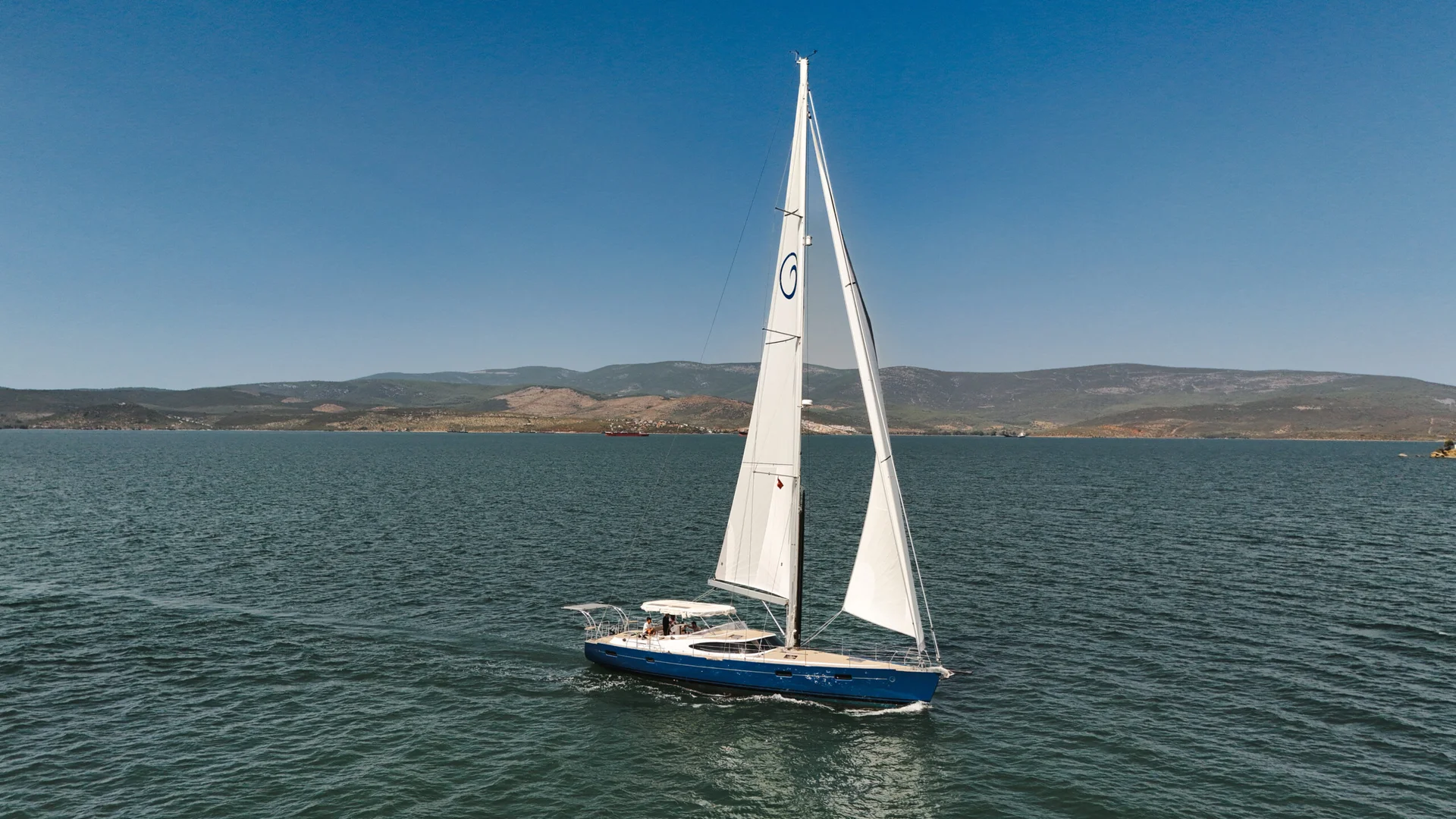
On some coastal outings, the main yacht moves from its home berth to another marina, with everyone stepping straight onto the quay. The tender may have no part in that particular day. On others, an anchorage and a trip ashore make it central to the experience. Where you keep the tender should follow these intended journeys, because carrying it aboard and keeping it at the home base create different possibilities.
For an owner selecting a yacht, the question is especially useful before the stern arrangement becomes a fixed preference. It connects deck space, storage and shore access to the coastal life the yacht will support.
The tender has a place in the itinerary
Begin with the stops you expect to repeat. If they involve direct access to a quay, the main yacht may provide the connection to shore for those visits. If you want the freedom to anchor and take people ashore, the tender becomes part of that outing's preparation.
Keeping it at the home marina can suit a programme in which it is used selectively, provided storage, access and launch arrangements are available and agreed. The owner can then decide which trips require it aboard. That decision deserves to be made while planning the day, with enough time for the people preparing the yacht to act on it.
A change of plan should be considered too. Leaving the tender ashore changes which shore visits are available once the main yacht departs. The captain can plan around that known arrangement, including the options appropriate to the destination. This keeps the intended flexibility clear to everyone aboard.
Understand what carrying it occupies
Tender storage can take several forms. A garage contains it within the yacht's structure; a platform or davits can carry it outside. Each arrangement allocates space differently, and the effect is most noticeable in the places where people want to sit, swim or board.
Catalogue example: the Kraken 58, listed at 17.76 metres, has equipment information describing electric davits and a RIB. This is an example of an exterior carrying arrangement, useful to compare with yachts that accommodate a tender in a garage. The actual tender and equipment supplied belong to the individual offer.
On a yacht with an exterior carrier, examine the stern with the tender in its normal stored position. Then understand the arrangement after launch through an appropriately conducted demonstration or explanation. The difference may affect the view, access to the water or movement across the aft area. Those observations give the comparison a physical basis alongside the convenience of carrying the boat.
Distinguish the tender itself from the fixed equipment supporting it. Assess the yacht as configured with the boat ashore, including the handling hardware that remains. The responsible team should explain which parts of the space are then intended for guests and which retain an equipment function. This gives the owner an accurate picture of the layout in that state, with the proposed uses assessed for the actual installation.
A garage creates its own allocation within the yacht. During selection, establish what is included, which tender fits and how the handling equipment is arranged. The relevant comparison includes the whole stern layout, so the storage choice remains connected to the yacht you are buying.
Make the shore arrangement a real arrangement
A tender left at the home base still needs a suitable place. Confirm the proposed storage with the marina or actual provider, including access, handling and the way the boat will be prepared for use. Available space, hours of service and the people authorised to operate equipment all matter to the arrangement.
Describe what you expect to happen before a trip. Will the tender be launched separately, transferred to the yacht or collected from another berth? Who confirms readiness, and when? A clear sequence helps you judge whether selective carriage will feel convenient in your regular pattern of use.
If selective carriage is proposed, have the particular tender and yacht-side installation assessed together by the appropriate specialists. The shore provider's handling arrangement and the boat's carrying system need to be understood as parts of one plan. The owner can then decide between trip patterns on a concrete basis, knowing what preparation has been assessed and who is responsible for providing it.
The return deserves the same clarity. Equipment may need cleaning, the tender may need charging or replenishment, and the next outing may involve a different plan. Assigning these tasks to the appropriate provider keeps ownership organised around the intended experience.

Compare the two versions of your coastal programme
The Travel and Tender Garage markers are useful entry points in the LYRA catalogue. The first identifies the broad style of use; the second highlights one storage arrangement. For candidates with other carrying systems, use the yacht's description and specification to understand the alternative.
Imagine the same favourite weekend in two versions. In one, the tender travels with you and remains available at each stop. In the other, it stays at the agreed home base while the main yacht follows a route suited to that choice. Notice which opportunities you gain in each version and which preparation the arrangement requires.
You may prefer regular carriage because spontaneous shore visits are part of the pleasure. You may prefer a carefully organised shore-storage plan because your usual outings favour direct marina access. Both can support enjoyable ownership when the physical arrangement and itinerary agree. Resolving this early gives the tender a clear role and lets the main yacht's living spaces be chosen with confidence.