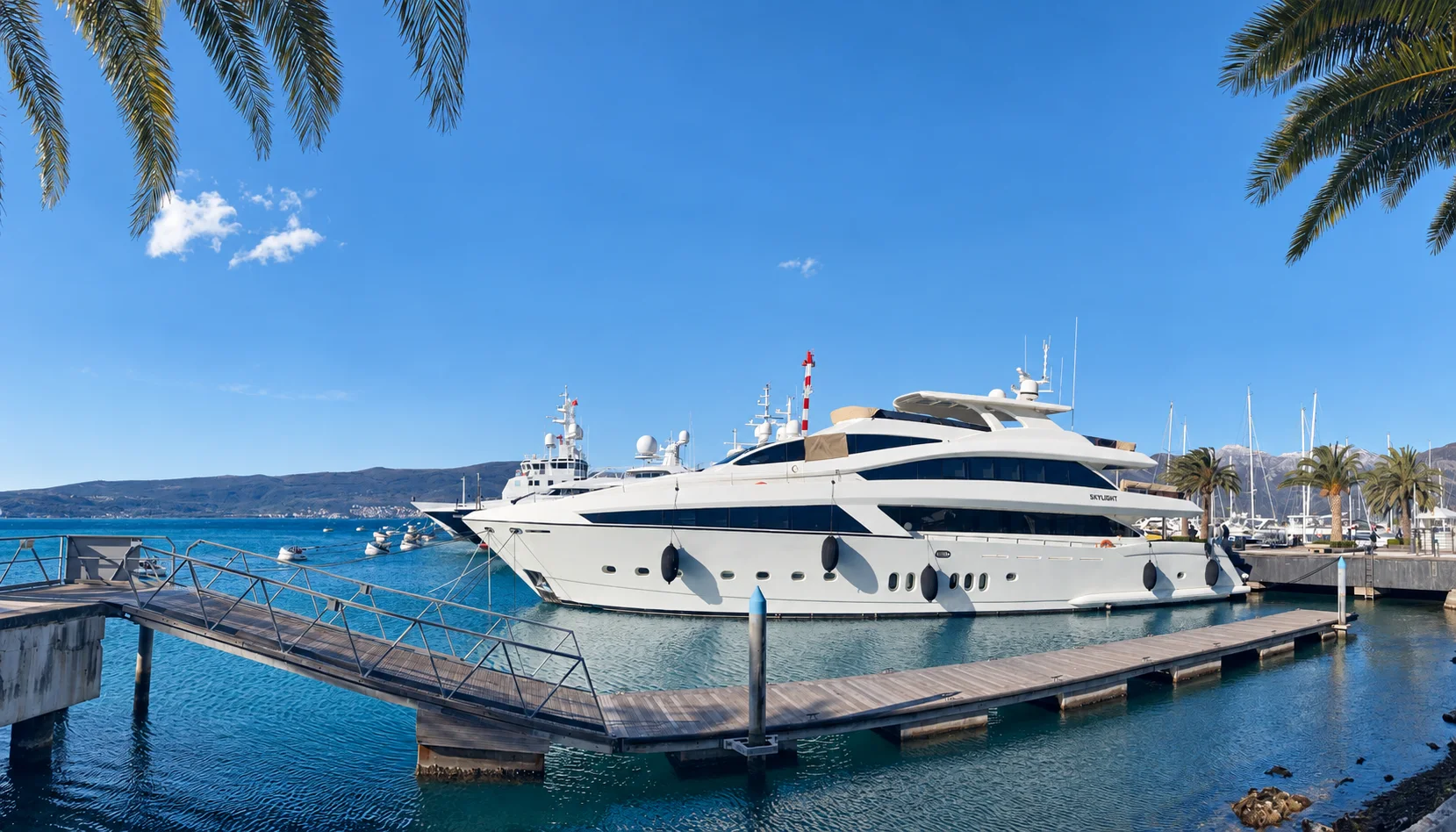
A sea trial is the moment when a yacht begins to answer questions that photographs, specifications and dockside inspections cannot settle.
The buyer can feel how the yacht accelerates, turns, responds at low speed and behaves at the helm. The technical team can observe engines, steering, stabilisation, vibration, noise and onboard systems under load. The results can then be compared with the agreed specification, survey findings and acceptance criteria.
The value comes from preparation. An unstructured trip may produce a pleasant impression while leaving important questions unanswered. A useful sea trial begins with a written scope, named participants, defined conditions and a clear process for recording what happens.
Decide what kind of trial is taking place
The term “sea trial” can describe different events.
For a used yacht, the trial may form part of a pre-purchase survey and help the buyer decide whether to proceed. For a new yacht, it may be one stage in a formal delivery and acceptance process against a builder’s specification. After a major refit or propulsion repair, the purpose may be to confirm that particular work has been completed and systems have been recommissioned successfully.
These situations require different documents and decision rights. The contract should establish what the trial can trigger: acceptance, a list of corrections, further testing, renegotiation or withdrawal. The RYA’s buying guidance specifically advises buyers to review the sale agreement and ensure they understand their ability to withdraw if a sea trial or survey is unsatisfactory.
Legal effect varies by contract and jurisdiction. The buyer’s lawyer should confirm it before the yacht leaves the berth.
Build the scope before trial day
The scope should begin with the yacht’s documents and the buyer’s unresolved questions.
For a new yacht, this may include contractual speed, engine loading, manoeuvring, steering, stabilisers, generators, navigation equipment and hotel systems. For a used yacht, the surveyor may focus on cold starting, exhaust, temperatures, RPM, leaks, vibration and equipment whose condition could not be assessed while dockside.
The owner’s intended use belongs in the scope as well. A buyer planning owner operation needs time at the helm and close-quarters manoeuvring under appropriate supervision. A family expecting long passages may want to understand noise and motion in cabins and social spaces. A buyer prioritising quiet anchor time should pay attention to generators, ventilation and stabilisation at low speed or rest where the installed systems allow it.
The list should remain specific enough to complete and record. “Check performance” is vague. “Record speed, RPM, fuel state, load, sea condition and direction during the agreed run” creates usable evidence.
The programme should also define minimum conditions and the response when those conditions are absent. Calm water may be appropriate for repeatable performance measurements while revealing little about motion in a typical coastal sea. Poor visibility or unsafe weather may prevent parts of the programme entirely. Postponement is preferable to creating a formally complete record from conditions that cannot answer the agreed questions. Any omitted test should remain open, with a reason and a new verification route, instead of disappearing from the closeout list.
Put the right people on board
The buyer should know who is responsible for operating the yacht, directing the tests, recording results and deciding whether a finding is acceptable.
The captain or builder’s representative normally retains operational command. An independent surveyor or owner-side technical representative observes the yacht and protects the integrity of the test scope. Specialist engineers may be needed for engines, propulsion, stabilisation or other complex systems. The broker coordinates the buyer’s commercial process but should not replace the independent technical judgement required for acceptance.
The buyer also has a role. Experiencing the yacht matters because some findings concern fit rather than defect. Visibility from the helm, the transition onto the plane, the sound level in a preferred cabin and movement through the yacht under way can influence whether the yacht feels right for its intended life.
Safety and command remain with the responsible professionals. A buyer taking the helm should do so only when invited and supervised.

Record the conditions as carefully as the result
A speed figure has limited value without context. Fuel, water, stores, people aboard, wind, sea state, current, depth and hull condition can all affect performance. The trial record should capture the conditions in which each observation was made.
The same principle applies to sound, vibration and temperatures. A brief reading at one operating point may not represent the yacht across its normal range. The technical team should define where and when measurements will be taken and whether the instrument and method are appropriate.
For used yachts, a genuine cold start can reveal information that a warmed engine may conceal. BoatUS notes that surveyors may observe exhaust immediately after starting, run engines through the required load range and monitor temperatures, RPM and leaks during a trial run. The exact procedure should be set by the appointed surveyor and relevant engine specialists.
Photographs, instrument readings, alarms, videos and written observations should be timestamped and attached to the same trial record. Memory is too weak a basis for an acceptance decision.
Test the yacht as a system
Propulsion is central, although the yacht should also be observed as an interconnected system.
At low speed, the team can assess steering response, gear engagement and manoeuvring aids. During acceleration, it can observe visibility, trim, vibration and the transition to cruising speed. At agreed higher loads, engineers can monitor temperatures, pressures, RPM and alarms within the manufacturer’s operating limits.
Turns and stopping behaviour reveal another part of the yacht’s character. Stabilisation, autopilot and navigation equipment should be exercised according to the test plan. Generators, air-conditioning, pumps and other hotel loads may be tested concurrently where this is safe and relevant, because systems can behave differently when several demands occur at once.
Doors, hatches, furniture and fittings also deserve attention. Movement may expose rattles, flexing, water ingress or closures that appeared satisfactory at the dock. Cabins and working areas should be revisited after the run for heat, smell, water, oil or other changes.
Every observation should lead to one of three outcomes: accepted performance, a defined correction or further investigation.
Separate preference from non-conformity
A buyer may discover that the yacht feels louder, heavier or less responsive than expected while every system performs within specification. That is an ownership-fit question. Another finding may show that contracted performance has not been achieved or that a system behaves outside its documented limit. That is a potential technical or contractual issue.
The distinction should be made by the appropriate specialists, then connected to the buyer’s decision. Personal disappointment should not be disguised as a defect. A material non-conformity should not be softened into a matter of taste.
The written trial scope and contract make this separation easier. They show which results were promised, which were advisory and which concern the buyer’s subjective experience.
When evidence conflicts, the safe response is to preserve the data, identify the responsible expert and define the next test. An unresolved finding should remain unresolved rather than being converted into acceptance through schedule pressure.
End with a decision record
The sea trial is complete when its findings have been organised into a decision, not when the yacht returns to the marina.
The record should list the tests performed, conditions, results, participants, evidence and any deviation from the agreed scope. Findings should be assigned by severity and linked to a responsible party, correction, deadline and verification method.
Some items can be accepted immediately. Others may require a dockside check, haul-out, specialist analysis or a repeat trial. Material issues should pass through the contractual approval or escalation route before the buyer signs acceptance or allows a contingency to expire.
A concise closeout pack should contain:
- the signed or acknowledged trial programme;
- the condition and load record;
- measurement sheets and media evidence;
- surveyor and specialist findings;
- the correction and retest list;
- the buyer-side recommendation;
- the contractual decision and its authority.
The sea trial should reduce uncertainty
The purpose of the trial is clarity. It should show how the yacht performs, how its systems behave under relevant loads and how the experience compares with the buyer’s expectations.
It cannot establish everything. Hidden defects may remain. Weather may limit testing. Some systems need specialist inspection or longer observation. A sea trial complements documentary review, survey, haul-out and technical due diligence; it does not replace them.
When the scope is clear and the evidence is recorded, the trial gives the buyer something more reliable than an impression. It shows which expectations have been confirmed, which corrections are still open and which questions must be resolved before the purchase or acceptance moves forward.