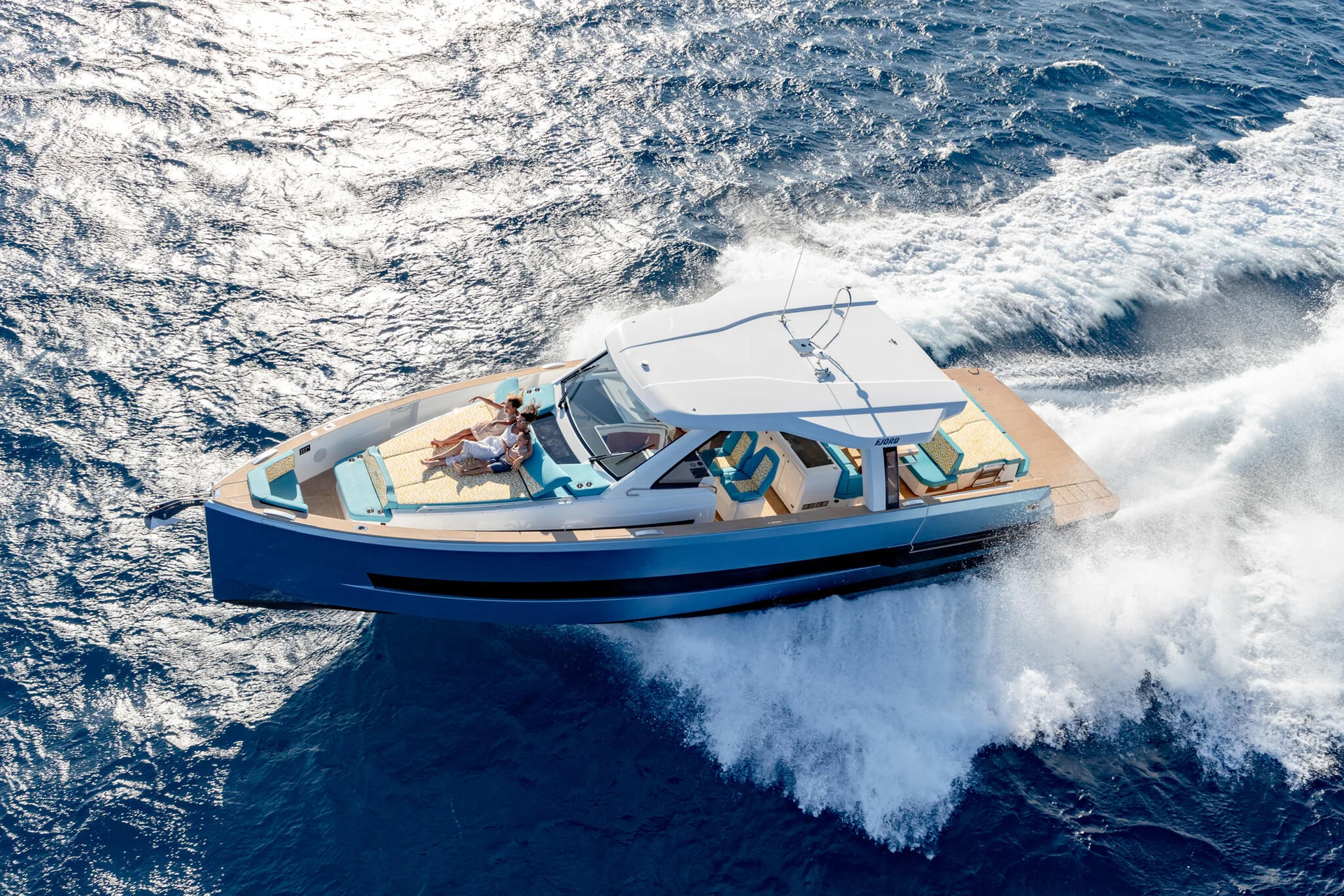
The shortlist is where the purchase begins to take shape
A yacht purchase rarely starts with a perfectly ordered specification. It begins with a mixture of images, ambitions and practical intentions: a particular way of spending time on the water, a preferred design language, a family routine, a wish to travel or simply the appeal of being able to leave the shore for an afternoon. The first useful shortlist gives that mixture a structure.
At this early stage, buyers often remember a feeling more clearly than a specification. It might be breakfast at anchor before the coast becomes busy, children moving safely between the cockpit and the water, or the quiet satisfaction of taking the helm without turning the day into an operation. These are not vague details to be replaced by technical data. They are the beginnings of the brief. The task is to translate them carefully enough that a yacht can be judged by the life it enables, not only by the impression it makes on first view.
Its purpose is not to prove that every corner of the market has been considered. Nor is it to reach a conventional number of options. Three yachts can be too many when they all solve the same problem; six can be appropriate when they reveal genuinely different ways to satisfy the brief. Length matters only after relevance has been established.
This changes the standard for inclusion. A yacht belongs because it adds a credible route to the owner's objective. One model may offer the open circulation and water access needed for social day use. Another may protect the same group in a longer season. A third may introduce a different balance between owner operation, crew support and accommodation. If a candidate cannot be described in those terms, its presence creates comparison without progress.
The value of the shortlist therefore lies in its internal logic. It should help the buyer recognise not only which yachts are attractive, but why certain forms of attraction are more relevant than others.
Let the intended life lead the search
Before brands and model names enter the discussion, the buyer needs a usable picture of life aboard. LYRA's onboarding provides the starting mechanism. It asks about yacht type, hull type, cruising regions, frequency and duration of use, guests, overnight requirements, activities, design preferences, ownership strategy, timing and budget. Taken together, those answers form an initial digital brief and allow suitable parts of the catalogue to come forward.
The strength of this process is not that any single answer determines the yacht. It is that combinations begin to reveal the shape of the decision. Frequent outings without overnight stays point towards a different use of space from extended living aboard. Family time, water sports and business entertaining place different demands on circulation and storage. A first-yacht strategy changes the importance of operating simplicity, future flexibility and liquidity. An interest in a catamaran opens a branch with a different relationship between beam, interior volume and berth requirements.
At this stage, the brief should remain broad enough to discover alternatives. Questions that require a known home marina, a confirmed berth, a local crew arrangement or an insurer's decision belong later, when a broker is testing real candidates against a real operating environment. They are important, but asking them too early can make a digital shortlist pretend to a level of personalisation it does not yet possess.
The digital stage should do something more disciplined: translate the owner's stated intentions into a field of relevant new production and semi-custom yachts, then show the differences that deserve human attention.
Read each yacht as an answer, not as a collection of features
Once the first candidates appear, every model needs an argument. The argument is not a slogan and it is not a list of equipment. It is a short explanation of the relationship between the yacht and the brief.
An enclosed saloon matters because it may extend comfortable use into wind, rain or cooler months. A walkaround deck matters because it may make movement easier when guests are spread between bow and stern. Additional cabins matter when overnight use is regular; for a day-led programme, the same interior volume might be more valuable as storage, a larger galley or a more generous social area. A flybridge can create another setting for the day, while also adding height, equipment and surfaces to maintain. Each characteristic changes the ownership experience in more than one direction.
Imagine two yachts on the same Saturday morning. On the first, the cockpit is already the centre of the day: bags disappear into accessible storage, guests find their places naturally and the water is only a few steps away. On the second, the attraction is different: doors close against the weather, the saloon remains calm and the family can continue the outing when the temperature changes. Neither experience is inherently better. The question is which one the owner expects to repeat, and whether the yacht's layout supports that rhythm without constant adaptation. Seen this way, a feature stops being an item on a specification sheet and becomes part of a recognisable day aboard.
This is why simple feature scoring often disappoints. The yacht with the most ticks can still be the least coherent choice. Features become useful only when they are translated into consequences: more or less protection, more or less preparation, a larger or smaller crew burden, easier or harder movement, greater flexibility or greater complexity.
A defensible inclusion statement keeps those consequences visible. It might say that a model remains because its protected main deck supports frequent family use across a wider season, or because its open layout and water access match a warm-climate day programme. Such a statement can be challenged, verified and refined. “Premium”, “iconic” or “well equipped” cannot do the same work.
Preserve meaningful alternatives
A good shortlist narrows the field without erasing the buyer's unresolved choices. This is especially important when two different yacht archetypes could both fit, but would lead to different forms of ownership.
Consider a buyer who wants regular coastal use with family and friends. An open performance yacht may make every fair-weather outing vivid and immediate. A protected crossover may offer a longer usable season and more interior comfort. A flybridge yacht may add separation between social areas and support longer stays, while bringing more systems and a different operating profile. The shortlist should not force these options into a false ranking before the buyer has decided which trade-off matters most.
The same principle applies to production and semi-custom yachts. A production model presents a relatively defined proposition: the buyer can see whether the layouts, systems and option packages already support the intended use. A semi-custom platform may solve a confirmed requirement through greater choice in arrangement, finish or technical specification. That flexibility is valuable when it has a purpose. Without one, customisation can turn an initially coherent yacht into a more expensive and less legible project.
Meaningful contrast gives the buyer something to decide. Duplication merely gives the buyer more material to review. If two yachts occupy almost the same position, the second should remain only when a difference in configuration, delivery, service, operating model or design has practical significance.
Exclusion is part of good advice
Removing a yacht from consideration is not a negative judgement about the yacht. It is evidence that the brief is working.
A candidate may leave because its principal spaces do not serve the normal guest pattern, because the configuration required by the buyer is unavailable, or because its operational demands outweigh the benefit it adds. Another may be visually compelling but offer no distinct advantage over a model already under consideration. The reason should be recorded in plain language, particularly when the yacht was initially attractive.
Exclusion also creates a certain calm. Without it, an appealing image, a familiar name or a new announcement can reopen the entire search each week. A stated reason allows the buyer to admire a yacht without confusing admiration with fit. It makes room for taste while protecting the logic of the decision — an important distinction in a market where almost every serious candidate has been designed to invite desire.
This record protects the decision from drifting back towards familiarity and enthusiasm. It also allows the shortlist to evolve intelligently. If a yard introduces a new layout, confirms an option or changes a delivery position, the relevant exclusion can be revisited without rebuilding the entire search.
Clear exclusions also improve the conversation with a broker. Instead of asking for more suggestions in the abstract, the buyer can explain which routes have already been tested, which compromises were rejected and which questions remain open. The broker can then investigate rather than restart discovery.
The broker turns digital fit into operational evidence
An initial LYRA shortlist is a decision framework, not the end of the purchase process. Once the field is coherent, a broker can test the details that depend on place, timing and the exact yacht.
That work includes confirming the configured dimensions against a berth, discussing build slots and specification with the shipyard, reviewing local service coverage, establishing a realistic crew model and arranging inspections, layout reviews and sea trials. It can also expose costs or constraints that are not visible in a high-level preference: optional equipment needed for the intended use, marina limitations, insurance conditions, crew accommodation or the practical sequence of preparing and closing down the yacht.
The distinction between stages matters. Onboarding should identify promising directions from the buyer's intentions. Catalogue data should make the candidates intelligible and comparable. Broker diligence should verify whether a specific yacht, specification and operating arrangement can deliver the experience in practice. When each stage does its own job, the buyer gains precision without false certainty.
A shortlist should make the next decision clearer
The final test is not whether the shortlist looks comprehensive. It is whether the buyer can explain why every yacht remains.
For each candidate, the answer should cover the use it serves, the trade-off it introduces, the evidence already available and the questions that still require confirmation. The models should be different enough to illuminate a real choice, yet close enough to the brief that further investigation is justified. The catalogue then becomes what it should be: an invitation to explore relevant yachts, understand their character and continue the selection with better questions.
That is how a shortlist earns trust. It does not reduce a complex purchase to a score or overwhelm the buyer with possibility. It creates a coherent path from intention to comparison, from comparison to verification and, eventually, from interest to a yacht that genuinely fits the life the owner wants to lead.