The welcome begins at the edge of the berth. A guest puts down a bag, somebody offers a hand and the family moves into its own space on the water. When that transition feels comfortable, the invitation starts well before the yacht departs.
For buyers expecting to use several coastal stops, it is worth understanding the different arrangements they may meet. A floating pontoon and a fixed quay create different relationships with the vessel. The right question is how the actual yacht, shore structure and people fit together.
Length overall helps establish the yacht's scale, while family suitability keeps attention on the people using it. The LYRA catalogue provides those starting references. A practical boarding assessment belongs to the exact proposed installation and berth.
Notice what moves and what stays in place
A floating pontoon follows the water level within the limits of its installation. A fixed quay has a fixed shore height. The vessel itself responds to loading and conditions, so the gap and relative height at the boarding point deserve attention in either setting.
The useful comparison is made at the actual point of transfer. A yacht that is convenient alongside one structure may need a different arrangement at another. The responsible operator and marina can explain how the expected conditions affect the proposed access.
For the owner, this turns an abstract berth description into a more familiar picture. Where do people stand before boarding? Where can luggage wait? What assistance is normally available? A short visit can reveal these details far more clearly than a photograph taken from the water.
Include the shore approach to the transfer point. Where a pontoon is reached through another connection from land, the family still needs to make that part of the journey. At a fixed quay, the route through the shore area has its own arrangement. Following both from a known meeting place helps the owner understand each whole arrival, with the relevant access conditions assessed by the responsible people.
Follow one person's whole arrival
Choose someone from the regular company and imagine their ordinary visit. They might carry a small bag, prefer to move slowly or want a free hand throughout the transfer. The assessment should reflect that person rather than a general promise that a yacht is accessible.
Continue the route after the first step. A guest still needs somewhere to put belongings, a clear way towards the seating and enough space to pause while another person boards. A comfortable transfer can lose its ease if the next few metres are occupied by furniture or equipment.
Families may also bring items that change the practical picture: children's bags, food or equipment for the day. It helps to understand how those things will move separately from the people. The invitation should allow guests to concentrate on arriving comfortably.
Any arrangement for a person's mobility or a particular child's needs requires appropriate assessment. The owner can describe the desired experience while qualified people establish the suitable equipment, assistance and operating conditions.
Ask about the offered yacht's boarding equipment
A gangway, side opening or stern arrangement can look quite different in separate model photographs. Confirm which configuration belongs to the yacht being considered and how it relates to the planned berth.
The relevant drawings and a direct demonstration can explain the usable route, working positions and storage of boarding equipment. They can also show whether the arrangement changes another area of the yacht while it is in use.
Length is relevant to the overall berth discussion, but it cannot describe the transfer on its own. Two yachts around the same length may meet the shore in quite different ways. That is a good reason to preserve boarding as a specific viewing question rather than assume it follows automatically from choosing a size band.
The broader home-port guide addresses the marina agreement and yacht dimensions. Boarding adds the human route through that physical arrangement.
Consider leaving as part of the same visit. Guests return with the belongings they brought, perhaps after several hours aboard, and need an understood place to pause once ashore. The owner can describe that return to the operator and marina alongside the arrival. It gives the comparison two directions through each actual berth arrangement, with appropriate assistance established for the people involved.

Examples around an eighteen-metre scale
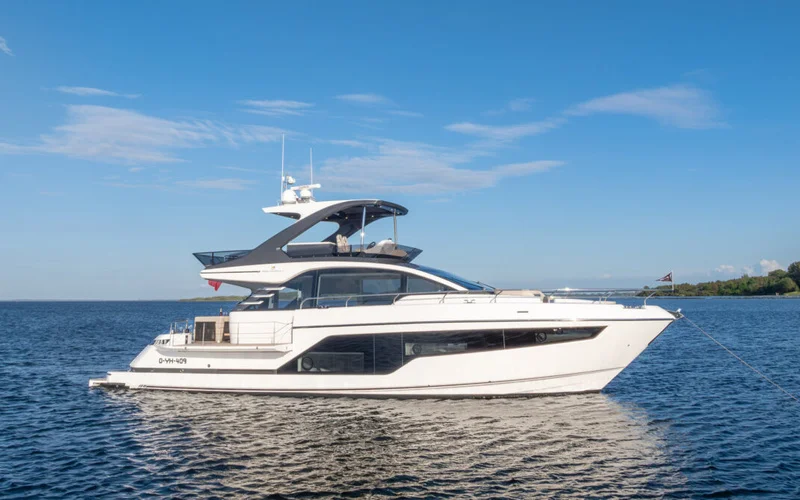
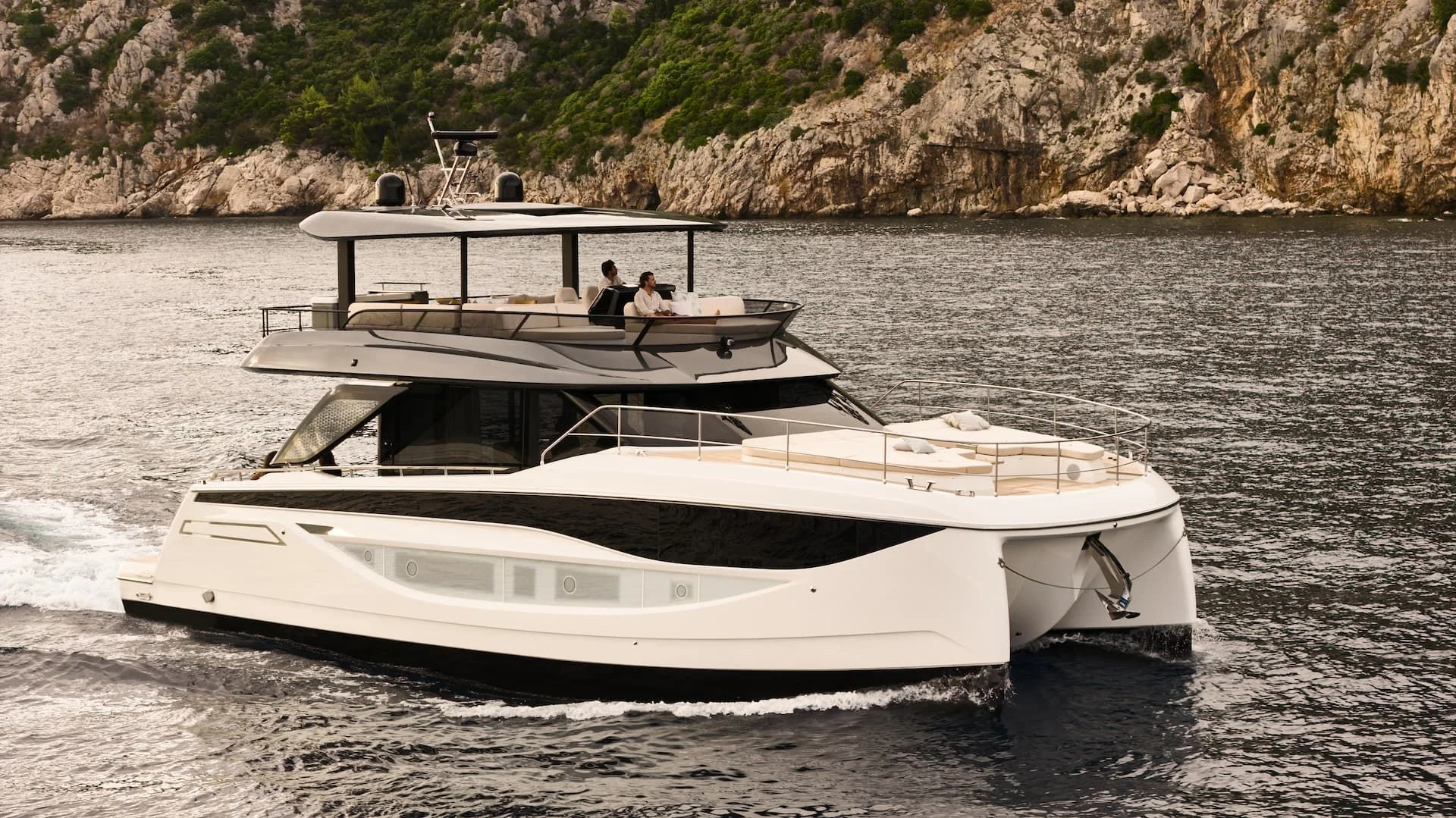
The Prestige M7, listed at 17.94 metres, and Pardo E60, listed at 18.08 metres, are examples carrying the Family suitability signal. They introduce a similar size frame for discussing how different yachts meet the berth.
For yachts in this band, the buyer can bring the same family arrival to each viewing. The useful evidence is the actual boarding point, current equipment and route into the living space. The examples establish scale and family relevance while leaving those physical details to be examined on the offered configurations.
Make the familiar berth a pleasant beginning
Once the preferred yacht is taking shape, return to the real shore setting. Confirm how the family will board, who provides any needed help and where guests can comfortably gather before and after the transfer.
That understanding adds confidence to the purchase. It also makes hosting feel more natural. Friends know where to arrive, belongings have a place and the owner can welcome everyone into the day. A carefully matched boarding arrangement becomes one of the quiet conveniences that makes the yacht a pleasure to use often.