For children, a cabin can become a memorable part of owning a yacht. It is where their belongings stay, where they settle after an evening ashore and where a familiar weekend begins the next morning. Choosing its sleeping arrangement deserves the same personal attention as choosing the owner's room.
Bunks and twin berths give that space different characters. Both can suit a family, with the best arrangement depending on the children, the yacht's actual layout and the seasons you expect to spend aboard. Family suitability and overnight accommodation provide useful starting parameters in the LYRA catalogue.
Two ways to share a room
Twin berths place the sleeping areas beside one another, with their usefulness shaped by the passage and storage around them. Bunks arrange the places vertically, creating another relationship between the beds and the room. The children's experience depends on the particular dimensions, access and setup rather than the label alone.
Bring their ages and needs into the conversation with the representative. For any upper berth, ask the yard or supplier to identify the documented intended users, restrictions, access and protective features of the supplied arrangement. Parents can discuss their child’s particular needs with the relevant qualified adviser and captain. Apply that child-specific assessment to the lower berth or twin room as well. The berth count is the starting information for an accommodation choice that needs to suit the actual children.
Children old enough to contribute can often make the choice more tangible. They may notice the place for a book, the way they would reach their bag or the room available when both are getting ready. Those observations help connect the plan to everyday use.
Measure the room a few seasons ahead
A growing family's needs develop over time. Consider the usable sleeping dimensions and the room's ordinary movements with that in mind. Getting dressed, reaching storage and sitting comfortably on a berth all become part of repeated stays.
Ask for usable dimensions in the configuration being offered, including the surrounding space where a child sits up or reaches their belongings. These observations can help compare the current alternatives. A future growth assumption should remain separate from the confirmed dimensions and the supplier’s conditions for using each berth.
The useful comparison includes the space around the beds. A cabin can accommodate two sleepers while offering very different room for their belongings and morning routine. Try to picture the weekend bags, clothing and favourite items the children will bring, with appropriate places for them throughout the stay.
Some layouts offer alternative or convertible arrangements. Establish exactly what is proposed for the yacht being purchased. A movable mattress section, a scissor berth and a different factory cabin plan are different kinds of flexibility, each with its own confirmed scope.
Where a future change is important to the family, have the yard assess it before relying on it. The purchase specification should identify the configuration supplied and any agreed conversion equipment or alternative work. This keeps the longer-term accommodation plan connected to what the yacht can actually provide.
It also helps to distinguish a change the family can make as part of ordinary use from work requiring a yard visit. An available alternative factory plan may involve different joinery and storage. If that option matters several seasons ahead, the yard can explain what would be involved and what can be agreed at purchase.
An example with distinct guest-cabin choices
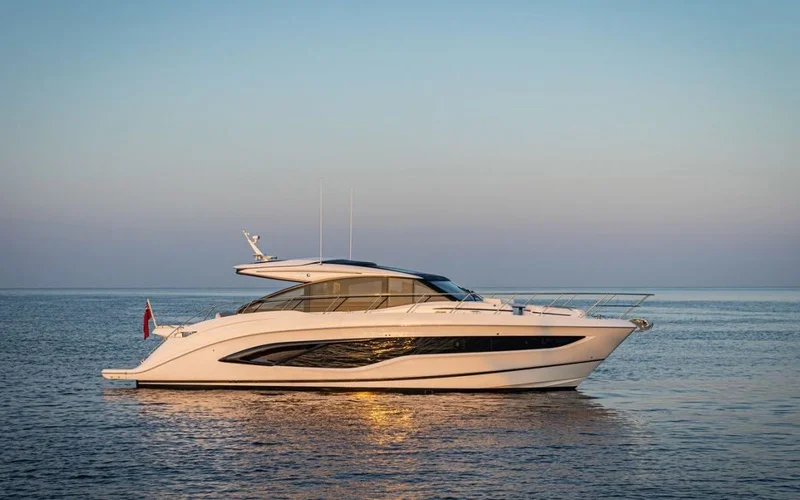
Catalogue example: the Princess V55, listed at 17.81 metres, describes a forward cabin with twin scissor berths that can form a double, alongside a separate third cabin with bunks. This illustrates different sleeping arrangements within a yacht's guest accommodation. It does not imply that the bunk cabin itself converts into a twin room.
When considering yachts with several cabin types, decide who would use each room. A plan that looks flexible in a brochure becomes more meaningful when the usual company is placed in it. You can see whether children have the arrangement they need while other guests remain comfortably accommodated.
The bathroom route belongs to that plan too. Where the children go in the morning, how they reach the family and which storage serves their room all contribute to the cabin's usefulness. Walk these routes together during a viewing when practical.

A room that becomes their own
Beyond the berth arrangement, a few well-positioned details can make the cabin feel welcoming. A suitable reading light, a place for personal belongings and storage they can use comfortably help children settle into life aboard. These preferences can be recorded in the interior brief where the yacht offers relevant choices.
The room should also fit the way the family spends time together. Children may share the cabin mainly for sleeping while using the saloon and cockpit throughout the day. That pattern gives the sleeping space a clear purpose and helps the owner assess its proportions within the whole yacht.
On the final comparison, imagine the children returning to the room after a familiar day on the coast. They should have comfortable places, suitable access and somewhere for the small things that make a stay personal. Choosing with those people in mind gives the yacht a family character from the start, ready to gather memories across the seasons ahead.