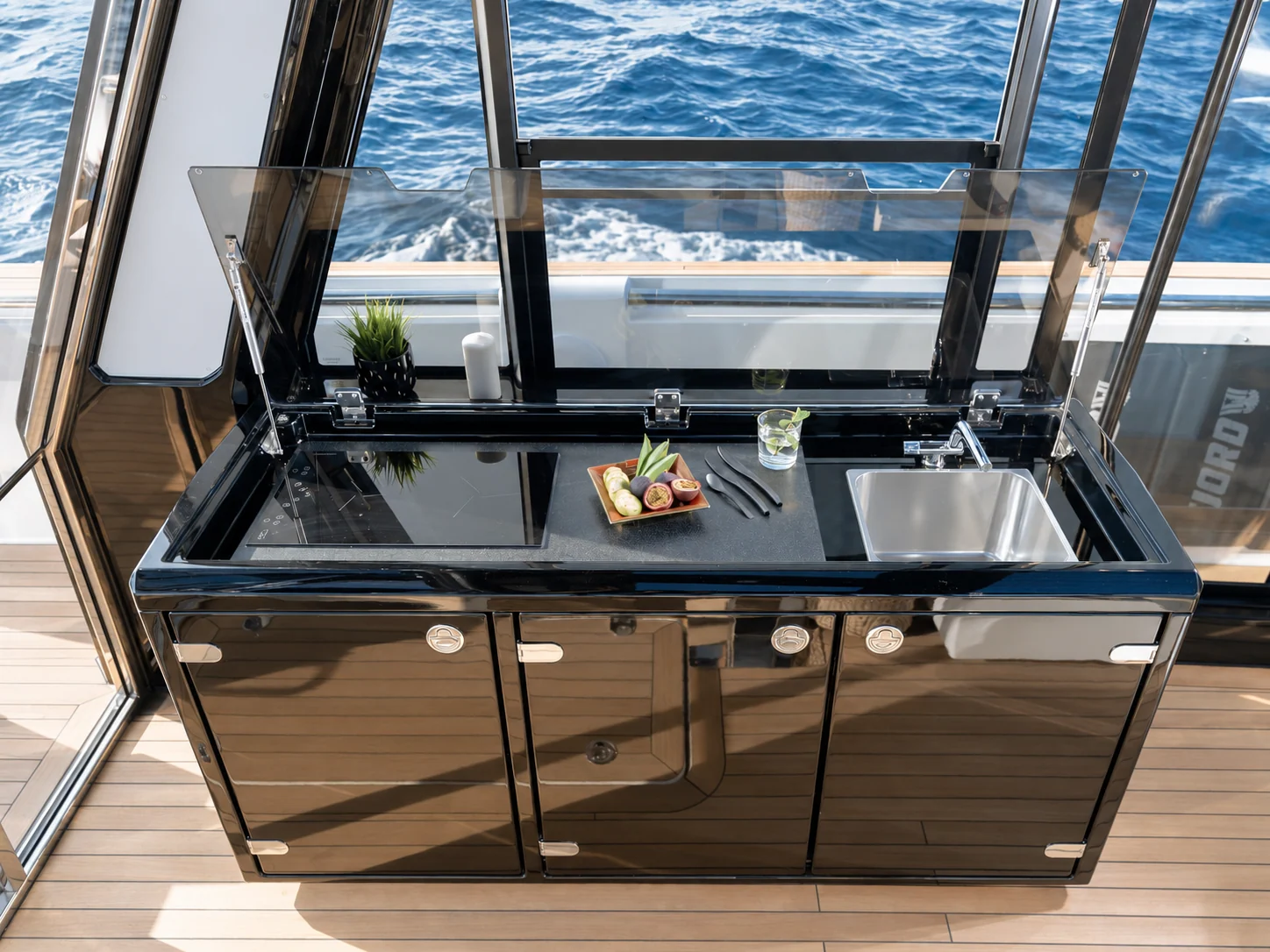
The same lunch can be hosted in two enjoyable ways. In one, the owner cooks while friends sit nearby, with conversation moving naturally between the food and the table. In the other, a professional prepares the meal while the owner remains entirely with the guests. The people, setting and occasion might be identical; the host's role gives the galley a different place in the day.
This distinction is worth making before yacht selection becomes a list of appliances. Galley suitability and the proposed crew arrangement should support the way you actually want to host. The kitchen's connection to the social spaces is central to that choice.
Cooking can be part of being with friends
For an owner who enjoys preparing food, a connected galley can contribute directly to the pleasure of the gathering. Guests see what is happening, someone offers to help and the person cooking remains part of the conversation. The room becomes a social place as well as a working one.
The quality of that connection depends on the actual arrangement. A galley beside the main seating area may let the owner talk comfortably while preparing a simple meal. A more separate room may offer generous working space but a different relationship with the company. Sit where the guests would sit and consider how the host would feel in the kitchen.
Owner-led cooking also has its own preferred rhythm. Some people prepare most of the meal before guests arrive and enjoy only a few finishing tasks aboard. Others want to spend part of the afternoon cooking together. Explaining that preference gives the interior brief more substance than a broad request for an open galley.
Include the part after lunch. An owner who enjoys cooking may also like friends lingering nearby as the kitchen is cleared, or may prefer to join them immediately in another area. The room’s relationship with the table continues to matter after the food has been served. That moment can reveal what kind of connection the host actually wants.
Professional service gives the owner another role
When someone else prepares the meal, the owner may want to stay at the table or move freely among guests. The galley then needs to support the cook's work and the agreed service arrangement. Its connection with the social area remains important, with a different purpose.
A degree of separation can let the kitchen operate while the company enjoys a quieter atmosphere. A connected arrangement can still be attractive when the owner values interaction with the chef. The right answer follows from the experience being purchased and the people who will deliver it.
The chef and captain can help assess the intended setup. They understand how the menu, preparation and staffing fit the yacht, and can explain which layout supports that programme. Their input belongs early in the purchase conversation when professional service will be a regular part of ownership.
Give the search two clear starting questions
The LYRA catalogue includes a galley suitability parameter and Recommended Crew. For a professional cooking programme, the Full-Service Galley designation is a relevant way to begin exploring the market. The actual kitchen and staffing arrangement then need to be assessed against the proposed use.
For an owner who cooks personally, attention may centre on the physical galley and its relationship with the company. A suitability flag for professional service has a particular scope; a yacht's specific layout and equipment reveal how personal cooking could work aboard. Keeping those meanings clear helps the search serve the chosen hosting style.
The recommended crew figure also begins a conversation rather than defining the service everyone will receive. Discuss who will cook, who will attend to guests and how those duties fit alongside the vessel's operation. The captain can develop an arrangement suited to the yacht and planned visits.
For occasional professional service, establish how the visiting cook will become familiar with the galley and who will coordinate the visit. A crew recommendation alone gives no account of those separate responsibilities. The discussion should connect the proposed team with the particular gathering and the equipment available aboard.
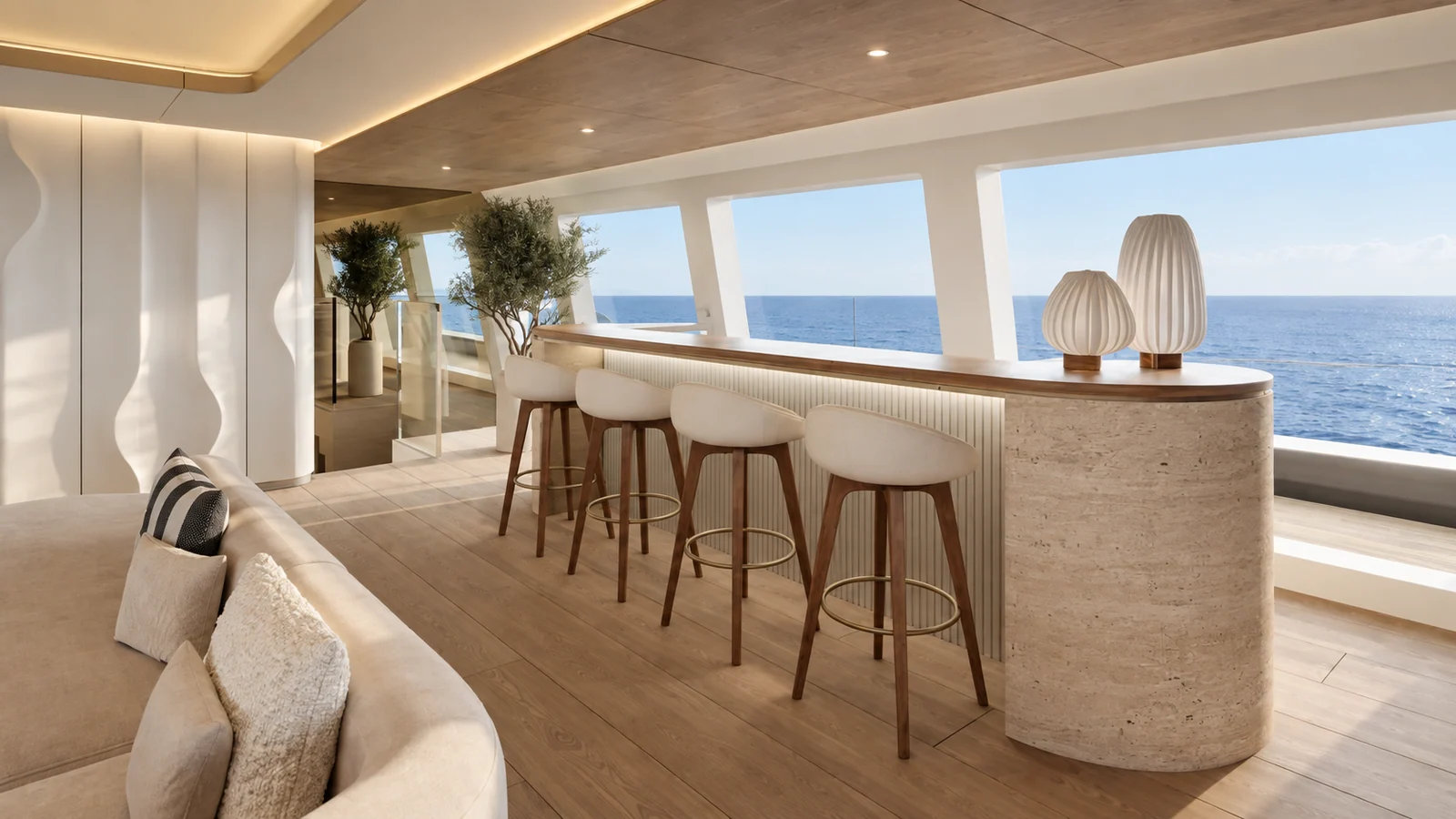
Picture where you want to spend the meal
A useful viewing follows the owner's place through the gathering. Before lunch, are you in the galley, welcoming people or already sitting with friends? During the meal, do you enjoy getting up to finish a dish, or would you prefer the preparation to continue separately? Afterwards, where would you like the conversation to move?
These questions give the room's design a personal measure. An opening, a seat beside the work area or a more separate kitchen can each become valuable when it supports the host's preferred role. The purchase brief can describe that role directly.
Some owners will alternate between the two ways of hosting. They might cook for family and arrange professional service for a larger occasion. In that case, explore how the same layout supports both, with the relevant people involved in the assessment.
The most satisfying galley is one you can recognise in the life you want aboard. It gives food and hospitality their intended place, while allowing the owner to enjoy the company in the way they prefer. Choosing around that experience makes the kitchen an integral part of the yacht's welcome.