Not every luxury purchase is meant to become part of a family story, nor should it be. For some people, family continuity is an important part of a buying decision. For others, it has no relevance at all. Luxury is personal enough to accommodate both. But when family does matter, it can add an entirely different dimension to the value of an object. A yacht can be bought for travel, privacy, sport, entertainment or simply the pleasure of being on the water. It can also be bought because someone wants to create a place where a family spends time together.
An object does not acquire this meaning at the moment of purchase. Price, rarity and craftsmanship may explain why it attracted attention, but the story develops through use. It comes from repeated journeys, familiar rituals, decisions made together and memories that could not have been designed in advance. Luxury can create the setting for those experiences, but the experience is what eventually gives the object its emotional weight.
Value is not the same as utilisation
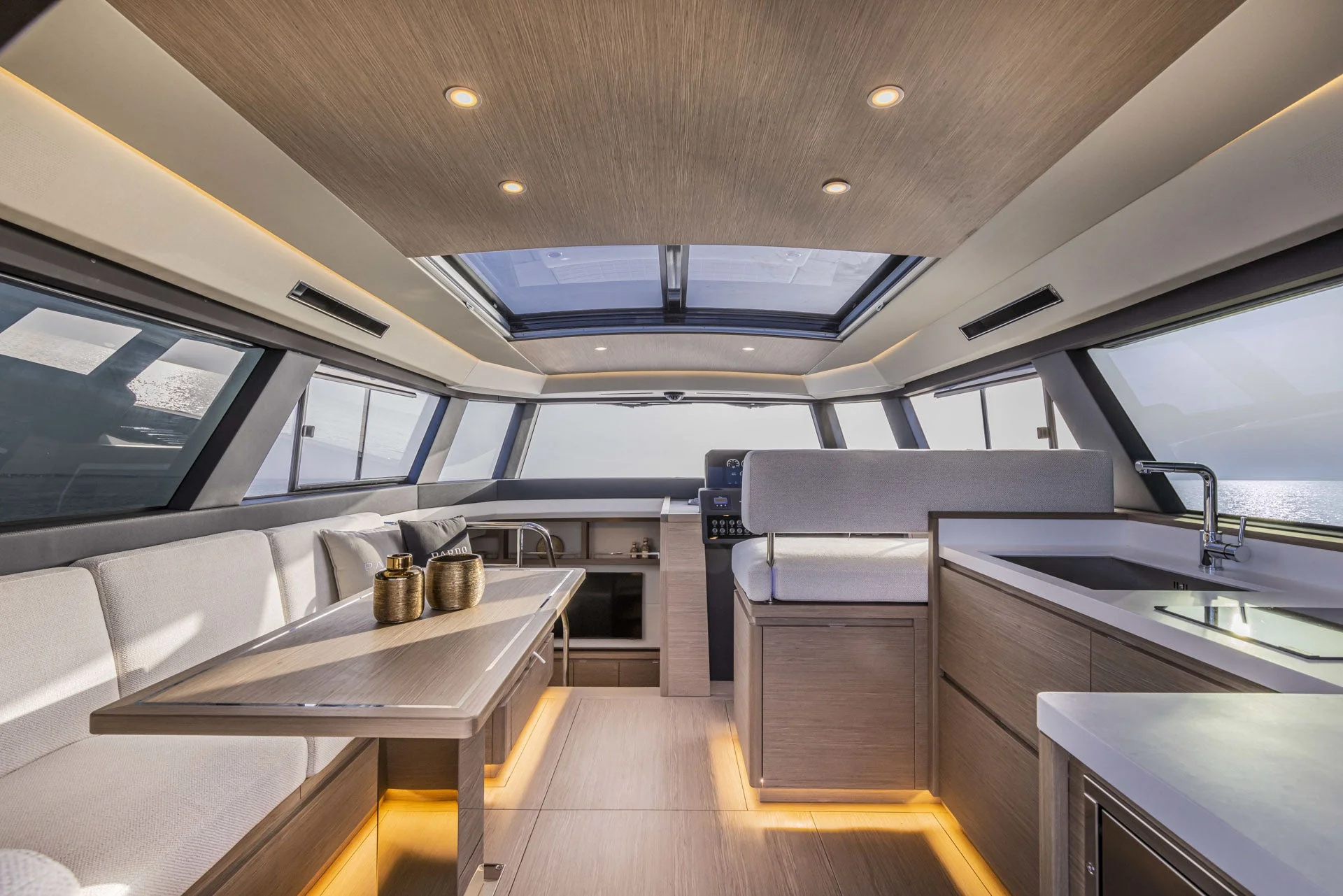
During our interviews with 40 yacht owners while developing LYRA Yachting Agency, we encountered an owner who had bought a large yacht despite using it for only a relatively limited period each year. From a purely utilisation-based perspective, that could look difficult to explain. But utilisation was not the point. The yacht gave his family a reason to gather. Relatives living in different parts of the world would come together for a period every year. They would be in the same place, eat at the same table and spend uninterrupted time with one another.
In that context, the yacht was not simply an asset being used for a certain number of weeks. It was an instrument for creating something the owner valued much more highly than the yacht itself. This is an important distinction in luxury. The financial price of something and the personal value attached to it are not always measuring the same thing. One family may see a yacht as a continuation of a tradition. Another may build a collection of cars. Someone else may gradually assemble an art collection, maintain a particular house across generations, collect watches or preserve a cellar of wine.
This does not mean that practical questions disappear. Ownership cost, maintenance, condition and frequency of use remain real. It means that utilisation alone may not explain the decision. A yacht used for several concentrated weeks with an entire family may create more personal value than an asset used more often but without the same purpose. The correct measure depends on what the owner intended the purchase to make possible.
Taste is learned through attention
The product is different. The underlying behaviour can be similar. An object begins to accumulate meaning because it becomes connected with people, memories and time. This is also why I believe luxury can play a positive role in how children develop taste. That does not mean teaching children that expensive things are inherently better. Quite the opposite. Taste should be connected with knowledge. Why was something made this way? What makes one material different from another? Who designed it? What work went into producing it?
Why does one object age beautifully while another does not? Why does this particular design appeal to you? Learning to look at products this way develops much more than an ability to recognise luxury brands. It develops attention and curiosity. It teaches someone to see detail, craftsmanship, proportion, history and intention. And, perhaps most importantly, it teaches them to form their own opinion. This process depends heavily on example. If adults approach luxury simply as consumption, children are likely to see consumption. If adults approach it with curiosity, respect for quality and an interest in how things are created, then luxury can become part of a much broader education.
The distinction matters because taste cannot be transferred as a list of correct brands. It develops when someone learns to compare, ask questions and understand why one object feels resolved while another does not. A child who hears only about price learns a hierarchy of prices. A child who hears about materials, design choices, provenance, maintenance and the people who made an object learns how to look.
A collection can become a form of biography
The same principle applies far beyond yachts. Art is perhaps one of the clearest examples. A work can remain in a family long enough for its meaning to change completely. What began as one person's purchase can later become part of the family's visual history. The same can happen with property, watches, cars, wine and certain objects within fashion. Collecting makes this particularly visible. A collection is rarely just a group of objects. Over time, it begins to reflect decisions. Why was this piece chosen?
Why did someone prefer one period, designer, shipyard or manufacturer over another? What was happening in the family when it was acquired? Eventually the collection can tell a story about the people who created it. Luxury objects also have an unusual ability to survive long enough for that story to become meaningful. With the right care, a property, yacht, artwork, watch, automobile or bottle of wine can remain relevant for decades and, in some cases, much longer. That longevity is important. Something may have little emotional significance to the next generation and enormous significance to the generation after that.
Time can change the meaning of ownership. An ordinary object from a grandfather may one day become more important than something far more expensive bought yesterday. Luxury has the potential to amplify this because craftsmanship, rarity, history and preservation often allow an object to remain physically and culturally present for a very long time. That creates another interesting opportunity for luxury service. The relationship with a client does not necessarily need to end with one purchase. There are already families that return to the same hotel brands for decades.
The objects that survive are not always the ones that seemed most important when they were acquired. Sometimes meaning appears later, when a new generation asks why something was chosen or what happened around it. That is why preservation is not only technical. Documentation, stories and the reasoning behind a purchase can become part of what is passed on.
Continuity also changes the role of the adviser
The choice becomes familiar. Children grow up with those places. Eventually the next generation returns independently. The same can happen with advisers and specialist luxury companies. Building that kind of relationship is difficult. Trust takes time. The adviser has to understand the client without becoming intrusive. The company has to perform consistently. Knowledge built during one transaction has to remain useful in the next. But when the relationship works, continuity itself becomes valuable. A yacht owner may eventually buy another yacht. A collector may build a collection over decades.
A family may own several homes, gradually develop an art collection or maintain a relationship with the same specialists across generations. Starting from zero every time is inefficient. More importantly, it loses context. A long-term adviser can gradually understand how a person thinks, what they value and how their preferences evolve. Technology and AI will make it easier to preserve that context over long periods, but the human relationship will remain fundamental. The objective should not be to build an unlimited profile of a family.
It should be to remember what is relevant, respect what is private and use accumulated knowledge to make the next interaction more natural than the previous one. Over time, the adviser and the luxury company may begin to feel less like separate service providers and more like part of a trusted ecosystem around the client. That is particularly powerful in luxury because many of these relationships can last for years. Sometimes decades. And perhaps, in the strongest cases, generations. A luxury object does not become meaningful simply because it survives. Its meaning comes from what happens around it: the people who used it, the places it went, the decisions behind it, the memories attached to it and the knowledge passed through it.
When those things accumulate, ownership becomes something more than possession. It becomes part of a story.
The most valuable role of luxury, then, may not be to display a moment of success. It may be to create something durable enough to gather meaning. The object provides continuity, but the people around it create the story.