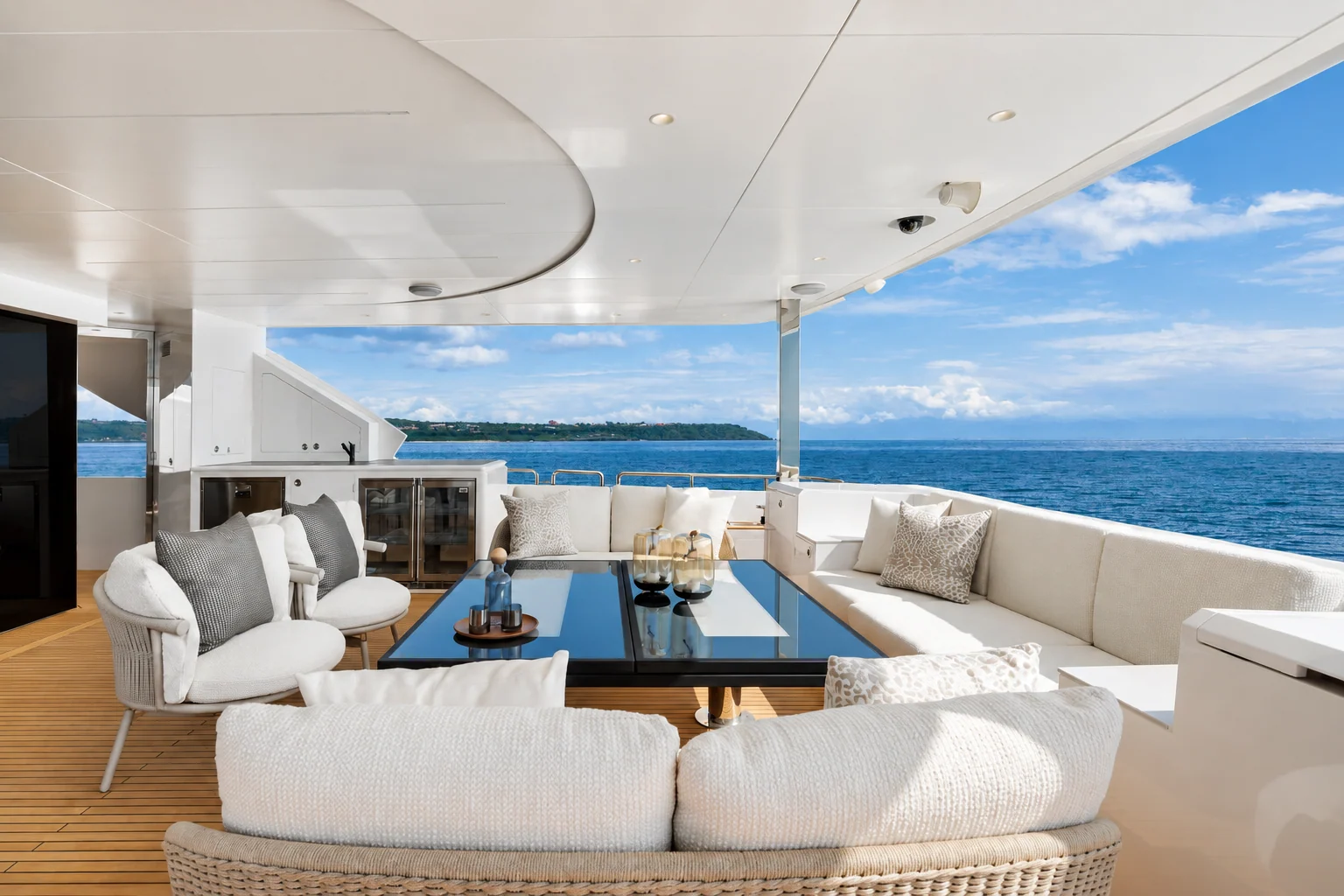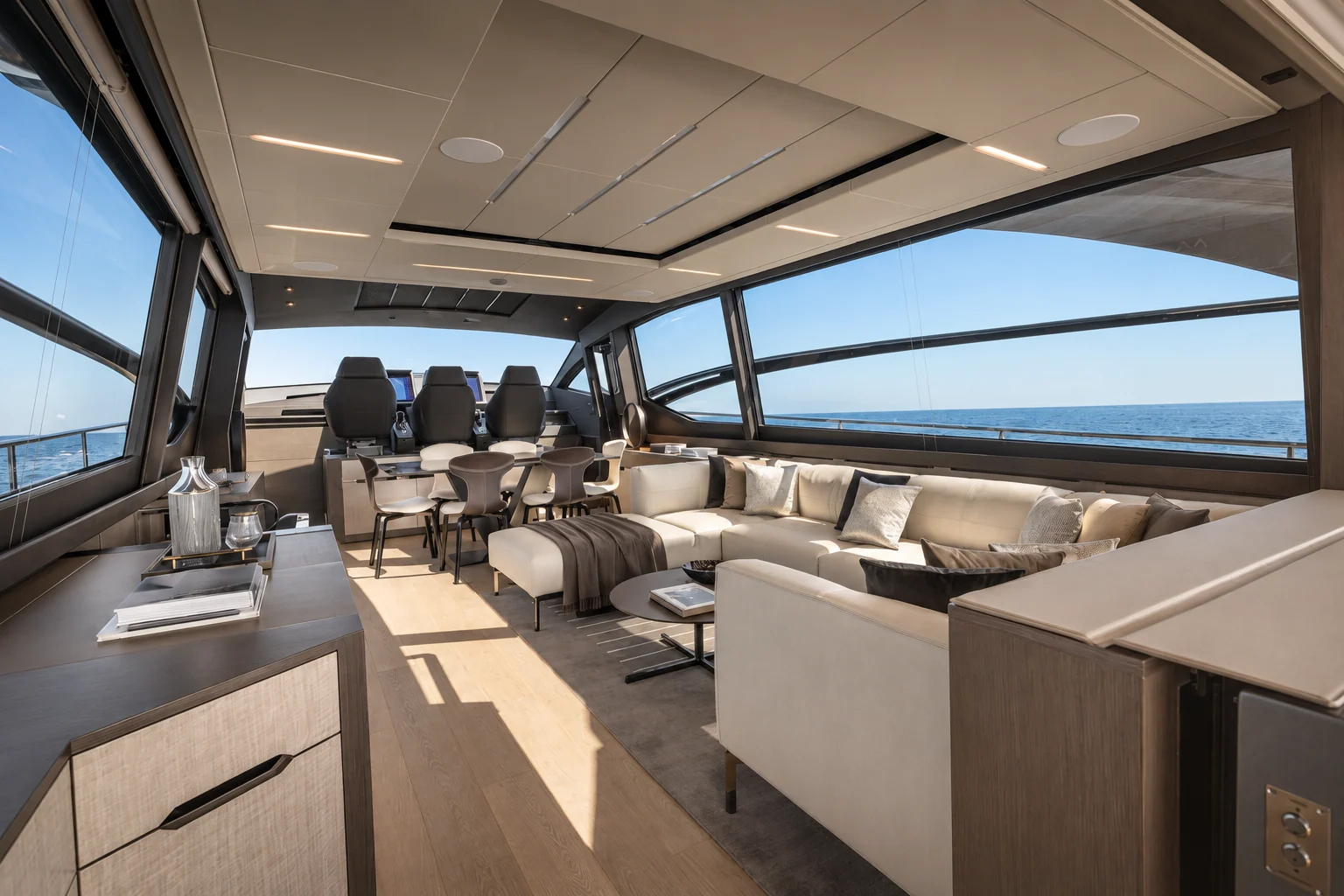
The company has enjoyed the water and a long lunch. As the yacht approaches its home marina, the afternoon moves towards a quieter conclusion. Guests collect their belongings, someone wants a final drink and the people operating the yacht prepare for arrival. The last part of the outing has its own rhythm, and a well-chosen arrangement can make it feel as considered as the departure.
For an owner planning regular use, this is a valuable scene to bring into selection. Single-Handed Operation and Recommended Crew frame the question of involvement and support. The actual yacht and agreed responsibilities determine how the return will be organised.
Give guests a comfortable place during arrival
The people enjoying the outing need an appropriate place while the skipper and helpers attend to the yacht. Comfortable seating, suitable shelter and an understandable route to the facilities can all contribute. The captain should explain the arrangement for the vessel and berth.
During a viewing, picture the cockpit at this stage of the day. Bags, towels and other personal items may still be aboard. Their places should leave the relevant working areas and passages available under the captain's plan. A practical storage arrangement can help the living spaces remain pleasant as arrival preparations take place.
Guests may be familiar with yachts or arriving aboard for the first time. A clear introduction lets them understand where to remain and when to prepare to step ashore. The owner's welcome continues through these final moments, with the company able to enjoy the return comfortably.
Know the owner's intended role
Some owners enjoy being closely involved at the helm and in the appropriate tasks aboard. Others prefer a professional arrangement that lets them remain with guests. Both intentions should be clear during purchase, with the captain or instructor assessing the owner's actual role and support needs.
Single-handed suitability in the LYRA catalogue helps identify models to explore for owner involvement. The offered configuration, experience and intended berth still need a specific assessment. Recommended Crew introduces the staffing conversation, followed by a confirmed operating arrangement for the vessel and use.
The point is a division of responsibilities everyone understands. The appropriate people operate the yacht, guests have clear information and the owners know which parts of the return they will manage personally. Familiarisation and practice should develop around that real arrangement.
Follow the belongings onto the quay
Once the captain confirms the appropriate time to leave, the company moves towards shore. Consider the actual route from the seats to the boarding point, including where bags can wait and how people pass one another. The intended berth should be part of this assessment.
A guest often leaves with more than one small item: a jacket, a bag and something used during the afternoon. Suitable places to gather those belongings can make the final departure feel orderly.
Separate the things returning home from the items intended to stay for the next outing. The owner may know that a jacket lives aboard while a guest expects to take a similar item ashore. A clear place to gather each person’s belongings helps those ordinary choices remain easy to explain during the farewell. The owners know where to check, and guests can prepare without occupying the spaces needed by others.
This scene can reveal differences between layouts. A direct route to the quay may suit the intended company particularly well; another arrangement may offer a comfortable place to pause while someone else leaves. Experiencing the route during a supervised viewing gives these details a personal meaning.

Let the yacht move towards its next visit
After the guests leave, the yacht has a domestic return as well. Used items need appropriate care, belongings must go back to their places and the next outing may need a different preparation. Agree the scope with the actual providers or people responsible.
The owner should understand which tasks are routine and which need a specific instruction. Cleaning, laundry, provisions and technical work can have different providers and requirements. A clear arrangement helps the visit conclude with a known handover, including any matter requiring attention.
Describe how you would like to finish your own visit. You may want to leave with the guests or remain aboard while the agreed household tasks begin. The people supporting the yacht can explain the corresponding handover: who receives the information, which work has been requested and how its completion will be confirmed. That distinction makes the end of the owner’s visit understandable alongside the care that continues afterwards.
The layout contributes to this work through storage and access. During selection, look at where frequently used items belong and how the relevant spaces can be left ready for future use. These are ordinary details with a repeated effect across the season.
Remember how the afternoon finishes
When comparing candidates, imagine the last part of the same favourite outing on each yacht. The company is settled for arrival, people collect their things and the yacht passes into its agreed after-use arrangement. Each part should be understandable for the people involved.
That clarity gives regular ownership a satisfying continuity. A good day ends comfortably, with the yacht cared for and another visit already easy to picture. The pleasure of going out is strengthened by knowing how naturally the day can come home.