
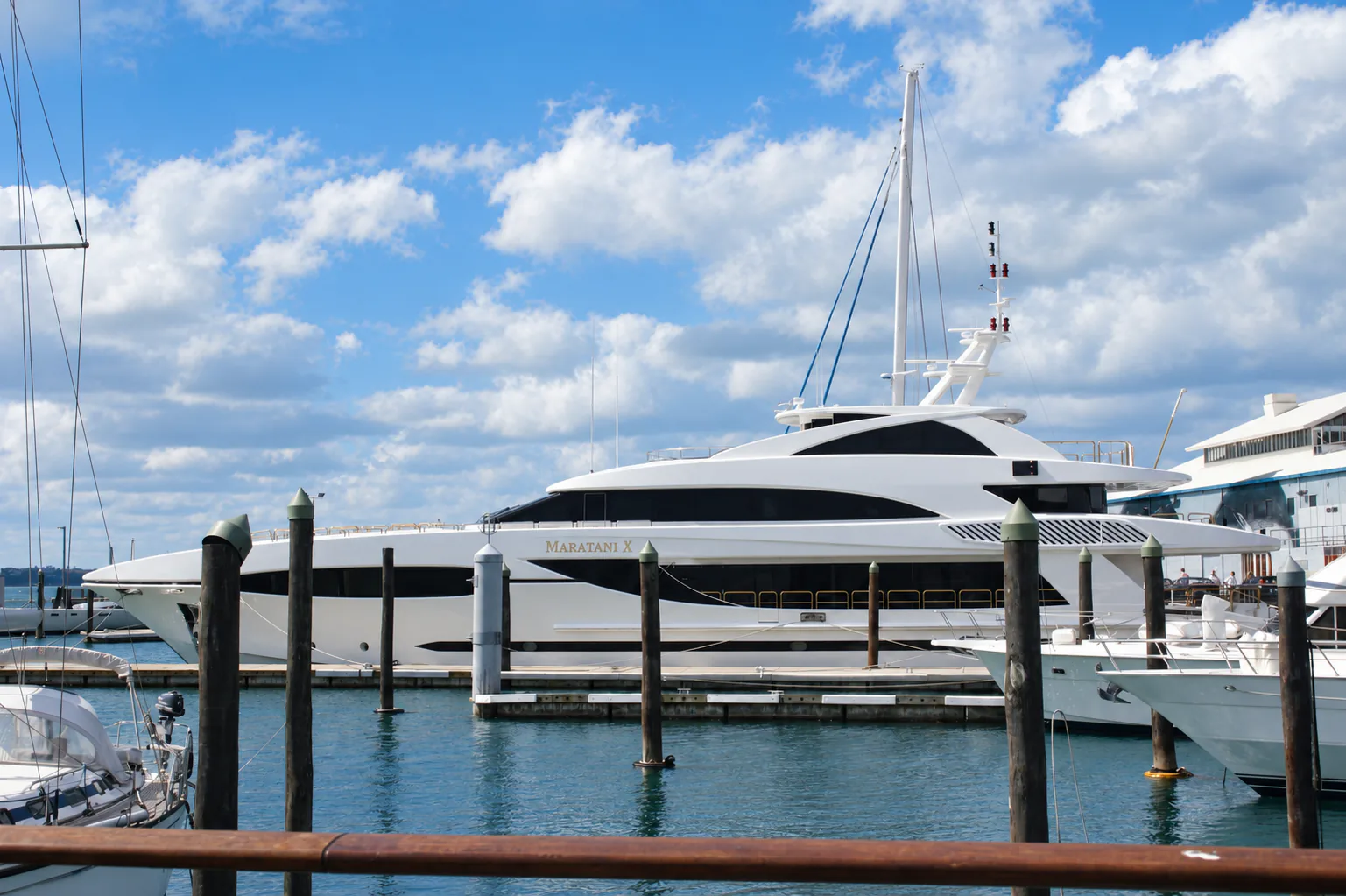
The objective is a relevant base decision. A busy charter scene should not automatically be treated as evidence of a complete private-ownership environment, and its absence should not be assumed to rule one out. Investigate the provision that matters to the intended use.
Describe the owner's relationship with the boat
Explain whether the yacht would be used privately, considered for a separately organised charter programme or employed in another defined pattern. These intentions need accurate discussion with the relevant professionals. The berth and support enquiries should follow the proposal rather than an ambiguous description of mixed use.
A private home-port plan may centre on familiar arrival, continuing care and personal time aboard. A charter-related plan may involve different tasks and appointments. The point is to identify those requirements for the particular yacht, not prescribe a universal distinction between two types of marina.
Consider a hypothetical buyer who likes an active waterfront but expects mainly private visits. The useful enquiry asks how that routine would be supported among the other activity. Observing many boats change visitors does not answer the owner's ongoing care or access questions.
Investigate the services behind the activity
Ask which facilities and providers are relevant to your boat. Technical work, preparation and support while the owner is absent need a clear scope. A service used by another group can be worth investigating without assuming that the same arrangement is available or appropriate for this owner.
Look at the particular berth and shore routes. How would the owner, guests and authorised providers reach the yacht? The actual position and period may matter more to the visit than a general label applied to the marina's users.
Local professionals can contribute useful knowledge within their expertise. A charter specialist may help explain aspects of a coast, while technical, contractual and other consequential questions require the appropriately qualified people and relevant evidence. The owner need not dismiss one type of local experience to seek another.
Read activity through the visit you intend
Ask how the proposed position and timing would shape a visit for your household.
This keeps the enquiry fair to other people at the base. A private owner may welcome surrounding activity or prefer a quieter position. Charter-related visitors may use different appointments from the owner. These possibilities need local answers; they should not be treated as fixed qualities of everyone using a particular type of boat.
Follow the yacht's care separately from the shore impression
The owner needs an appropriate arrangement when present and absent. Ask which tasks the marina covers, which require separately appointed professionals and how consequential questions are reported. A lively scene on the quay cannot establish those responsibilities.
Preserve the distinction if the intended use changes
A buyer may begin with a private-use plan and later become interested in a charter programme. Treat the revised intention as a separate professional enquiry. The relevant providers and qualified advisers need to address the yacht, arrangement and actual requirements. A berth that serves the original plan should not silently be assumed to support every later use.
The same principle applies to the personal calendar. If the owner wants particular periods aboard, explain them within any proposed programme. Their availability and the commercial scope need actual discussion. Do not invent a revenue outcome or assume that interest in charter automatically removes the owner's practical commitments.
Ask market questions only when they affect the decision
A wider account of local demand can be interesting, but the home-port choice may depend on a more specific answer. Can this yacht obtain the appropriate berth and support for its intended use? Pursue that proposition directly rather than wait for a complete theory of the region's yachting economy.
Where a broader commercial judgement is being considered, seek evidence appropriate to that scope. Observed activity, enquiries and agreed use should retain their different meanings. A full waterfront or a popular charter offering cannot by itself establish the causes of infrastructure development or future investment performance.
Keep market interpretation separate from the offer
If evaluating broader demand, establish what the information describes: the place, period and types of use. A visual impression or a single booking response should not become proof of a universal relationship between charter and private ownership.
If the owner wants charter involvement, have the proposed programme and relevant requirements reviewed as a separate professional arrangement. A private berth or a popular local charter market cannot establish the legality, availability or financial result of using this yacht commercially.
A useful reading of marina users sharpens the questions relevant to ownership. The owner understands which provision serves their boat and what needs another appointment or confirmation. The wider activity becomes context for the decision, while the offer gives the home-port plan its practical basis.
