
The Swedish, Norwegian, Finnish and Danish references within a broad Nordic discussion should remain distinguishable. Country of build, brand association and the people responsible for a project are separate pieces of information. Treating them carefully makes it easier to understand what a particular yacht actually represents.
Compare the priorities visible in the design
Hallberg-Rassy's 44 Mk II presentation discusses changes to the windscreen, saloon windows and the division between the saloon, galley and work table. Those are specific design subjects that an interested buyer can investigate through the configuration and a visit. They do not confer ice capability or establish a general rule for Nordic boats.
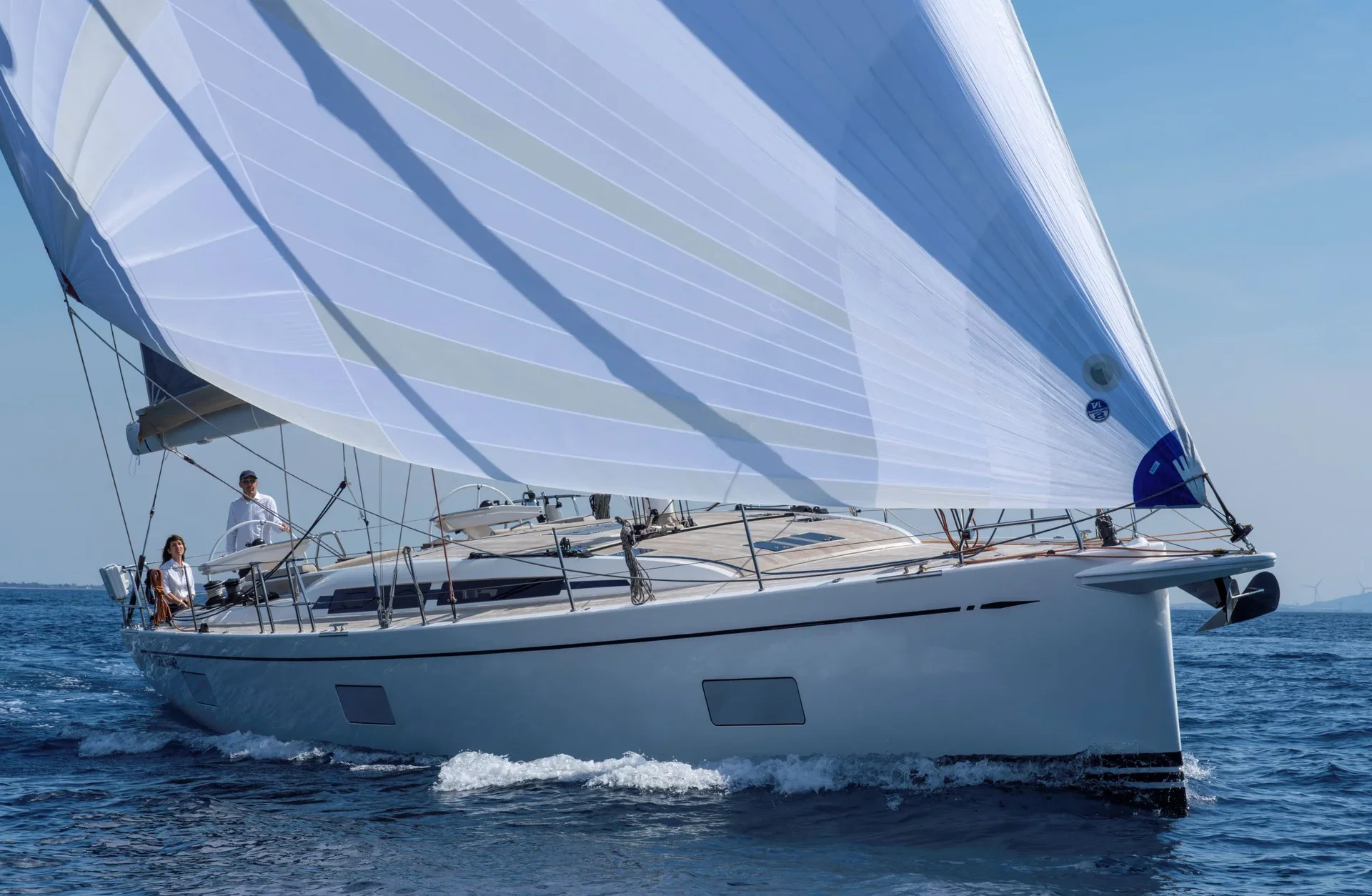
A different priority appears in Nautor Swan's ClubSwan 80 description, which sets out a racing brief with an optional interior for time between races. The page identifies Persico Marine as the builder. That named construction role is a useful reminder to check build origin independently of a brand's regional associations.
These examples are not direct alternatives for every buyer. They show why a broad regional category needs a personal purpose beneath it. A focus on sheltered cruising and a focus on competitive sailing lead to different questions about crew, participation, space and support.
Examine protection and light together
Picture an ordinary day when some people want to remain inside while others use the cockpit. Can the arrangement keep them connected in the way you prefer? What can a seated person see? How does the owner want to balance shelter, openness and privacy? These are useful questions to take aboard a candidate yacht.
Interior brightness should be considered as an experience rather than a colour palette alone. Look at the actual windows, sightlines and places to sit, and ask how shade and privacy are arranged. A light finish may appeal aesthetically while leaving the practical questions unanswered.
Comfort in a proposed climate also requires specific information about the boat and its equipment. Have the relevant professionals explain the configuration and its intended use. A Nordic label does not establish insulation, heating performance, autonomy, certification or suitability for a particular passage.
What does purposeful design mean to you?
The idea of practicality becomes more personal when you connect it with the way you want to spend time. A clear arrangement may appeal because you can understand it easily. A restrained room may create an atmosphere you enjoy. Explain the reason before treating either response as a general conclusion about how simple the yacht will be to own.
The cruising and racing references give this distinction a practical use. A hypothetical buyer drawn to a bright saloon might want to understand a seated view and the connection with the galley. Someone interested in the racing brief might instead ask how their intended participation relates to the proposed arrangement and the interior described by its builder. These are starting questions, not assigned owner types. The same person could be curious about both, while each enquiry needs its own project information and relevant professional contribution. A Nordic association does not make either example the answer to the other person's question.
Carry a question between different interpretations
Choose one experience you want to understand and use it as the common thread through the search. How would the actual arrangement let you spend time with others while preserving the kind of atmosphere you value? The question can remain consistent even when the designs offer different responses. Ask the builder to explain its interpretation before deciding whether it suits you.
If a particular reference feels familiar, notice why. It may resemble an experience you already enjoyed, while another candidate asks you to imagine something new. Give the unfamiliar proposal enough explanation to make the comparison meaningful. A regional reputation should not decide the result before the owner has understood the actual difference.
The owner's preferred involvement is relevant too. You may want a close interest in the boat and its design, or a clear support arrangement that prepares the time aboard you want. Those are personal choices to discuss. A minimal visual language does not establish that every practical responsibility will be minimal, and the intended role needs its own explanation.
Use a country collection for what it contains
LYRA's Finnish-built yacht collection is a relevant route into one part of this exploration. It should be read as a Finnish build-origin collection, rather than a complete representation of Nordic design or a list of everything associated with a Nordic brand.
Nordic design becomes a useful lens when it develops that understanding. Instead of expecting a region to guarantee toughness or simplicity, the buyer can recognise the priorities of an actual boat and assess them with the right evidence. The choice then rests on a design the owner wants to use, supported by an understood operating and ownership arrangement.
