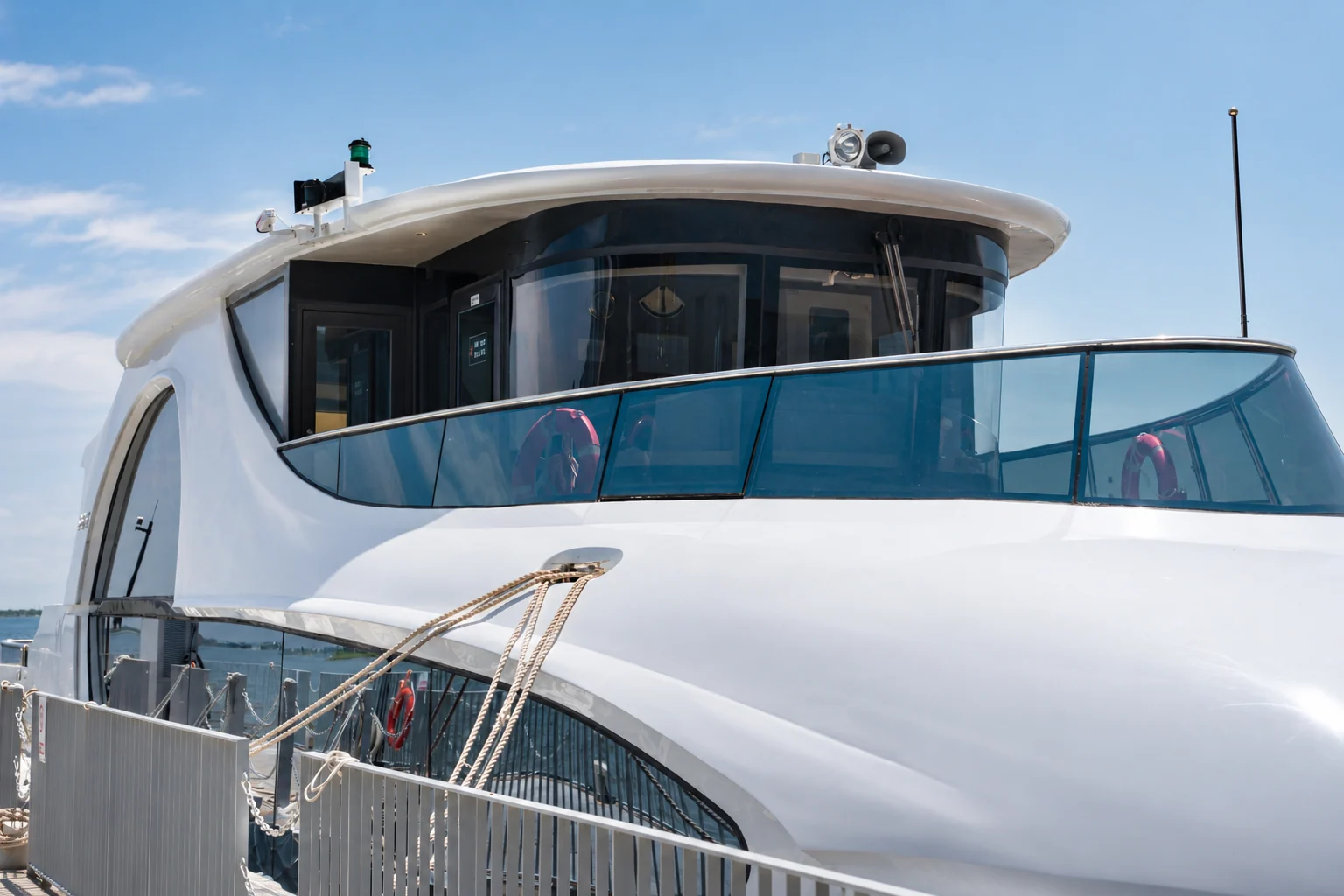
A helm can look immediately inviting: the view ahead, a well-arranged console and the pleasure of imagining your own hand at the controls. Spend time in the station and the personal fit becomes more specific. The seat, reach and surrounding space need to suit the position you will actually use, within the operating arrangement established for the yacht.
Single-Handed Operation helps identify yachts intended for owner involvement; cruising speed gives the passage discussion a reference. At the helm itself, the important question becomes personal: how does this installed station fit you over the time you expect to spend there? Appropriate familiarisation and a supervised demonstration give that question a practical setting.
Let the seat establish a real position
Try the supplied adjustment with the representative explaining the arrangement. Notice where you sit in relation to the console, screen and available foot space. Your own proportions give the station a particular character, so the observation should come from the actual position rather than a general impression while standing nearby.
The relevant controls and information should be considered together by the captain or instructor assessing the intended use. The owner can contribute personal observations about reach, comfort and the way the seat feels. Those responses help identify which points deserve further demonstration or clarification.
Bring the glasses you normally use and, where suitable for the viewing, the clothing and footwear you expect to wear aboard. They form part of your experience of the seat and console. A jacket can change how the backrest feels; your usual glasses may affect how easily you read a particular display. Describe those observations to the representative so any proposed adjustment addresses the situation you actually encountered.
A partner who may also use the station can have a different experience of the same equipment. Invite their assessment where appropriate. The goal is a clear understanding of the arrangement for the real people involved, with the professionals determining the appropriate roles and operation.
Understand the standing arrangement on its own terms
Where the design provides for standing operation, have the representative explain the intended position and associated equipment. The space around the console, seat and any supplied supports should be assessed as part of that configuration. The owner should know what the offered yacht includes.
The view and reach can differ from the seated position. Experience the relevant places under suitable supervision and describe the personal response precisely. A station should be understood through its actual intended use, with technical and operating suitability addressed by the qualified professionals.
If the demonstration yacht carries different seating or equipment from the proposal, identify the differences before relying on the impression. Drawings and the equipment schedule should connect the helm you are assessing with the yacht you intend to receive. That keeps the purchase conversation specific.
In the LYRA catalogue, single-handed suitability helps focus an owner-involved search. The offered station and installed systems provide the next detail. The marker becomes useful when it leads to a personal and professional assessment of that real arrangement.
Give time at the station a place in the trial
A brief sit can introduce the proportions, while a suitable demonstration can address the experience over a longer period. Explain the intended owner role to the captain so the relevant positions and questions can be assessed appropriately. The captain determines the actual operation and conditions.
Cruising speed in the catalogue provides a reference for the passage discussion. The practical operating mode must be established for the vessel, location and company. The owner should understand which conditions and configuration support their observations during the trial.
Keep the feedback concrete. The seat's feel, the personal view and a particular reach can each be described without turning one moment into a universal judgement about the yacht. The adviser and professionals can then address a specific question rather than an undefined impression of comfort.
Include getting into and leaving the position during the supervised assessment. The relationship between a swivel seat, its adjustments and the surrounding passage can be difficult to understand from a photograph. Ask how the supplied arrangement is intended to be used, then consider the personal comfort of entering and settling into it.
The surrounding company matters too. A nearby companion seat can give the passage a shared atmosphere, while another layout offers more separation. The owner's preferred way of spending time with a partner or friend can help distinguish otherwise attractive helm arrangements.

Follow the choice through to handover
The final specification should identify the actual seating, controls and relevant options. Any change should be assessed against the intended use and reflected in the proposal. The owner should know which arrangement the purchase will deliver.
Familiarisation should be developed by the qualified instructor for that installation and the owner's assessed experience. The relevant documentation and further support need to be clear at handover. Physical comfort and understanding of the yacht can then develop together through appropriate use.
The pleasure of taking the helm often grows as the station becomes familiar. You recognise the position, the view and the arrangement around you. Choosing those details thoughtfully gives owner involvement a comfortable home aboard a yacht selected for the passages you look forward to making.