An owner who wants to go to sea for two or three hours most weeks is describing a particular kind of freedom. The outing might begin after lunch and end before dinner. There may be no crew to summon, no elaborate itinerary and no need to turn a small opening in the calendar into a major operation. For that owner, yacht length belongs near the beginning of the search because it influences how easy the departure can be.
A sensible first exploration is the segment up to about 18 metres, then a closer look at which yachts are designed to be operated with the level of help the owner actually wants. That is an editorial starting point for this scenario, not a universal size limit. The precise boat, berth and owner's experience still matter. But the boundary immediately removes a great deal of irrelevant scale from the conversation and lets the buyer study yachts built around frequent use.
The time between the idea and the departure
Imagine the moment the owner decides to go. Can they reach the marina conveniently? Is the yacht ready? How many people are needed to leave and return? A model can be beautiful on a viewing day yet poorly matched to the owner's ordinary week if every departure requires a sequence of arrangements the owner rarely has time to make.
Length is consequential here because it often travels with other operating choices. As a yacht grows, berthing, preparation, manoeuvring and support can change in character. The relationship is not perfectly linear: equipment, visibility, deck design and crew arrangements matter too. Still, size is an efficient first boundary when the main ambition is to use the yacht often. It gives the buyer a relevant part of the market to explore before comparing individual layouts.
The LYRA catalogue offers a Size filter with a metre range. For a weekly-outing brief, choosing a range up to 18 metres is a natural first pass. The next question is operational rather than numerical: which yachts in that segment feel practical for the owner to depart on the notice they expect to give?
Handling is the second test
The ability to operate with one person is a useful characteristic, but it should be read carefully. A model-page suitability label indicates a design direction; it is not a promise that every owner can safely handle every berth, weather condition or configuration alone. The buyer should examine the actual deck, helm visibility, docking equipment and the support available at the home marina.
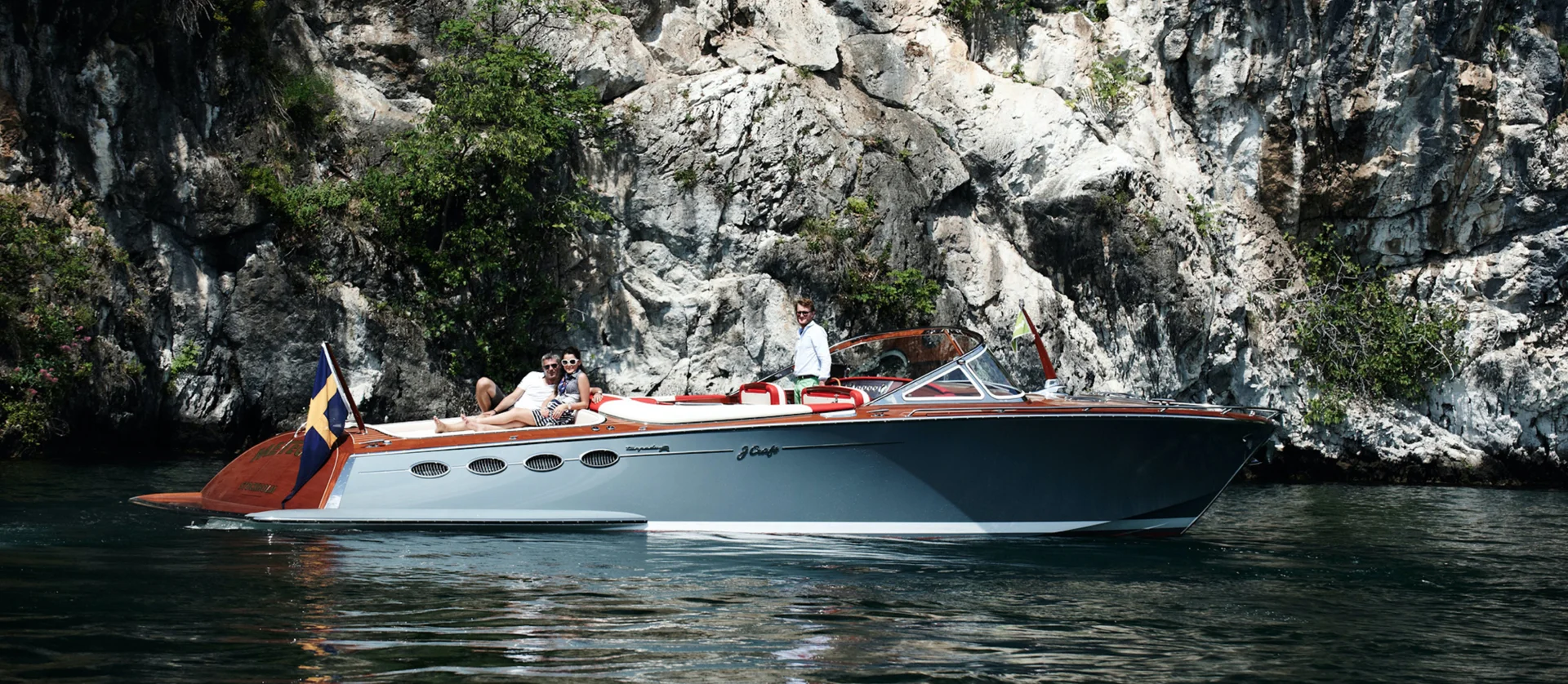
The catalogue offers examples of what this direction can look like. J Craft Torpedo is listed at 12.63 metres and marked for single-handed operation; XO Boats EXPLR 44 is listed at 13.40 metres with the same suitability indication. They are examples of a wider segment, not recommendations or the centre of this search. What matters is the relationship between manageable scale, the owner's skills and the actual departure routine.
This second test helps prevent a common mistake: treating a compact LOA as proof of effortless use. A short yacht with awkward sightlines or an unsuitable berth may demand more attention than expected. Conversely, the right equipment and support can make a slightly larger yacht feel natural to use. The owner should test the entire operation, not just read the length field.
A brief built for repetition
The strongest short-outing brief names the home marina, the typical people aboard, the route and the usual notice before departure. It describes the hour when the owner is likely to say, “Let's go,” not only the longest holiday they might one day take. That simple scene gives size a purpose.
The search can then stay open to different yacht types within the relevant range. A day-oriented motor yacht may put social deck space first; a compact cruiser may offer more protection and occasional overnight comfort. The owner is choosing how a recurring outing should feel, not trying to buy the largest vessel that fits a number.
Once a few promising models are identified, a marina visit and a direct look at their boarding, helm and circulation turn the brief into something tangible. LYRA's selection process connects the owner's lifestyle to a shortlist; the catalogue supplies the breadth of choice behind it. For this owner, length should lead because it protects the very reason to buy: the ease of making the sea a regular part of life.