An owner imagines Friday departures after work and Saturday afternoons in a bay beyond the immediate coastline. They want the journey to be part of the pleasure, yet still arrive with time to swim, eat and see friends ashore. Here, speed can shape the buying decision because the usual route and the available hours meet in a very practical way.
The meaningful figure is the pace the yacht can travel comfortably with the normal party and load, not simply its published maximum. LYRA's catalogue can narrow a search by maximum speed, while model pages show cruising-speed values where recorded. Those tools begin the exploration. The owner must connect the figures to the trip they expect to make and verify the chosen configuration.
Give the route a timetable
Start with a real departure point and destination. Estimate the navigable distance, the likely departure time and how much of the visit should remain after arrival. Include the return, since a yacht chosen only for the outward run may make the end of the weekend less inviting. This timetable gives speed a reason to matter.
For a route of 60 nautical miles, a steady 20-knot passage would take three hours in a simple distance-divided-by-speed calculation; at 12 knots it would take five. These are illustrative arithmetic figures, not predictions for a particular yacht or sea state. Manoeuvring, speed restrictions, weather and the actual route add time. The difference nevertheless shows why a sustained, enjoyable cruising pace can change what a weekend feels like.
With that use in view, the buyer can ask what speed each candidate can maintain under relevant conditions. The answer should come from configuration-specific performance data and, when material to the decision, a sea trial. It should include how people feel in the saloon, cockpit or helm area at that pace. Arriving faster is valuable only if the passage itself is one the owner wishes to repeat.
When the speed field earns priority
Speed belongs near the front of the search when a repeated journey has a time boundary. That might be a narrow weekend window, an island transfer the owner wants to make frequently, or a programme involving several stops in one day. In each case, the route provides the boundary and the yacht's usable cruising pace provides the test.
For an owner who intends to spend long afternoons at anchor close to home, other characteristics may lead. The yacht can still be fast and exciting; speed simply may not decide whether the principal use case works. A parameter should be promoted because it changes an intended experience, not because it is easy to sort.
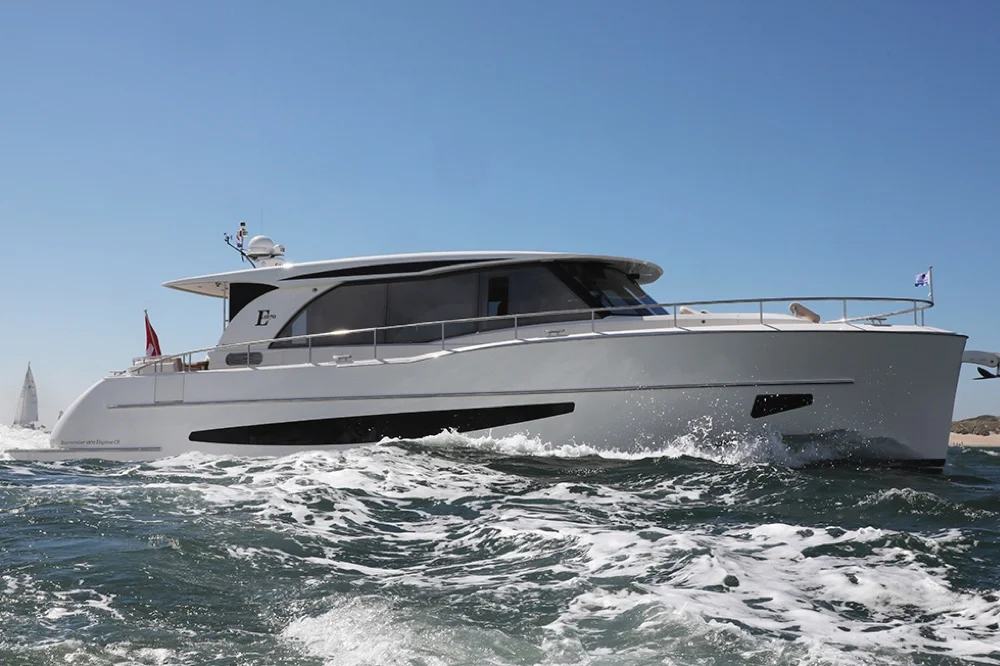
The Boarnstream Boarncruiser 53 Ocean – Flybridge and Frauscher 1414 Demon Air are examples of LYRA model pages that publish different maximum and cruising speeds. They are not the article's subject or a two-model shortlist. Different yachts in the relevant size and category should be examined for the owner's actual route; the examples merely show the fields a buyer will encounter.
Keep the journey enjoyable
At the final comparison stage, pair the planned passage time with comfort, fuel implications and the service arrangements for the exact yacht. A faster advertised maximum may be less relevant than a stable, pleasant cruising point. A slower passage may be worth choosing when the owner wants more time at sea and less pressure on the clock. The right answer belongs to the owner's calendar and preferences.
LYRA's selection philosophy begins with the life a yacht is meant to deliver. Speed should shape a purchase when it unlocks that life: turning a destination from an occasional expedition into a place the owner can genuinely enjoy visiting often.