
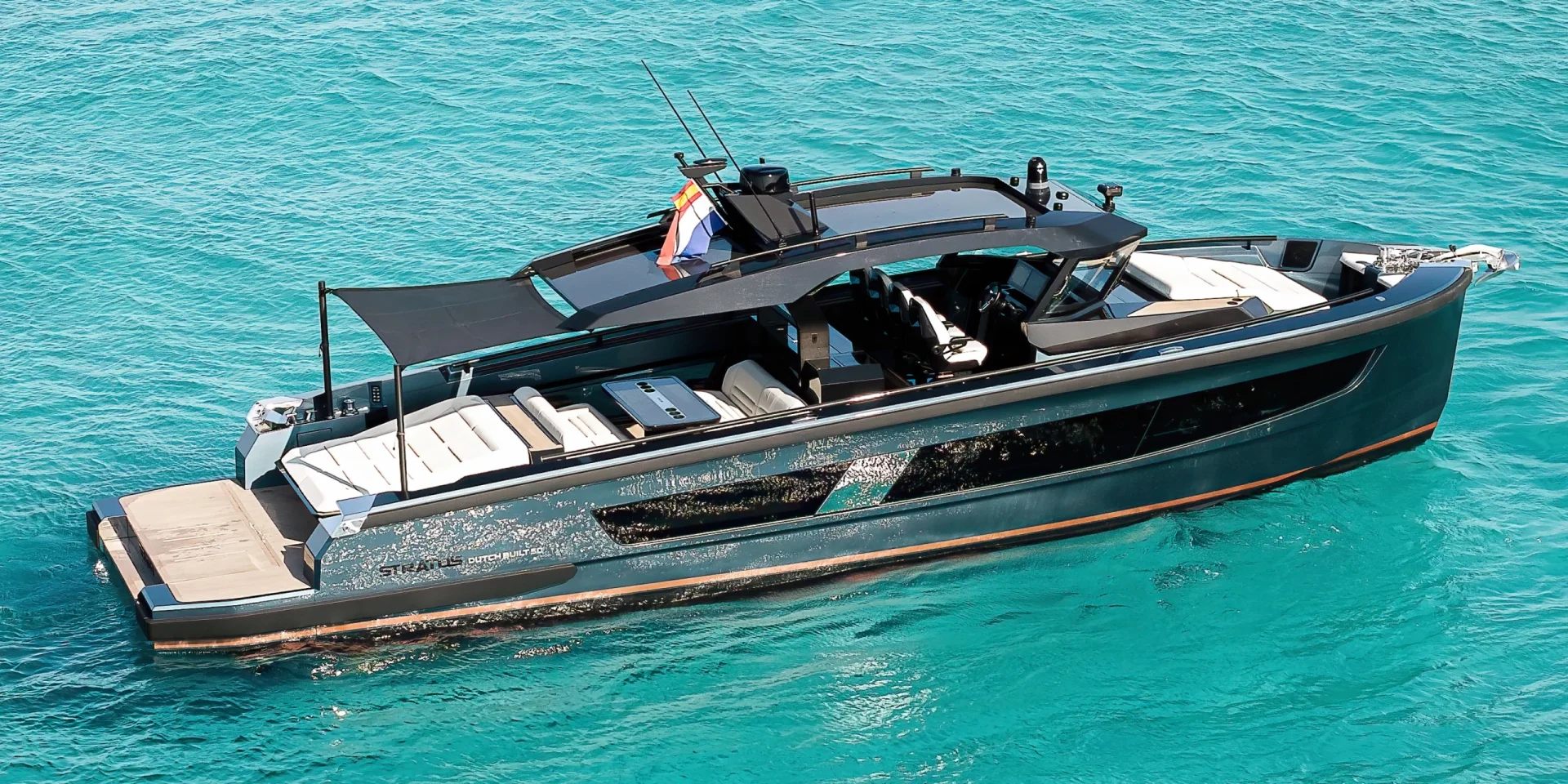
Enthusiasm belongs in that account. A yacht can be desirable because of how it feels as well as what it enables. The useful discipline is to understand the conditions that support the feeling, so that a memorable first impression is accompanied by a workable plan for ordinary ownership.
Keep the personal reason visible
Before committing, describe what you hope ownership will add. Go beyond the model and the occasion of receiving it. Consider the kinds of days you want, the people involved, the place the yacht would occupy in your life and the role you want personally. These intentions give later experience a meaningful point of comparison.
A hypothetical buyer may be drawn to a yacht's atmosphere during a visit, then discover that the essential attraction is the prospect of relaxed time with close friends. That understanding changes the questions worth asking. The spaces, support and access should be considered in relation to that experience, rather than assessed only as impressive features.
The reason may evolve through research. Record important changes honestly. If a compromise becomes acceptable because another requirement matters more, preserve that reasoning. It is easier to assess a deliberate trade-off later than to reconstruct one after the owner has forgotten what alternatives were available.
Remember what the evidence did and did not establish
Keep the distinction between a confirmed fact, an adviser judgement and an assumption requiring further work. The selected proposal should remain connected with its date and the specific yacht or configuration concerned. A research conclusion about a model is not automatically verification of an individual boat.
The owner's explanation should also acknowledge uncertainties that could not be removed. Future use, personal circumstances, market conditions and practical developments cannot all be known at purchase. Understanding that boundary is more useful than expecting an adviser to guarantee permanent satisfaction or a cost-free change of mind.
The intended ownership horizon belongs here too. A first experiment with ownership and a long-term personal project can justify different choices about involvement and personalisation. Neither intention predicts a future sale price or eliminates the need for appropriate technical, legal and financial advice on the actual commitments.
Preserve the reason as it was understood at the time
A useful purchase account should not be rewritten simply because later experience introduced another preference. Record the intention that made the opportunity attractive and the information available when the owner chose. That gives subsequent reflection a fair starting point rather than asking the earlier decision to anticipate everything learned through ownership.
The explanation can contain several different contributions:
| Contribution to the choice | What the record should preserve |
|---|---|
| A personal attraction | The experience the owner wanted and why it mattered |
| A supplied proposal | The actual yacht, scope and time basis under discussion |
| Professional judgement | The source, reasoning and limits of the view |
| An accepted trade-off | What the owner knowingly prioritised and what remained uncertain |
| A future intention | The conditional horizon rather than a promised outcome |
The table describes a way to retain meaning. It does not validate a transaction, establish that an assessment was sufficient or replace the relevant professional records. Those keep their own subjects and actual scope.
An ordinary experience can then develop the account. If a preference has been confirmed, identify what makes it satisfying now. If it has changed, ask what the new experience revealed. A changed view can be useful learning without requiring every earlier reason to become a mistake or every current difficulty to be dismissed because the owner once felt strongly.
Test the explanation against ordinary life
Once the yacht is in use, revisit the original intention through actual experiences. Which parts have become natural? What remains awkward? Is the difficulty in the boat, the support arrangement, the base or a changed personal plan? Allow the answer to be specific before making another large decision.
An owner need not wait for a prescribed emotional cycle to do this. Review when there is relevant experience to discuss or a meaningful reason to reconsider. The pleasure of ownership can continue alongside a candid account of what requires adjustment; one does not make the other invalid.
A purchase you can still explain has a clear personal purpose, an understood basis and room for subsequent learning. That explanation helps the owner preserve what works and change what does not. It gives the relationship with the yacht continuity beyond the moment of acquisition, without demanding that the original decision remain beyond question.
