
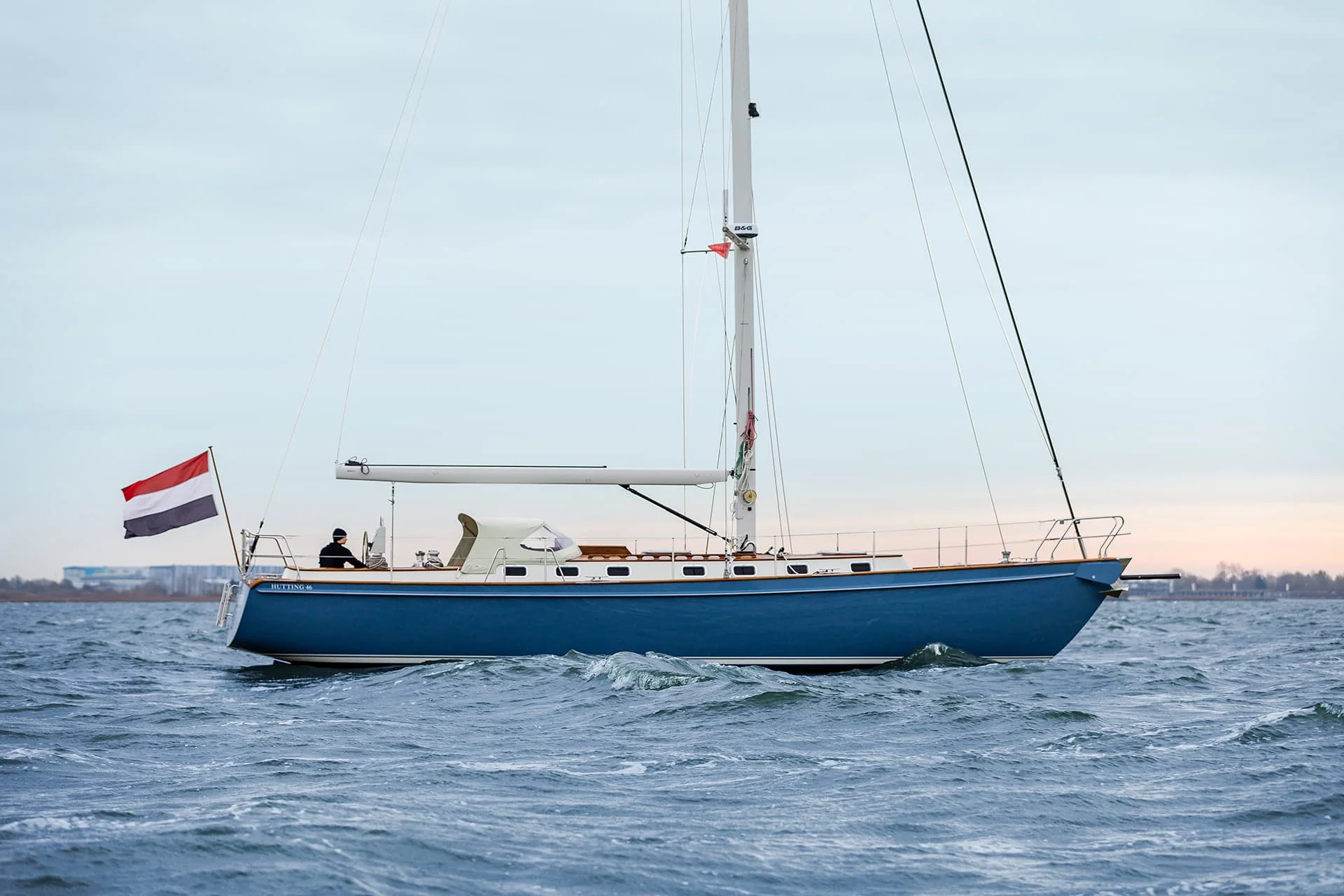
Start by browsing LYRA's German-built yachts and Dutch-built yachts as separate collections. They organise exploration by build origin. They do not establish that the yachts share a hull type, construction process or identical design philosophy.
Look for the idea behind the platform
Consider how a builder describes the relationship between the underlying yacht and the owner's choices. Hanse's presentation of the 410 describes a cockpit with two tables and an interior layout that can be configured. Moonen's Martinique YN208 presents a motor-yacht interior developed with Vripack and opportunities for personalisation. These are builder descriptions of different projects, not evidence that either defines an entire national tradition.
The contrast helps a buyer ask a better question than which country builds the best yacht. How much of the proposed boat is already established, and where can an owner's brief meaningfully shape it? A chosen platform may suit someone who values a clearly understood arrangement. Another project may appeal because of the particular personal choices it permits.
Neither route makes the other less individual. A carefully selected configuration can fit a person closely, while extensive personalisation still needs a coherent underlying brief. The important point is understanding what can actually be chosen in the project under consideration.
Explore craftsmanship through specific details
If engineering and finish attract you to this part of the market, turn those interests into subjects for examination. How are service access and everyday storage resolved? What documentation explains the systems? Which materials and finishes are proposed, and what would their care involve? Relevant professionals can help assess the actual specification and execution.
Walk through a hypothetical ordinary morning aboard. Follow the route from the cabin to the place you would sit, prepare for the day or join other people. Notice how doors, storage and circulation support that routine. Small arrangements can reveal more about a personal fit than a general impression of solidity.
Appearance deserves its own attention. A restrained exterior or a richly finished room can be appealing, but neither proves structural quality, reliable systems or suitability for particular conditions. Keep the aesthetic response and the technical assessment connected without treating them as the same kind of evidence.
Turn an interest in detail into a personal viewing question
For a hypothetical owner interested in gathering with family, the examples can prompt two different enquiries. Within an offered configuration, which arrangement would serve that time together? Within a project allowing personal choices, which part of the brief is still open for development? Ask the relevant builder to answer for the actual proposal. The questions do not make a sailing yacht and a motor-yacht project direct substitutes, or imply that every published choice remains available. They help the owner distinguish selecting a suitable established response from participating in development of another response. Either route still needs a personal reason to appeal.
The builder's language is another part of the encounter. Does the explanation connect its priorities with the boat you are considering? Can you recognise your own intention in the response? A conversation may reveal a different approach from the one you expected, even within the same country collection. Preserve that observation instead of forcing the project to confirm an inherited label.
Afterwards, describe what would make you return to the candidate. The reason should have a definite subject: an arrangement, a design relationship or a project contribution you want to explore. If the answer remains only that the country is known for quality, the next enquiry needs more substance.
Separate origin, authorship and suitability
A yacht's builder, naval architect and interior designer may contribute distinct ideas. Identify those contributions in the project rather than assuming the build country explains them all. The Moonen example is useful precisely because it names a specific collaboration and describes what that collaboration addresses.
Then return to the ownership brief. Intended use, available time, support and appetite for involvement determine which of the explored ideas deserves closer consideration. Technical capability and operating limits require the relevant yacht-specific evidence and competent assessment.
Exploring German and Dutch traditions becomes most useful when it sharpens the buyer's eye. The collections supply candidates; project information explains the possibilities; an informed visit tests how the design relates to life aboard. The result can be a personally reasoned preference instead of a purchase resting on a national reputation alone.
