The moment of stopping can be as personal as the passage. An owner reaches a familiar bay, imagines a swim and looks forward to a quiet lunch. For that scene to feel natural, the work around arriving and leaving the anchorage needs to fit the people aboard.
This is worth discussing during the yacht search. An owner may be comfortable at the helm yet have very little experience of the particular anchor arrangement being offered. Understanding that part of the yacht helps make regular coastal use more enjoyable from the beginning.
Single-Handed Operation and Recommended Crew give the catalogue search a direction. For an owner who wants to participate at an anchorage, the useful next step is to understand how the installed equipment and working positions relate to the role they hope to take.
Give the anchoring task a place of its own
Owner operation is made up of distinct activities. The person who enjoys steering may also want to understand preparation, mooring and the work at an anchorage. Each deserves attention in its own setting.
Describe the usual company first. Will another capable adult normally be aboard? Would the owner prefer occasional professional support? Are guests coming primarily to relax? These answers help establish a sensible operating arrangement without turning a friend or partner into an assumed member of the working team.
The LYRA catalogue offers a useful way to explore yachts associated with owner involvement. Its suitability fields give the buyer a direction. The skipper or an appropriately qualified professional can assess how the particular installation and proposed team support the intended outing.
Look at the places from which the work happens
On a viewing, the buyer can ask to be shown the relevant controls, the working area and the view between those positions. This is an exercise in understanding the yacht. Decisions about manoeuvres, anchoring conditions and safe procedures belong to the responsible operator.
The physical arrangement can be revealing even before a demonstration. Where would the owner stand for the part they expect to perform? How would communication work with somebody in another position? What needs to be visible, and what information is available at the controls?
Access matters throughout the sequence. A working location that looks convenient when the deck is empty may feel different with guests, furniture or bags nearby. The exact offered layout should be considered in its ordinary use, with the planned people and equipment aboard.
The buyer can also ask how the installation is identified and documented. Controls, powered equipment and any assistance systems need to correspond to the actual configuration. A feature seen on a demonstration yacht should be checked against the specification of the yacht being bought.
A plan can help preserve the questions raised during the viewing. Mark the positions the professional has identified and note which observations relate to each. The purpose is to make the arrangement easier to discuss afterwards, with visibility and communication questions attached to a definite place. The qualified person should interpret what those observations mean for the intended owner role.
Understand the assistance before relying on it
An arrangement becomes easier to assess when the role of each person is clear. One owner may enjoy participating with a skipper providing support. Another may want a yacht and training plan suited to greater independence. Both can lead to a satisfying ownership experience.
The useful conversation goes beyond asking whether a task is “easy.” A professional can explain which parts of the proposed routine suit the owner's current competence, what familiarisation is needed and where another person should be involved. That discussion should address the actual equipment and intended use.
It is helpful to distinguish the part the owner wants to learn from the responsibility they will hold during an actual outing. Familiarisation can introduce an activity under supervision while the operating arrangement assigns roles appropriate to the people aboard. Having both explained gives the owner a clearer understanding of how learning and use fit together on their own yacht.
Recommended Crew adds context to the search, but it does not prescribe the working team for a particular anchoring situation. Its relevance is to the broader organisation of ownership. The separate owner-operation comparison explores how individual tasks contribute to that larger picture.

Catalogue examples of owner-operation signals
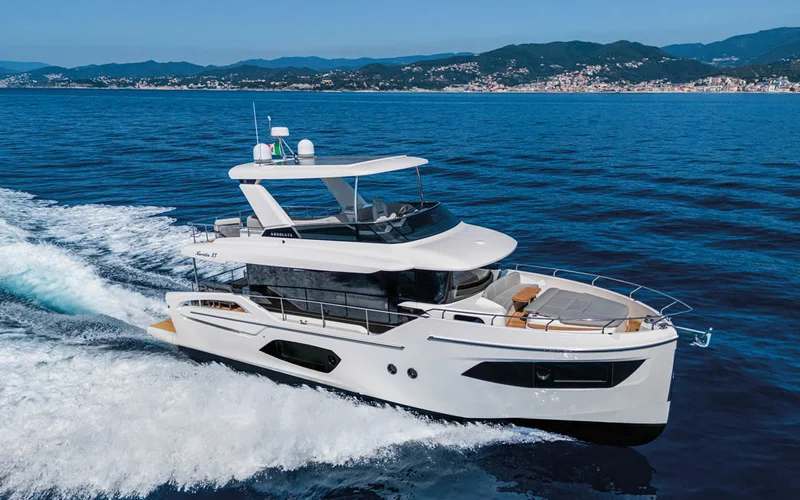
The Absolute Navetta 53, listed at 15.98 metres, and Greenline 48 Coupe, listed at 15.97 metres, are examples whose catalogue records include Single-Handed Operation. Both also display a Recommended Crew value of one.
Those entries illustrate why the two fields should be read together and then brought to the actual yacht. Similar scale and suitability signals still leave the anchor controls, visibility, equipment and owner's intended role to be examined. The examples are a starting point for investigating yachts in this segment, rather than an assessment of anyone's ability to anchor them independently.
Make familiarisation part of the pleasure
A practical demonstration with a competent professional can turn an unfamiliar part of the yacht into something the owner understands. There is satisfaction in learning where the work happens, how information is communicated and which responsibilities belong to whom.
The outcome should be a clear picture of the owner's role, the help arranged and the questions resolved about the offered configuration. That knowledge supports the scene that made the purchase attractive: arriving at a bay the owner loves, settling into the day and enjoying a yacht whose working life feels increasingly familiar.