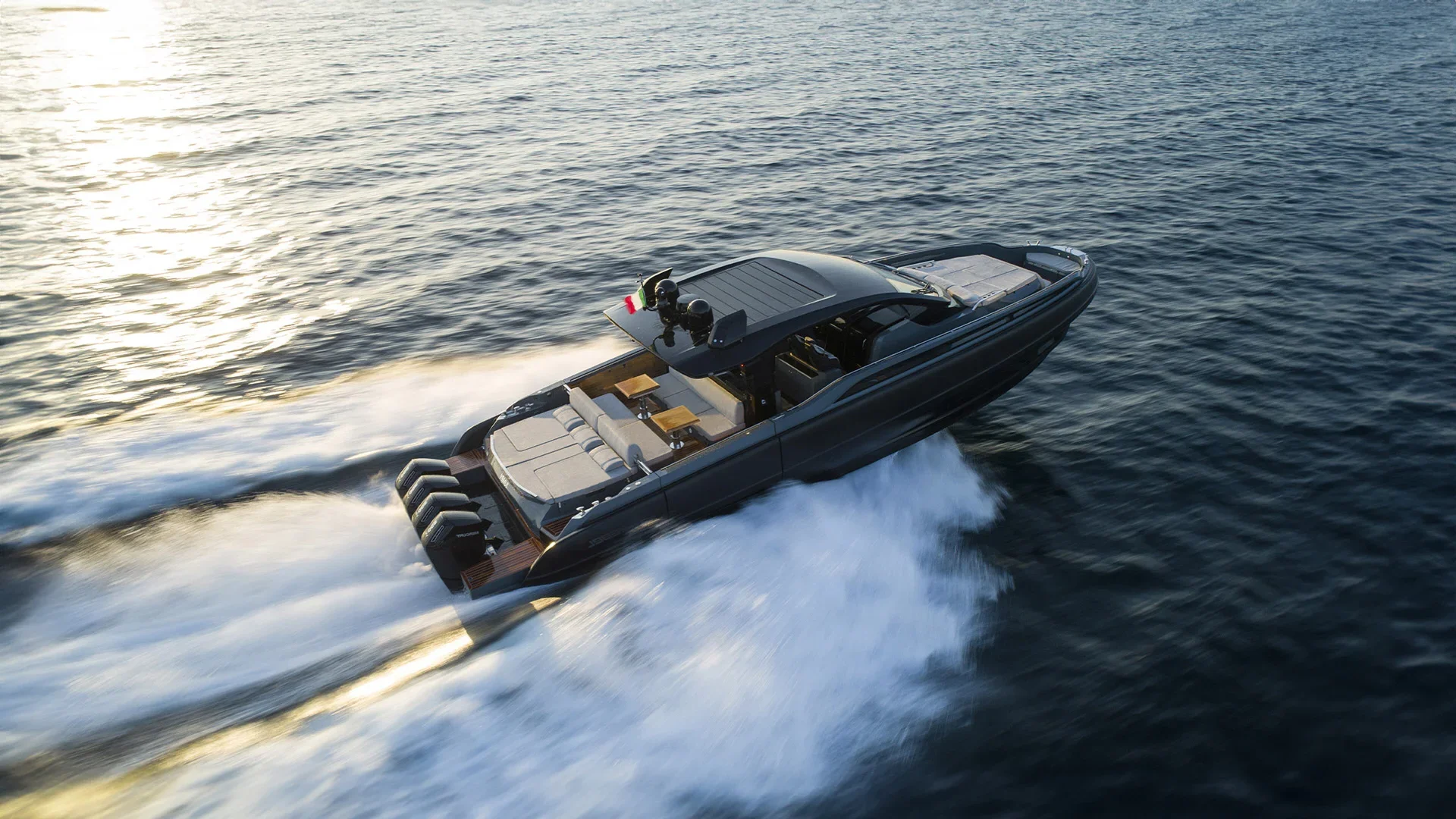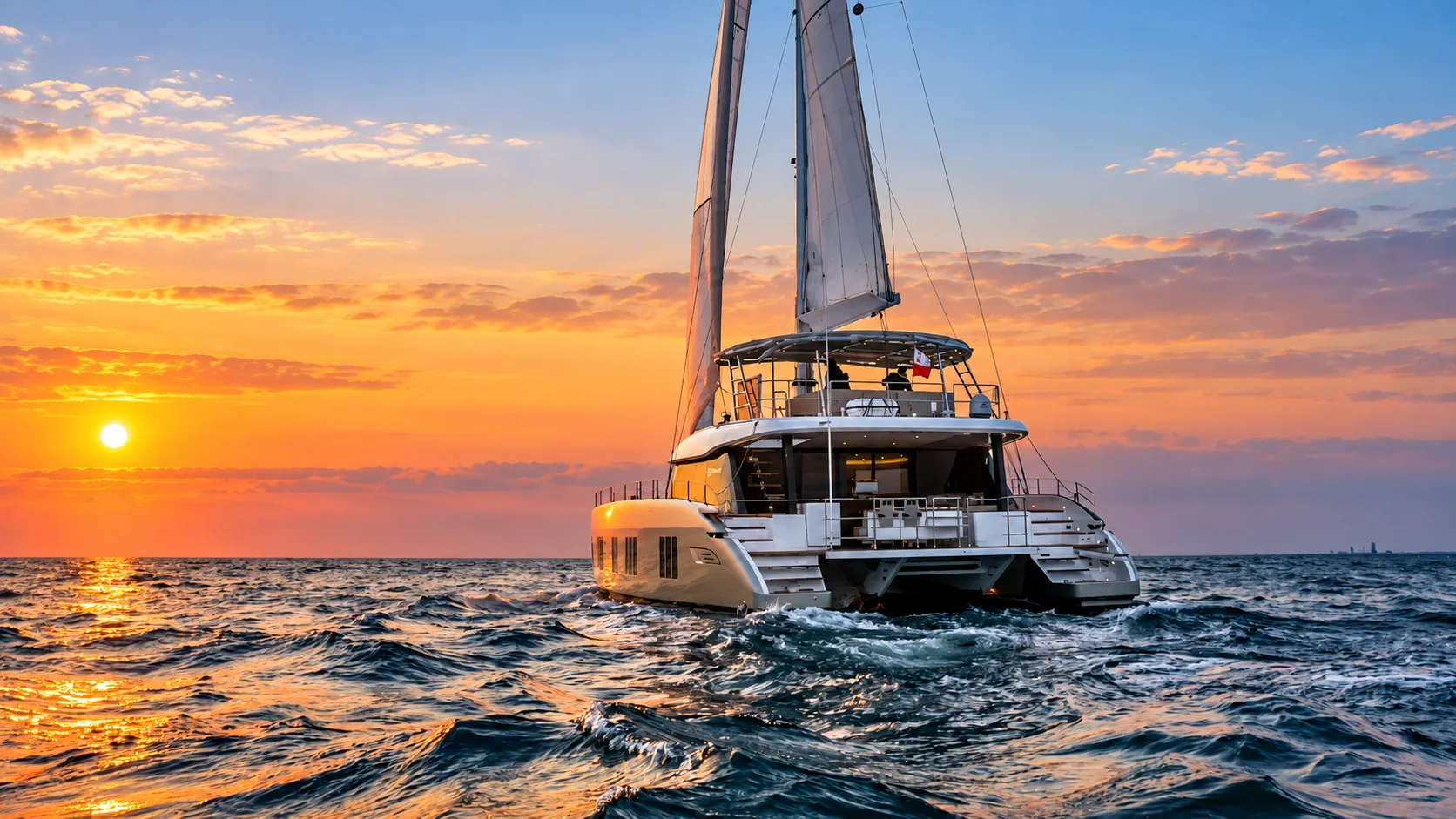
Stand on the main deck of two yachts of broadly similar length and their shapes may tell entirely different stories. One concentrates its spaces around a single hull. The other spreads them across two or more hulls and a connecting platform. The second arrangement can create an unusually broad social area; the first may offer a more concentrated footprint and a different feel under way. “Monohull” and “multihull” are therefore useful beginnings to a conversation about life aboard, not conclusions about which yacht is better.
The LYRA catalogue lets a buyer explore hull type, including monohull and catamaran concepts. The control is valuable because it separates distinct design families before the buyer is distracted by brands or finishes. The next question is what that family of shapes changes for the owner's plans.
The footprint changes first
A multihull can carry living spaces across a wider platform, with accommodation distributed among separate hulls. That width may appeal to an owner who wants social space at anchor or separation between guests. It also has an obvious practical consequence: the yacht needs an appropriate place to berth and room to move in and out of it. Beam deserves attention beside hull type whenever a multihull is under consideration.
A monohull keeps its main structure within one hull. This does not mean a cramped interior or a single kind of layout; designers can use length, deck levels and openings to create very different volumes. It means the footprint and the way spaces connect are likely to be arranged differently from a broad catamaran. The owner should compare plans and dimensions rather than assume that one label predicts usable area.
The categories also contain variation. A sailing catamaran, a motor catamaran and a trimaran do not create the same experience merely because more than one hull is involved. Similarly, two monohulls can differ in beam, hull form and intended use. Hull configuration gives the buyer a vocabulary, then asks for closer reading.
Space is experienced, not just measured
Where do guests gather? How do they reach the water? Are cabins close together or naturally separated? Does the owner prefer one continuous social area or a collection of quieter zones? These questions translate hull geometry into the use of the yacht.
Model pages provide examples without deciding the matter. Sacs Rebel 55 is presented as a motor monohull; Sunreef Yachts 60 Power as a motor catamaran. They illustrate the catalogue's hull families, not a proposed two-yacht shortlist. The owner should continue across the appropriate segment, reading current plans and dimensions for each relevant model.
The layout matters because the same broad footprint can be used generously or awkwardly. A wide saloon is only valuable if its seating, sightlines and circulation suit the people who will be aboard. A more compact plan can feel beautifully coherent when each space supports the way the owner moves through the day.
Motion needs experience and evidence
Buyers often attach simple motion claims to hull types. Real behaviour depends on more: hull shape, loading, conditions, speed, stabilisation and the specific yacht. A category label cannot promise comfort or safety. If motion matters strongly to the owner, a relevant sea trial and a qualified explanation of the actual design are more useful than a general rule about one hull versus two.
The same caution applies to draft and access to shallow water. A multihull shape may suggest possibilities, but the individual yacht's stated draft, appendages and intended route must be checked. The owner is buying a particular configuration, not an abstract diagram.
The LYRA selection approach begins with what the owner wants to do. Hull configuration becomes meaningful when it helps answer that: how much shared space is wanted, where the yacht will live and what sort of movement feels right at sea. The label opens a design family. The right yacht is found by seeing how that family serves a real life.