Picture an owner who wants a generous, single-level gathering space at anchor and has already chosen a home marina. Hull configuration may belong at the front of that search, but only together with beam. A catamaran may offer the breadth the owner is imagining, while the available berth may impose an equally clear physical boundary. These two facts can shape a useful shortlist before interior style or brand enters the conversation.
This is different from treating a multihull as a universal answer to entertaining. The owner's preferred use gives the shape a purpose; the berth gives it a place to live. If both align, the LYRA catalogue can be explored by hull type with a concrete reason for each model that remains.
When width is part of the desired life
For some owners, the defining image is a group moving comfortably between an aft dining area, the saloon and the water. A broad platform can support this kind of social rhythm. A multihull also offers the possibility of accommodation divided between hulls, which may suit guests who value separation. The actual plan still decides whether those possibilities have been realised well.
The same owner may discover that a monohull at a different length provides the circulation and privacy they want. Hull type should lead only when changing it would materially change the experience. That makes the choice a considered design direction rather than an identity attached to the buyer.
The companion dimension is beam. A length figure can make two yachts appear comparable while their width gives them quite different footprints. Ask the marina about the berth that is genuinely available, including its usable width and access, before interpreting a wide layout as an effortless home base. This is a practical check in support of an exciting ownership plan, not a reason to diminish it.
The search should reflect the whole week
Where will the yacht spend a normal Tuesday night? How will guests board on a Saturday? Which waters will the owner usually reach, and where will the yacht wait at the end of the day? A shortlist built around these ordinary movements is often more revealing than one built around the most ambitious holiday the yacht might make.
For a marina-based owner, hull type and beam can be the two early parameters. For an owner whose priority is accessing particular anchorages, stated draft may replace beam as the stronger companion question. It would be misleading to combine all of these into a rigid formula. The decisive pair follows the actual route and home berth.
On the catalogue, monohull and catamaran are real hull-type directions. The model pages then supply the individual dimensions and arrangement that give the label substance. The owner can view each result as one member of a design segment, not as a winner produced by a filter.
What the examples make visible
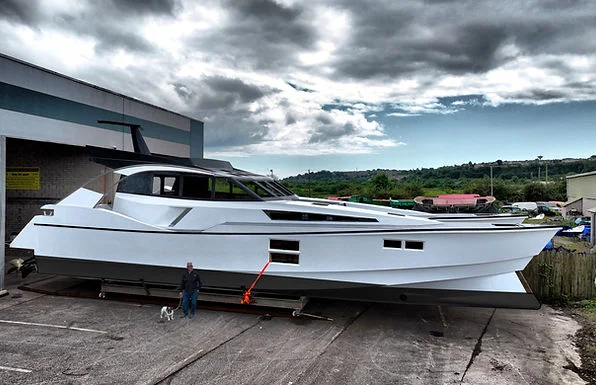
The Safehaven T-2000 Voyager is a LYRA example of a motor catamaran, while the Super Lauwersmeer SLX54 is an example of a motor monohull. They demonstrate the difference in hull-family labels; neither is the object of this article or a proposed purchase. The relevant comparison extends to other yachts of the appropriate size, layout and berth footprint.
Their role as examples is particularly useful if an owner has been comparing only length. A visual impression of width can prompt the right next question: what are the actual beam and berth requirements of each suitable yacht? The answer is found in its current specifications and the home marina's confirmed capacity, not in a generic statement about catamarans.
Motion deserves a separate kind of evidence. Hull configuration influences a yacht's design, but comfort under way depends on its particular shape, loading, speed and conditions. An owner for whom this is important should experience an appropriate sea trial and discuss the individual yacht, rather than assuming that one hull family guarantees a preferred feeling at sea.
A shortlist with a clear purpose
The strongest list can be explained in one sentence: these yachts support the desired social use and fit the places where the owner will keep and cruise them. Their hull forms may differ if each solves that sentence in a credible way. The first filter gives shape to the search; a walkthrough of the layouts and a verified berth plan make the decision personal.
LYRA's selection approach begins with the life the yacht is expected to deliver. Hull configuration should lead when its spatial consequences are central to that life. Once the boundary is established, design variety becomes a pleasure to explore within it.