The table is ready, but everyone reaches it differently. A child has just come back from the water. A grandparent would like a comfortable seat in the shade. The hosts are carrying food, and somebody has left a bag in the passage. A family lunch makes a yacht feel alive. It also reveals how thoughtfully the space serves the people gathered around it.
When three generations will meet aboard regularly, family suitability and the listed guest capacity deserve early attention. Together, these parameters establish a relevant group in the LYRA catalogue. The next question is personal: how comfortably can this family share an ordinary afternoon?
Invite the actual family into the brief
“A family yacht” can mean very different things. The group may include two young children and independent grandparents. It may consist entirely of adults who like a long lunch and a gentle swim. The ages alone explain less than the people and their habits.
Describe who usually comes and how they like to spend the day. Someone might prefer to remain dry, another may want an occasional quiet place indoors, and a child may need help reaching the table. These details give a viewing a purpose while keeping the pleasure of the invitation central.
Occasional assistance should also be understood in advance. If a family member would appreciate a hand boarding, identify who can provide it and assess the actual arrangement together. The Family label is a discovery signal. Personal comfort needs the attention of the people who will use the yacht and, where relevant, appropriate professional advice.
Let everyone sit where they would choose to stay
At a viewing, the most persuasive seat is often the one with the best view. For a long lunch, the family should try the seats they would really occupy. Notice access, back support, the relationship to the table and the space available to move a chair or stand up.
An older guest may value a place from which they can remain in the conversation without needing to move each time another person passes. Parents may prefer a seat with a clear view of the area where children are spending time. Children themselves need somewhere comfortable within the group, rather than being treated as spare places to fit around the adults.
The aim is a table that lets people relax into the afternoon. A beautiful dining area becomes more convincing when everyone can imagine staying there comfortably through a second cup of coffee.
Give the table itself the scale of a real meal. Imagine the plates, drinks and serving dishes in place, then consider how each person reaches what they need and remains part of the conversation. An empty surface can leave those relationships unexplored. The occupied arrangement shows how the family can share lunch while everyone enjoys an appropriate place within the group.
Watch the paths around the meal
Lunch involves more movement than its photograph suggests. People go to the bathroom, change after swimming, collect a jumper or step away from the table. Food and drinks travel through the same space. The relationship among those routes matters as much as the seat count.
Trace a few of the family's ordinary movements on each candidate. Where does a guest go after coming aboard? Can somebody reach a quieter area while others remain outside? Where do wet belongings settle before their owners join the meal?
The busiest moment is useful to picture. Several people may be moving at once while a plate is being carried through. The owner can notice whether the space supports that activity naturally or whether furniture, bags or equipment repeatedly occupy an important route.
Access and supervision arrangements need assessment on the actual yacht for the people and activities involved. Where someone needs assistance or a particular physical arrangement, the viewing gives that requirement a concrete setting. The responsible professionals can then assess it alongside the family's plans for the day.
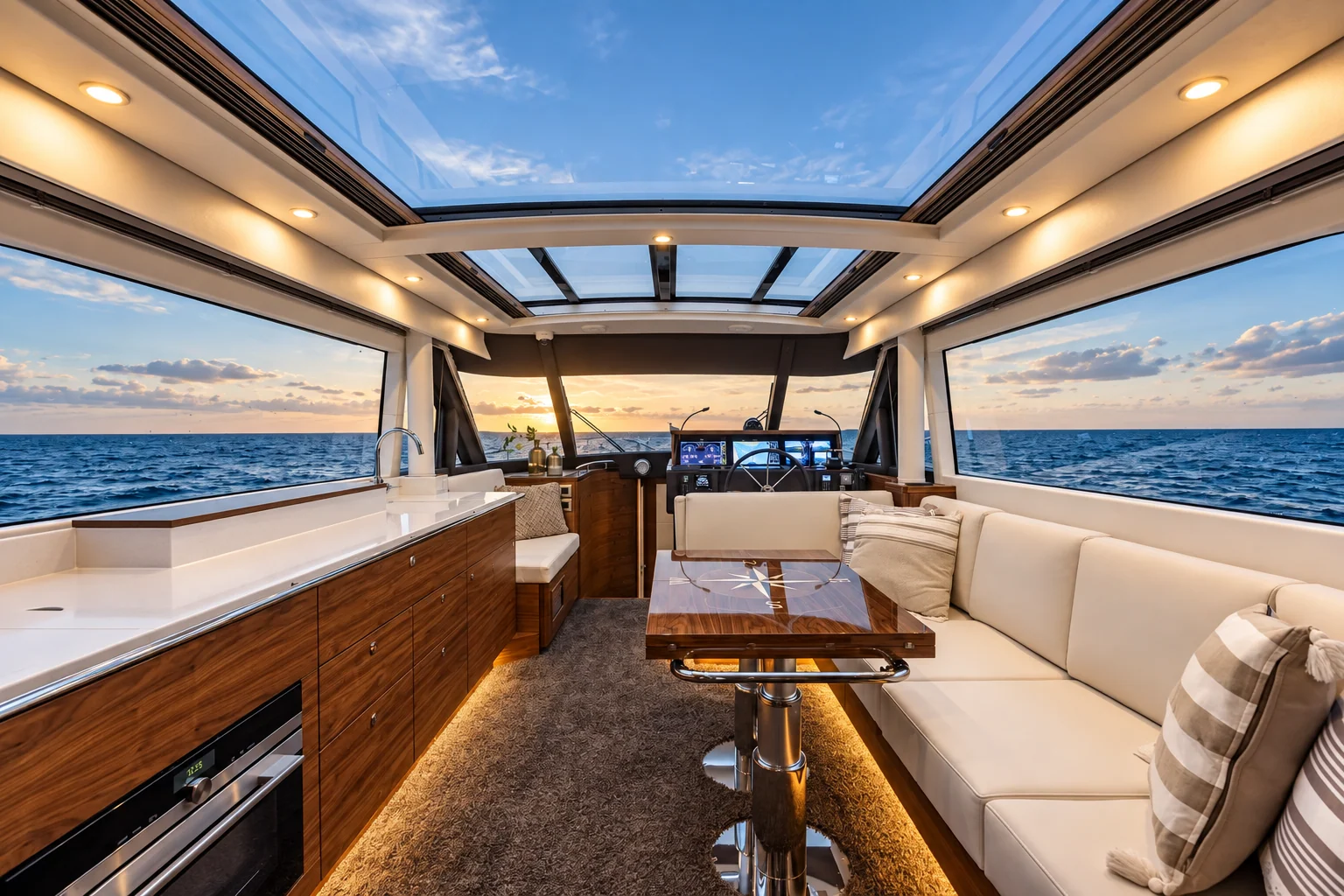
Family-labelled examples from the catalogue
The I.C. Yachts Brave and Sialia 59 Loft are catalogue examples listed at 18 metres, each carrying the Family suitability signal and a listed Guests figure of 14. Their figures illustrate the discovery stage for a family looking within this size band.
The family's lunch should then guide the closer comparison. Yachts with the same displayed capacity still need their seating, boarding and internal routes examined. A generous headline number creates room for investigation; the actual invitation determines which arrangement feels welcoming.
The family's preferences can be expressed in ordinary terms: a protected place for grandparents, a clear route to the bathroom, somewhere for children's belongings and a table that keeps everyone together. That language remains useful across the entire segment.
Remember the moments after the plates are cleared
A good family afternoon has room to change pace. Some people stay at the table, others move into the saloon, and the children find their next activity. The yacht should make that gradual separation comfortable while preserving the feeling of being together.
Guest capacity has done its job when the regular group is accommodated in the intended operating arrangement. Family suitability becomes meaningful when those people can recognise their own day aboard. The reward is wonderfully concrete: an invitation everyone looks forward to accepting again, with a familiar place for each generation around the same table.