An owner wants to move among quiet islands and stay where the day feels right, not where the nearest pump or shore connection dictates. In this programme, fuel and fresh-water capacity can lead the yacht search together. They are two different limits on time away from services, and neither should be read without the intended route and people aboard.
The LYRA catalogue lets a buyer explore fuel capacity as a technical range, while model pages can show fuel and water volumes. A preliminary shortlist can use these two fields to identify yachts worth deeper investigation. It cannot convert them into a guaranteed autonomy figure until consumption, usable volume, reserves and replenishment are understood for each yacht.
The itinerary creates the need
For a marina-based day yacht, filling fuel and water at a familiar base can be part of a simple routine. For repeated multi-day anchoring away from reliable facilities, the owner needs more independence. The key is not an abstract ambition to carry the largest tanks, but a specific picture: how far the yacht will travel between fuel stops, how many people will stay aboard and how long they may remain at anchor.
The itinerary should include the way back. A pleasant arrival at a remote bay is only half the story; the owner wants the freedom to leave again with comfortable margins. A captain or technical adviser can set those margins for the chosen yacht and conditions. The buyer's role at this stage is to make sure the prospective design can support the intended pattern.
Fuel capacity addresses the travelling part of that pattern. Its meaning changes with speed, sea conditions and the exact engine installation. Water capacity addresses the life lived between passages. Guest count and the chosen onboard routine affect its use. Keeping the two clocks separate helps the owner see which aspect of autonomy deserves attention first.
A shortlist can stay generous
An early capacity range can narrow the represented market, but it should not turn into a rigid requirement without the route behind it. A yacht with a smaller fresh-water tank may have a watermaker and a different replenishment strategy. Another with substantial fuel may be designed for a travelling pace quite unlike the owner's. The purpose of the first search is to reveal relevant candidates and the right questions about them.
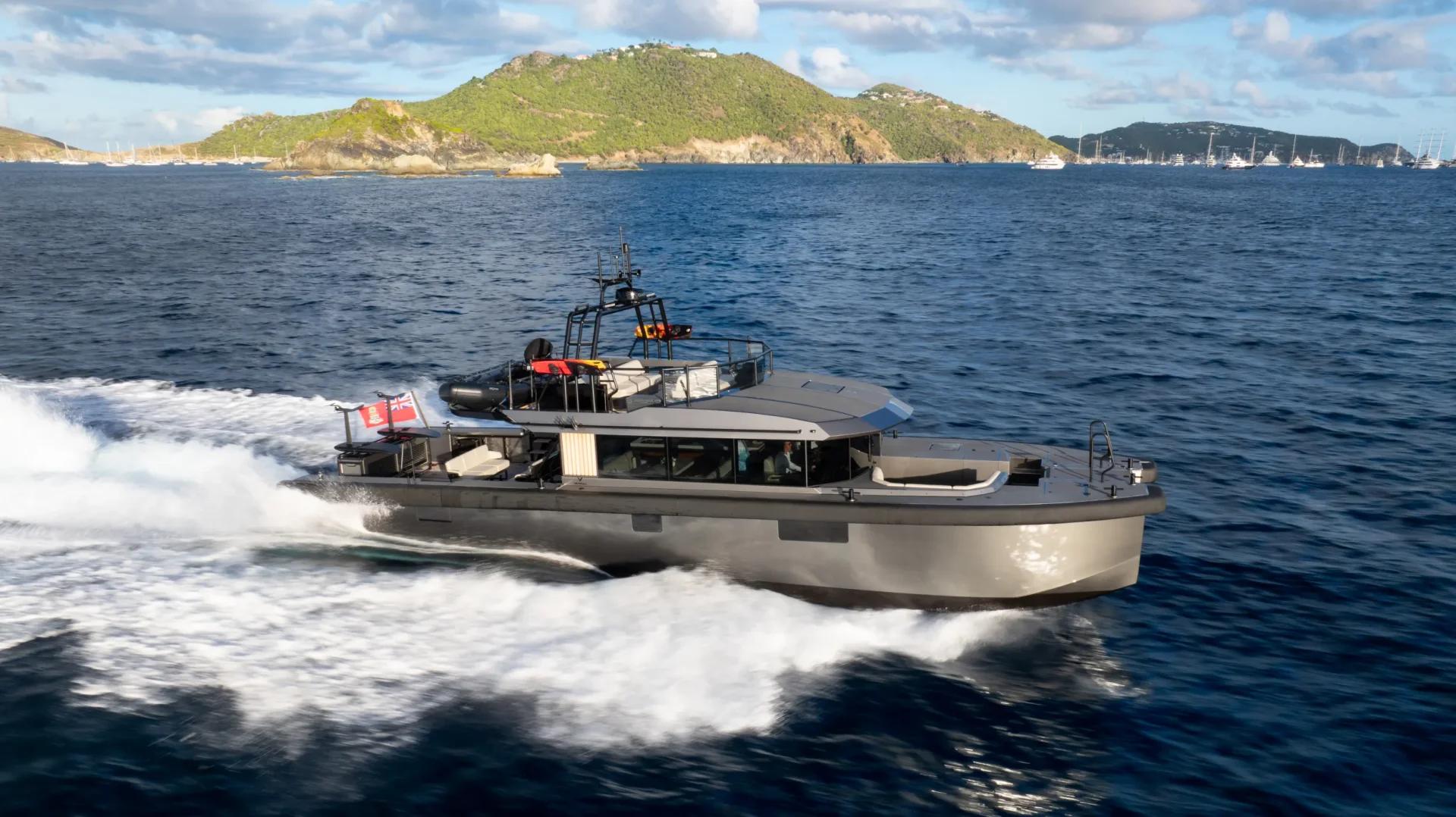
The Vandal 60' and Y Yachts Y7 are examples of LYRA pages with very different fuel-capacity figures and propulsion roles. They are not direct purchase alternatives here. Their contrast shows why stored fuel must be interpreted within the relevant yacht type and intended travel style, while water deserves its own separate assessment.
The owner can keep variety in the shortlist by describing the intended independence in ordinary words: several nights away with a particular group, or a passage between known replenishment points. That sentence is more useful than a tank threshold whose origin nobody can explain.
Resolve the two supplies before choosing
For each promising yacht, request the tank arrangement and usable volumes, then examine consumption evidence at the likely travelling pace. Ask how fresh water is produced or replenished and what the onboard systems require. A qualified passage plan should apply reserves to the exact route; a single catalogue number should not be used as a safety assurance.
The reward of this work is spontaneity within a well-understood envelope. The owner can say yes to another day in a beautiful place because the yacht was chosen and prepared for that kind of freedom. LYRA's selection approach begins with the life the yacht should deliver. For time away from services, fuel and water capacity are two early parameters that make that life possible.